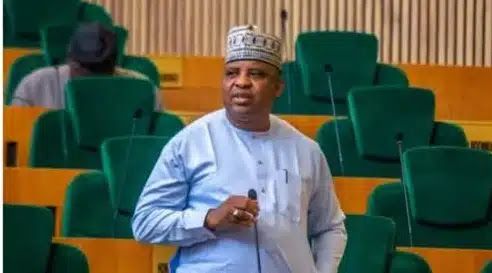
Governor Aiyedatiwa launches state ambulance system, boosting emergency healthcare and saving lives across Ondo State with modern pre-hospital services.
Ondo State Governor Lucky Aiyedatiwa has officially launched a comprehensive ambulance system aimed at transforming emergency healthcare delivery across the state.

The unveiling, which took place in Akure, is a landmark initiative under his administration to ensure timely medical intervention for all residents, particularly in life-threatening situations such as road accidents, obstetric emergencies, and other critical health crises.
Represented at the event by Deputy Governor Olayide Adelami, Aiyedatiwa emphasized that the initiative reflects the government’s determination to save lives by bridging gaps in pre-hospital care.
“Every day, medical emergencies occur, and many lives are lost because assistance is delayed.
“Through our OUR EASE development agenda, we are committed to providing rapid and effective medical interventions to protect all residents, regardless of status,” Aiyedatiwa stated.
The state government has partnered with the National Emergency Medical Services and Ambulance System (NEMSAS) to cover transportation and treatment costs for the first 48 hours of medical emergencies.
This ensures that financial constraints do not prevent residents from receiving urgent care when it matters most.
A key component of the program is a fully operational 24-hour call center. “The State Emergency Call Center has been reactivated and equipped with advanced communication tools.
“Over 100 frontline emergency responders have been trained to handle emergencies professionally, and ongoing training will expose them to modern emergency care techniques,” the governor added.
Governor Aiyedatiwa also praised private hospital operators and ambulance owners for partnering with the state to enhance healthcare delivery.
This collaboration ensures a seamless emergency response system that efficiently reaches patients in need.
Director-General of NEMSAS, Hajia Fatima Ciroma, explained that the new system would reduce hospital congestion by providing critical care before patients arrive at medical facilities.
She added, “The initiative includes Basic Life Support (BLS) and Advanced Life Support (ALS) ambulances, as well as tricycle (Keke) ambulances, and highly skilled personnel ready to respond to road accidents, domestic incidents, obstetric emergencies, and other critical conditions.”
Ciroma highlighted the importance of an upgraded communication network that allows real-time coordination between hospitals, ambulance crews, and emergency response teams.
This ensures that patients receive immediate attention, improving outcomes and reducing preventable fatalities.
The initiative is also expected to enhance road safety across Ondo State. Samuel Ibitoye, Ondo State Commandant of the Federal Road Safety Corps (FRSC), commended Governor Aiyedatiwa for integrating the state into the national emergency medical services network and for revitalizing the Ondo State Emergency Medical Services Agency (ODEMSA), which was once a national benchmark for emergency care.
Governor Aiyedatiwa stressed that this program is part of a broader vision to ensure equitable access to quality healthcare for all citizens.
By covering initial emergency treatment and transportation costs, the government removes barriers that often delay life-saving care.
Medical experts note that pre-hospital care is critical in reducing mortality from accidents and sudden illnesses.
Immediate medical intervention can significantly increase survival rates in critical conditions, and the deployment of well-equipped ambulances and trained personnel under Aiyedatiwa’s leadership positions Ondo State as a model for effective emergency healthcare delivery.
The ambulance fleet, ranging from advanced BLS and ALS vehicles to agile tricycle ambulances, will serve both urban and rural communities.
This inclusive approach ensures that even residents in remote areas have access to essential emergency services, reflecting Aiyedatiwa’s commitment to comprehensive healthcare coverage.
Continuous training and the integration of modern technology are key pillars of the program.
Frontline responders will undergo regular refresher courses and exposure to global best practices in emergency care.
“The health and well-being of our people remain our top priority. We aim to build a responsive, efficient, and modern emergency medical system capable of saving lives,” Governor Aiyedatiwa emphasized.
The initiative has been praised by private hospital operators and community leaders alike, who highlighted the benefits of a coordinated and professional emergency response network.
They expressed confidence that the program would improve health outcomes and reduce fatalities caused by delayed medical attention.
As the ambulance system becomes fully operational, residents of Ondo State can expect faster response times, better coordination among emergency services, and improved critical care before hospital admission.
Aiyedatiwa’s administration has ensured that the system is both reactive and preventive, prioritizing life-saving interventions.
Through strategic planning, public-private partnerships, and investment in technology and training, Governor Aiyedatiwa has positioned Ondo State at the forefront of emergency medical services in Nigeria.
The state now boasts a robust, well-coordinated system capable of responding to diverse medical emergencies efficiently and effectively.
The State Emergency Medical Services and Ambulance System is poised to serve as a benchmark for other states seeking to modernize emergency healthcare.
By combining skilled personnel, advanced communication systems, and a wide-ranging ambulance fleet, the initiative demonstrates a holistic approach to life-saving care.
Governor Aiyedatiwa’s ongoing healthcare reforms extend beyond ambulances, including improvements to hospital infrastructure, primary healthcare centers, and the adoption of new medical technologies.
These initiatives reflect a long-term vision of transforming Ondo State into a model for modern, accessible, and efficient healthcare services.
The immediate impact of this program is expected to be significant, saving lives and reinforcing the government’s commitment to public welfare.
By strengthening pre-hospital care, Aiyedatiwa is ensuring that residents of Ondo State are protected in emergencies, improving overall health outcomes and quality of life.
With these initiatives, Ondo State now has a reliable, well-coordinated emergency healthcare system.
Governor Aiyedatiwa’s proactive approach to medical emergencies highlights the importance of effective governance in safeguarding lives and demonstrates that innovative healthcare solutions can be successfully implemented at the state level.
Ireport247news