The “Gaza siege crisis” has intensified after Israel closed all crossings following its attack on Iran, threatening food supplies for two million Palestinians already enduring extreme hardship and displacement.
Authorities in Gaza Strip warned that shuttered borders are choking essential imports, with flour, cooking oil, and sugar prices soaring sharply within days of the renewed regional escalation.
The closure followed Israel’s military action against Iran, expanding what many describe as the “US-Israel war on Iran” into a humanitarian emergency for civilians trapped inside Gaza.
Under the mounting “Gaza siege crisis,” humanitarian organisations say warehouses lack strategic reserves, leaving families dependent on daily aid deliveries that have now abruptly halted at crossing points.
The Israeli agency Coordinator of Government Activities in the Territories said shipments were paused for security reasons but indicated limited humanitarian access could resume gradually through Kerem Shalom.
Aid groups including World Central Kitchen cautioned that they may exhaust supplies within days, as community kitchens struggle to maintain one million daily meals.
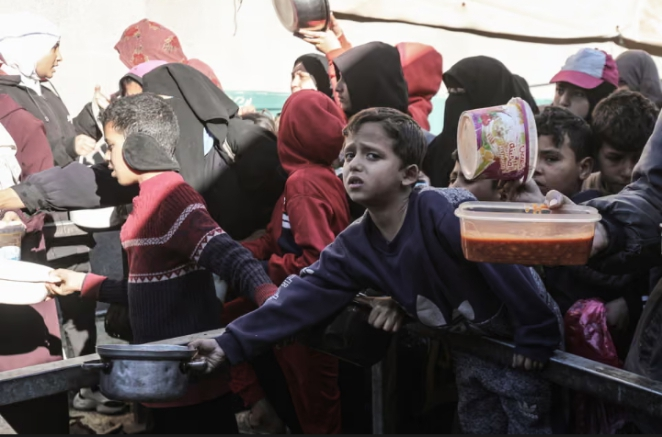
In markets across Gaza, the price of a 25kg flour sack has reportedly tripled, underscoring how quickly the “food insecurity in Gaza” emergency is accelerating.
Families displaced multiple times describe panic buying reminiscent of last year’s famine period, when aid bottlenecks pushed the territory toward catastrophic hunger levels.
The renewed “border crossings closure” has compounded trauma among residents who recall previous sieges that left supermarket shelves empty and bakeries shuttered for weeks.
According to the Norwegian Refugee Council, international humanitarian law obliges Israel, as occupying power, to ensure adequate supplies reach civilians under its control.
Meanwhile, officials insist there are still stockpiles inside Gaza, though no detailed figures have been publicly released to verify those assurances.
The “humanitarian aid shortage” is particularly acute in northern districts, where damaged warehouses and destroyed roads complicate internal distribution networks.
Crossings with Egypt remain effectively sealed for large-scale aid, limiting alternative supply routes that once alleviated pressure during earlier escalations.
Economic paralysis has followed swiftly, with small traders reporting empty inventories and customers unable to afford inflated staple prices.
Local business representatives say the absence of buffer stocks means any interruption instantly triggers both psychological panic and commercial collapse.
Parents describe prioritising children’s meals while skipping their own, fearing a repeat of starvation conditions experienced during previous sieges.
The “Gaza siege crisis” is unfolding as Israeli forces reportedly maintain control over significant portions of the enclave after years of conflict.
International observers link the deteriorating food security situation to broader instability generated by the “US-Israel war on Iran.”
Diplomatic efforts to de-escalate tensions regionally have yet to translate into practical relief for civilians waiting at closed gates.
Aid convoys positioned outside Gaza warn that perishable goods may spoil if entry permissions are further delayed.
Community bakeries supplying subsidised bread to vulnerable families say flour reserves may last little more than ten days without replenishment.
Health professionals caution that malnutrition risks rise quickly among children and elderly people when calorie intake drops suddenly.
The “food insecurity in Gaza” emergency is compounded by widespread unemployment and the destruction of homes and farmland.
Many residents report exhausting savings during earlier fighting, leaving them unable to stockpile supplies amid the latest “border crossings closure.”
International agencies stress that humanitarian corridors must remain insulated from geopolitical confrontations to prevent civilian suffering.
Despite statements suggesting limited reopening, uncertainty continues to dominate daily life inside the territory.
The “humanitarian aid shortage” also threatens sanitation services, as fuel scarcity undermines water pumping and waste management operations.
Analysts argue that restoring predictable supply chains is essential to prevent market speculation and hoarding behaviors.
For now, families watch developments anxiously, hoping diplomacy will ease the “Gaza siege crisis” before cupboards run empty.
As the regional conflict widens, civilians in Gaza remain caught between military calculations and the immediate need for bread, water, and security.
Read also: Kemi Badenoch criticises Labour Defence Policy controversy over UK base access