

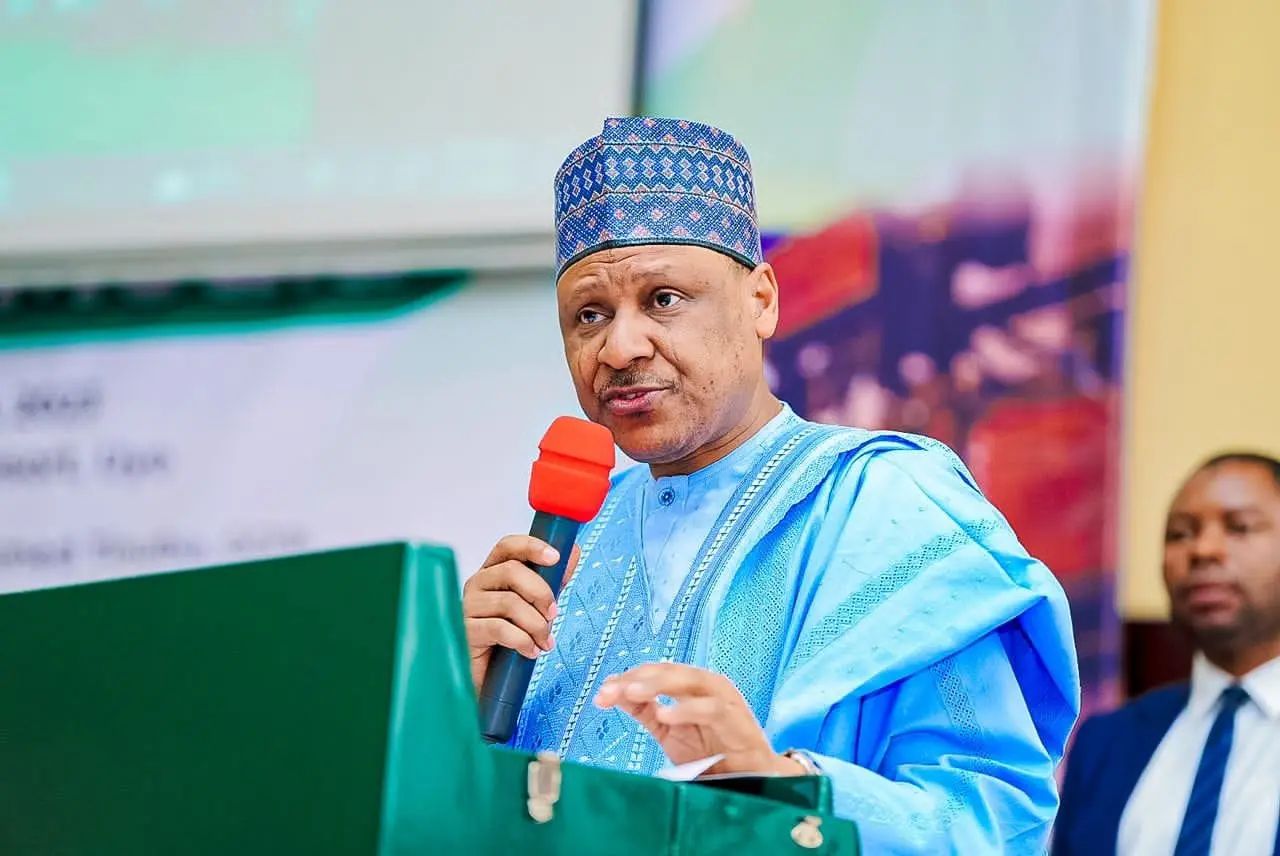
Mohammed Idris warns that restoring fuel subsidy could weaken Nigeria’s finances, reduce investor confidence and reverse gains from economic reforms.
The Federal Government has renewed its opposition to any attempt to bring back fuel subsidy, with the Minister of Information and National Orientation, Mohammed Idris, warning that such a move could put Nigeria’s economic recovery at risk.
Idris said the country could lose some of the financial flexibility gained from the removal of petrol subsidy if the government returned to the previous system.
According to him, the debate over fuel subsidy should go beyond the immediate impact on petrol prices and consider the wider consequences for government revenue, public spending, investment and essential services.
The minister expressed his position in an opinion article published in some national newspapers on Monday. The article, titled “Restoring Fuel Subsidy Will Reverse Nigeria’s Economic Gains,” examined the financial implications of bringing back the policy.
His position was contained in a statement issued in Abuja by his Media Aide, Rabiu Ibrahim.
Subsidy savings have increased government resources
Idris argued that one of the major consequences of the subsidy removal has been the release of funds that can now be shared among the Federal Government, states and local governments.
He referred to the Federal Government’s recently presented Nigeria’s Reform Scorecard: The Benefits, Costs and Harms Prevented, which highlighted the financial impact of the reforms introduced under President Bola Tinubu.
The minister said the Minister of Finance and Coordinating Minister of the Economy, Taiwo Oyedele, disclosed that subsidy savings generated about N15.8 trillion in resources for the Federation between June 2023 and December 2025.
The figure, he explained, should not be interpreted as N15.8 trillion sitting in a single government account. Rather, it represents additional resources released within the Federation’s overall fiscal system.
The Federal Government reportedly accounted for approximately N5.43 trillion of the amount, while states received about N6.52 trillion and local governments received N3.88 trillion.
Idris said the increased allocations had helped different levels of government meet important financial obligations, including the payment of workers’ salaries and pensions.
He also linked the additional fiscal space to spending on infrastructure, security, agriculture and human capital development.
What Nigeria could lose by returning to subsidy
The minister’s central argument was that restoring petrol subsidy would require the government to redirect money away from other priorities.
He therefore challenged those advocating a return to the old system to consider what would have to be sacrificed to finance the policy.
“Do we restore petrol subsidy, or sustain student loans and consumer credit for young Nigerians?” he asked.
He similarly questioned whether the country should return to subsidy at the expense of higher allocations to state and local governments or continued investment in roads, rail transportation, electricity and security.
Idris also raised concerns about funding for healthcare, education and social protection, arguing that these areas require adequate and sustainable government financing.
His argument was that cheaper petrol at the pump should not be considered in isolation from the other services that government must provide.
Nigeria’s previous subsidy burden
The minister recalled the enormous cost of maintaining the former petrol subsidy system.
He noted that Nigeria spent roughly $10 billion on fuel subsidies in 2022, a period when the country was already struggling with falling oil production and weak government revenues.
The financial burden, he said, became increasingly difficult to sustain.
Idris also cited previous concerns raised by the World Bank that the money spent on fuel subsidies could have been used to finance other areas of national development, including education, healthcare, infrastructure and social protection.
He argued that the old subsidy system did not only create a major financial burden. It also contributed to distortions within the petroleum market and created opportunities for arbitrage.
According to the minister, returning to that arrangement could recreate many of the economic problems the reforms were designed to address.
“Restoring subsidy would almost instantly return Nigeria to the economic conditions of 2022, recreating the same fiscal pressures, distortions, scarcity and incentives for arbitrage that made the old system unsustainable,” he said.
Infrastructure spending gets boost
Idris also highlighted some of the areas where additional government resources have been deployed since the reforms began.
He said the Reform Scorecard recorded approximately N6.47 trillion in additional expenditure on strategic infrastructure.
The minister said more than N400 billion had also been committed to major social investment initiatives.
Among the programmes he mentioned were the Nigeria Education Loan Fund, the MOFI Real Estate Investment Fund and the Nigerian Consumer Credit Corporation.
He further disclosed that social transfers had reached more than 10 million Nigerian households.
For the government, Idris said these developments demonstrate how funds previously committed to petrol subsidy can be redirected towards programmes with broader economic and social benefits.
Electricity subsidy adds to fiscal pressure
Another concern raised by the minister was the cost of electricity subsidies.
Idris said Nigeria had already spent an estimated N3.14 trillion on electricity subsidy between June 2023 and December 2025.
He warned that adding a petrol subsidy to the existing electricity subsidy burden could further strain government finances.
At a time when the government is seeking to improve its fiscal position, the minister maintained that introducing another expensive subsidy would make it more difficult to sustain spending on critical sectors.
He said the government must instead focus on creating an economy capable of generating enough revenue to fund public services without depending heavily on costly subsidy arrangements.
Private sector warns against policy reversal
Idris further noted that concerns over the return of petrol subsidy were also being expressed within the private sector and the wider business community.
He said the Organised Private Sector and other economic stakeholders had cautioned against reversing the reforms.
Investor confidence, he argued, depends partly on policy consistency and the ability of businesses to anticipate the direction of economic policy.
A return to the previous subsidy system, according to the minister, could therefore create uncertainty for investors while placing renewed pressure on public finances.
He maintained that the government’s focus should remain on reforms capable of improving productivity, strengthening government revenue and creating an environment where businesses can grow.
Government insists reforms must continue
While acknowledging the difficulties associated with the reforms, Idris urged Nigerians to assess them from a longer-term perspective.
The removal of petrol subsidy has contributed to higher living costs and placed pressure on households, but the minister argued that reversing the policy would not necessarily provide a sustainable solution to those challenges.
Instead, he said, the government must continue developing measures that expand economic opportunities and provide support for vulnerable Nigerians while maintaining fiscal discipline.
“Nigeria cannot build tomorrow’s economy by returning to yesterday’s unsustainable subsidy regime. We have moved beyond that model,” Idris said.
The minister’s comments come amid continued public debate over the impact of petrol subsidy removal and calls in some quarters for measures that would reduce the burden of fuel prices on households and businesses.
For the Federal Government, however, the challenge is to ensure that the savings and additional fiscal resources created by the reforms translate into tangible improvements in citizens’ lives.
Idris therefore urged Nigerians to consider the broader economic implications of subsidy restoration, arguing that the country needs to preserve the fiscal space required to invest in infrastructure, education, healthcare, security, social protection and other areas essential to long-term development.
He maintained that Nigeria’s economic future would depend on building a more productive and financially sustainable system rather than returning to a subsidy regime that had placed significant pressure on public finances.
About The Author
