Israeli prisons torture survivors are exposing horrific details of what they endured behind bars, describing physical brutality, starvation, and deliberate psychological torment as official policy.
Recently freed Palestinian detainees returned to Gaza with visible injuries and mental scars, recounting years of beatings, humiliation, and deprivation inside heavily guarded Israeli detention centers.
Their testimonies paint a grim picture of organized cruelty and neglect, suggesting that the systematic mistreatment of Palestinian prisoners has become normalized across Israeli prisons.
Many former detainees allege that their suffering was part of a deliberate strategy to break morale, suppress resistance, and send fear throughout occupied Palestinian territories.
The men describe a network of underground cells, overcrowded barracks, and what they call “torture chambers” where loud music, isolation, and physical assault were routine.

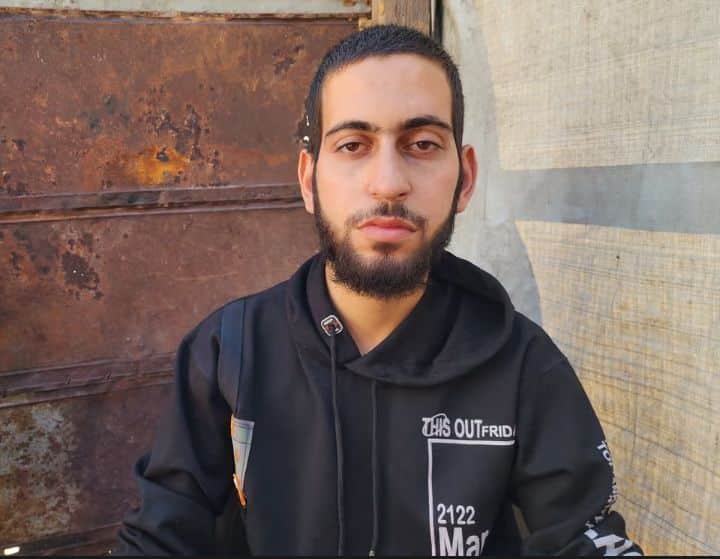
Naseem al-Radee, a 33-year-old Gaza resident, spent nearly two years in Israeli custody without formal charge, enduring relentless abuse and deteriorating health in confinement.
Before his release, guards allegedly beat him “as a farewell,” leaving him bruised, blind in one eye, and deeply traumatized from the violence inflicted upon him.
He recounted being bound hand and foot, beaten with rifle butts, and forced to crawl across cold concrete floors smeared with dirt and blood.
Radee said his imprisonment represented the darkest chapter of his life, claiming that Israeli prisons torture detainees systematically while depriving them of legal recourse.
He spent over one hundred days underground, in a cell devoid of sunlight, where sleep deprivation and loud noise replaced daylight and rest.
Overcrowding worsened the torment; fourteen detainees were crammed into a small cell meant for five, forcing men to sleep standing or share contaminated mattresses.
Filthy conditions led to infections, fungal outbreaks, and open wounds left untreated, as medical neglect became another weapon in the regime of Israeli prisons torture.
According to witnesses, guards punished requests for medical help with violence, ensuring that illness spread and malnutrition weakened prisoners beyond endurance.
Inmates were fed rancid food, denied clean water, and regularly deprived of basic hygiene, creating an environment of slow physical and psychological destruction.
Another survivor, 22-year-old university student Mohammed al-Asaliya, said detainees resorted to using floor disinfectant to clean their wounds because medicine was forbidden.
Asaliya said the prison he was held in had a “disco room,” where deafening music played for forty-eight hours straight to torture inmates.
He described being hung by the arms, sprayed with cold air and water, and sometimes covered in chili powder while soldiers laughed.
The use of noise torture, he added, was especially cruel because it robbed men of sleep and left them delirious after days without rest.
Asaliya lost more than thirty kilograms during detention, entering prison at seventy-five kilograms and dropping to forty-two at his weakest point.
Radee also lost over thirty kilograms, a visible testament to starvation and deliberate deprivation within Israel’s prison system.
Palestinian medical officials who received the released detainees confirmed widespread malnutrition, dehydration, fractures, and bruises consistent with repeated beatings and restraint injuries.
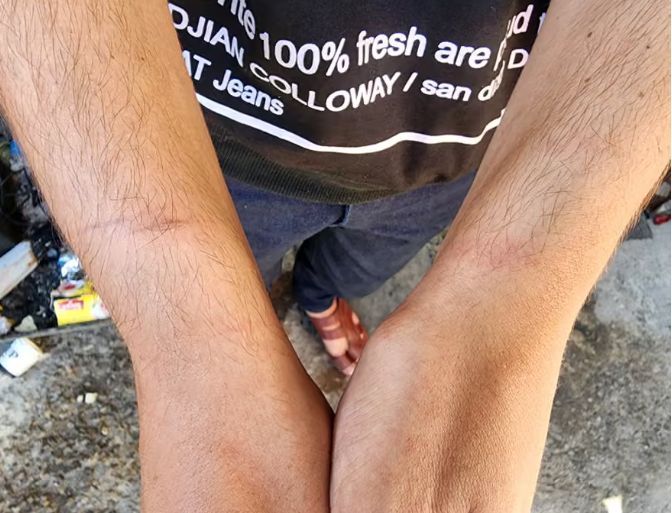
Doctors said many returnees had visible scars on wrists and ankles, signs of tight handcuffs and ropes used to immobilize prisoners during interrogations.
Hospital officials described seeing burns, open wounds, and signs of prolonged binding, all supporting allegations of an institutionalized pattern of Israeli prisons torture.
Eyad Qaddih, a senior medical administrator in Gaza, said several former detainees were rushed to emergency care upon arrival due to extreme exhaustion and trauma.
He noted that many had not eaten properly in weeks and showed symptoms of shock, infection, and untreated internal injuries sustained in detention.
Rights groups have repeatedly accused Israeli authorities of employing administrative detention to hold Palestinians indefinitely without formal charges or fair trials.
Recent amendments to Israeli law have expanded the power to detain individuals indefinitely on vague suspicions of being “unlawful combatants.”
Legal experts say these laws allow indefinite imprisonment, turning detention into a political tool and enabling systematic abuse under the guise of national security.
Human rights advocates describe this policy as collective punishment, targeting Palestinians to weaken their families and communities through cycles of fear and pain.
Reports indicate that since October 2023, the rate of torture and abuse has surged dramatically, with thousands of Palestinians swept into detention.
Israeli prisons torture, according to these testimonies, is no longer an isolated act by rogue guards but a method endorsed by state policy.
Critics point to statements by far-right Israeli officials who openly advocate harsher conditions and minimal care for what they label “enemy combatants.”
Security Minister Itamar Ben-Gvir has publicly boasted about providing detainees with “the minimum of the minimum,” reinforcing the perception of cruelty as state-approved.
Observers say that since the October 2023 Hamas-led attacks, Israel’s treatment of Palestinian prisoners has grown more repressive and punitive.
The Israeli government defends its policies as security measures, claiming compliance with international law, though evidence suggests otherwise.
Legal watchdogs argue that Israeli prisons torture violates both the Geneva Conventions and Israel’s own Basic Law on human dignity.
International organizations have demanded independent investigations into detention facilities, calling for accountability and immediate access for humanitarian observers.
However, Israeli authorities continue to block such access, citing security concerns and refusing to disclose the conditions of so-called “classified” detention centers.
Within Gaza, families of former prisoners describe emotional reunions overshadowed by loss, as many detainees return to find their homes destroyed and relatives killed.
Radee’s own tragedy deepened when he learned that his wife and children had perished during his imprisonment, leaving him broken despite his newfound freedom.
He said his release coincided with his late daughter’s birthday, a date that should have brought celebration but instead reminded him of irreversible loss.
“I was freed but not truly free,” he said. “My joy died with them, and my pain is a constant reminder of what I endured.”
For many Palestinians, such testimonies reinforce their perception of Israeli prisons as instruments of domination and dehumanization.
Analysts warn that these practices, if left unchecked, could further radicalize generations who grow up witnessing or surviving such brutality.
Observers fear that the cycle of detention, torture, and retaliation will continue to fuel unrest across the region, undermining any hope for peace.
Advocacy groups are urging the international community to demand accountability and to pressure Israel into ending the use of torture against Palestinian detainees.
Calls for sanctions, international trials, and global awareness campaigns are growing as the extent of Israeli prisons torture becomes increasingly undeniable.
Despite international outrage, few expect policy change soon, as the Israeli government continues to justify its actions as counterterrorism measures.
Still, human rights advocates insist that the stories emerging from Gaza’s returnees are irrefutable proof of systematic brutality and psychological warfare.
These testimonies, documented across hospitals and refugee shelters, represent a collective indictment of a detention system built on fear and impunity.
As survivors slowly recover, their voices challenge the silence surrounding Israeli prisons torture, demanding justice and recognition for those still trapped inside.
Every scar, they say, tells a story not only of suffering but also of endurance under a regime determined to break the Palestinian spirit.
For them, freedom is only partial until accountability is achieved and those responsible for years of organized abuse face the judgment of history.
The narrative of Israeli prisons torture has now become central to the broader Palestinian struggle for dignity, justice, and recognition on the world stage.
About The Author