Industry stakeholders and energy experts have renewed calls on the Federal Government to rehabilitate and reopen the 98-kilometre aviation fuel pipeline connecting Atlas Cove Depot to the Murtala Muhammed Airport in Lagos. The facility, which has been inactive since 1992 following a rupture, was once the primary supply route for Jet A1 fuel to Nigeria’s busiest airport.
At a recent aviation industry colloquium themed “Aviation Fuel Business in Nigeria: The Scenario and the Metaphor,” stakeholders emphasized that restoring the aviation fuel pipeline would not only improve operational efficiency but also significantly reduce road congestion, accident rates, and the high cost of jet fuel that continues to burden airlines.
The Economic Importance of Restoring the Aviation Fuel Pipeline
Speaking at the event, Managing Director of CITA Energies Limited, Dr. Thomas Ogungbangbe, highlighted the urgent need for the Federal Government to revive the long-abandoned aviation fuel pipeline to ensure efficiency, safety, and quality in the sector.
He noted that the absence of the pipeline has forced fuel marketers to rely heavily on road tankers, resulting in higher logistics costs and traffic congestion on Lagos roads.
“Rehabilitating the aviation fuel pipeline will take more than 100 fuel trucks off Lagos roads daily,” Ogungbangbe stated.
“That translates to fewer accidents, reduced wear on road infrastructure, and lower fuel distribution costs — all of which will ultimately make flying cheaper for passengers.”
He further explained that reopening the pipeline could save Nigeria millions of dollars monthly by cutting losses associated with inefficient transportation and storage.
Ogungbangbe urged the government to treat the pipeline’s restoration as a priority national project that aligns with the country’s broader infrastructure recovery and economic diversification agenda.
Oversupply and Quality Concerns in Jet A1 Market
The CITA Energies boss also raised concerns about the number of Jet A1 marketers currently operating in the country, noting that the market has become oversaturated and poorly regulated.
According to him, Nigeria now has about 45 registered fuel marketers, compared to just six a few years ago, leading to increased competition but also to lapses in fuel quality control.
“Our industry is expanding, but it is groaning under the weight of inadequate regulatory oversight,” he said.
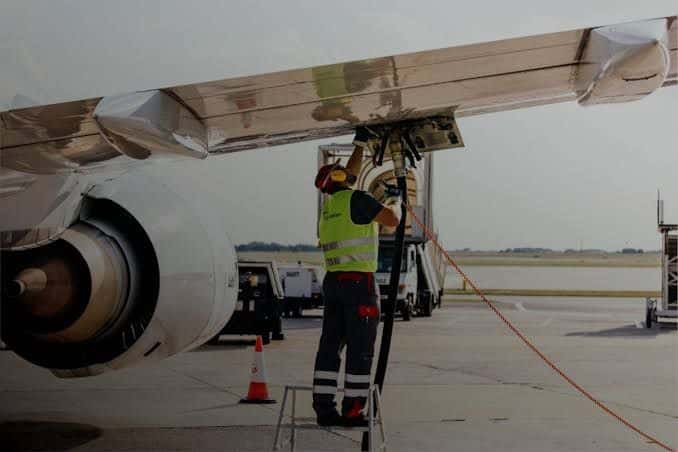
“We must balance growth with control. The proliferation of fuel marketers must not come at the expense of safety or product quality.”
Ogungbangbe also acknowledged improvements in local refining capacity following the operational debut of the Dangote Refinery, which has reduced Nigeria’s dependence on imported aviation fuel.
However, he stressed that quality assurance, infrastructure modernization, and stronger coordination between regulatory agencies remain crucial for long-term sustainability.
Stakeholders Emphasize Oversight and Collaboration
Also speaking at the event, Managing Director of Ndano Energy, Mr. Chris Ndulue, called on the Nigerian Civil Aviation Authority (NCAA) to strengthen its regulatory oversight, particularly regarding the quality of aviation fuel pipeline supply and distribution.
He said that while collaboration among operators is necessary, many firms remain reluctant to share facilities due to past disputes and lack of trust.
“It’s increasingly important that we learn to collaborate,” Ndulue said. “At some airports, we have far too many marketers for the available operations.
Enugu airport, for instance, has five active Jet A1 suppliers — an excessive number given the level of flight activity. Streamlining this will enhance efficiency and safety.”
Ndulue also advised the Federal Airports Authority of Nigeria (FAAN) to exercise more discretion in allocating land to fuel marketers, stressing that over-concentration of depots and fueling facilities poses environmental and safety risks.
Experts Call for Policy Clarity and Long-Term Strategy
Industry experts at the colloquium agreed that the restoration of the aviation fuel pipeline should be part of a broader strategy to modernize Nigeria’s energy logistics.
They urged the Federal Government to partner with private investors under a public-private partnership (PPP) model to ensure sustainable funding and efficient management.
The experts emphasized that reviving the pipeline would not only reduce aviation fuel costs but also improve supply chain reliability for domestic and international airlines, potentially restoring investor confidence in Nigeria’s aviation sector.
“Bringing back the aviation fuel pipeline is not just about convenience — it’s about economic competitiveness,” one panelist noted.
“Airlines operating in Nigeria pay some of the highest fuel costs in Africa. Reducing these costs through efficient infrastructure could make our airports more attractive to foreign carriers and lower fares for passengers.”
Toward a Safer and More Efficient Aviation Sector
The call for the aviation fuel pipeline restoration underscores a broader sentiment across the industry — that Nigeria must modernize its infrastructure to sustain aviation growth.
With air traffic increasing and new airlines entering the market, experts warn that the continued reliance on fuel trucks poses logistical, environmental, and safety challenges that cannot be ignored.
As discussions progress, stakeholders hope that the Federal Government will act decisively to rehabilitate the pipeline and create a regulatory framework that prioritizes efficiency, safety, and competitiveness.