Nigeria’s long quest to achieve industrial self-sufficiency may finally be gaining traction, as the Federal Government has sealed a landmark $400 million partnership with Stellar Steel Company Limited to accelerate steel production in Nigeria.
The agreement, signed in Abuja on Wednesday, is one of the largest foreign direct investments in the nation’s steel sector in nearly ten years.
The deal, involving the Federal Ministry of Steel Development and Stellar Steel—a Chinese-backed firm—aims to establish a world-class steel plant in Ewekoro, Ogun State.
The project, backed by Chinese parent companies Galaxy Group and RSIN Group, both headquartered in Fuzhou, Fujian Province, is expected to commence operations by mid-2026.
A statement by the ministry’s Public Information Officer, Ijomah Opia, described the collaboration as a “Joint Strategic Cooperation Declaration” designed to revitalise steel production in Nigeria and cut the nation’s dependence on imported steel products.
“The company has committed approximately $450 million to the Ewekoro project, which represents a turning point for Nigeria’s industrial growth,” the statement said.
$400m Investment to Catalyse Steel Sector Growth
The Minister of Steel Development, Prince Shuaibu Abubakar Audu, who signed on behalf of the Federal Government, described the partnership as a “milestone agreement” that aligns with the administration’s target of achieving 10 million tonnes of crude steel output per annum by 2030.
According to him, steel production in Nigeria is central to the country’s economic diversification drive and the ongoing push to strengthen local manufacturing capacity.
“This agreement will not only drive industrial expansion but also reduce our reliance on steel imports, saving the country over $1 billion in foreign exchange annually,” Audu stated.
The ministry also pledged to provide necessary policy support, including inclusion of Stellar Steel’s logistics projects in the National Infrastructure Plan, and access to fiscal incentives under Nigeria’s investment promotion framework.
Key Features of the Agreement
The new deal is expected to have a far-reaching impact on steel production in Nigeria, addressing long-standing challenges that have hindered the country’s industrialisation goals. Among the key benefits outlined by the ministry are:
- Development of a domestic iron ore supply chain, reducing import dependence.
- Creation of over 2,000 direct and 20,000 indirect jobs across the steel value chain.
- Promotion of green steel production using energy-efficient technology.
- Strengthening Nigeria’s position as a regional hub for steel manufacturing in West Africa.
Prince Audu also revealed that Stellar Steel would prioritise local recruitment and training, collaborating with Nigerian universities to develop technical and managerial expertise in metallurgy and industrial engineering.
“This partnership signifies a new era of sustainable industrial growth,” he said. “Our goal is to establish Nigeria as Africa’s leading steel-producing nation by the end of this decade.”
Stellar Steel Commits to Timely Delivery
Responding on behalf of Stellar Steel, Mr Li, President of Inner Galaxy Group, reaffirmed the company’s commitment to executing the project on schedule and maintaining international safety standards.
Mr Li, who led a high-level delegation of Chinese investors, including Mr You Xiastian (Vice Chairman of RSIN Group) and Mr Jackie Den (Vice President of Inner Galaxy Group), said the partnership represented a long-term commitment to the Nigerian economy.
We believe in Nigeria’s industrial future,” Li said.
“Our investment will not only enhance steel capacity but also encourage technology transfer and human capital development.”
He noted that the project would leverage modern steelmaking technologies to reduce emissions and ensure sustainable operations.
Addressing Nigeria’s Long-Standing Steel Deficit
Nigeria’s steel production history has been marked by missed opportunities. Despite having one of Africa’s largest iron ore reserves, the country still imports over $4 billion worth of steel products annually, meeting less than 10 per cent of domestic demand through local producers.
Analysts say that with the Ajaokuta Steel Complex still dormant after decades of public investment, the entry of private players like Stellar Steel could redefine the sector’s future.
“If implemented effectively, this project could fill the gap Ajaokuta failed to bridge,” said an industry observer, adding that a functioning Ewekoro plant would have ripple effects across construction, manufacturing, and energy sectors.
The Federal Government believes that with policy consistency, infrastructure support, and strategic partnerships, steel production in Nigeria could transform into a key driver of GDP growth and export earnings.
Industry experts view the Stellar Steel partnership as a strong signal of investor confidence in Nigeria’s industrial policy under President Bola Tinubu’s administration.
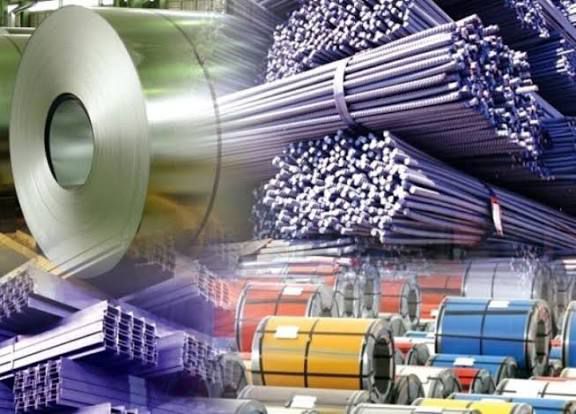
The renewed focus on steel production in Nigeria is expected to stimulate the construction of rail lines, bridges, and automobiles, driving downstream industries and boosting employment.
For now, the focus remains on timely project execution. The Federal Ministry of Steel Development has committed to monitoring progress and ensuring compliance with regulatory standards.
“This is not just another investment pledge,” Minister Audu said.
“It is a practical step towards making Nigeria self-sufficient in steel, which will, in turn, accelerate industrialisation and job creation.”
As Nigeria takes concrete steps to reduce its dependence on imports and attract sustainable investments, the $400 million Ewekoro project could become a defining chapter in the nation’s industrial revival story—marking the dawn of a new era for steel production in Nigeria.
About The Author