

Nigeria’s ambition to achieve stable and uninterrupted electricity supply is facing a significant funding reality, as the Federal Government projects a massive capital requirement to transform the country’s struggling power ecosystem.
Industry stakeholders say the scale of investment required underscores both the depth of structural deficiencies and the urgency of coordinated reforms across generation, transmission, and distribution segments.
Nigeria power sector investment needs surge past $100bn
The Federal Government has disclosed that Nigeria power sector investment needs have exceeded $100bn, covering the entire electricity value chain required to deliver reliable, round-the-clock power supply to homes and businesses.
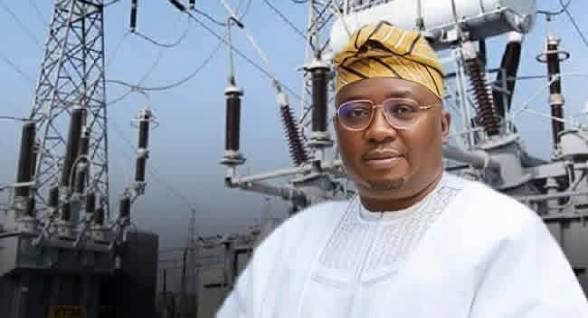
Speaking on the development, the Minister of Power, Adebayo Adelabu, said the estimate reflects the cumulative financial requirements across power generation, transmission infrastructure, distribution networks, and gas supply systems.
According to him, achieving a functional electricity market capable of supporting economic growth will depend on sustained capital inflows from both the public and private sectors.
He explained that Nigeria’s energy expansion targets include adding at least 20,000 megawatts of generation capacity, which alone would require approximately $30bn based on global cost benchmarks. This estimate assumes an average capital expenditure of $1.5bn per 1,000MW plant, highlighting the capital-intensive nature of power generation projects.
Beyond generation, the minister noted that transmission infrastructure would require an additional $20bn to ensure that electricity produced can be efficiently evacuated across the national grid. Distribution networks, which connect power to end-users, are projected to require about $25bn, while gas infrastructure—critical for fueling thermal power plants—would demand roughly $22bn.
Combined, these figures reinforce the scale of Nigeria power sector investment needs and the complexity of achieving energy security in a country with a population exceeding 200 million.
Adelabu acknowledged recent disruptions in electricity supply nationwide, attributing them largely to gas supply constraints affecting a significant portion of the country’s generation fleet. He noted that about 75 per cent of Nigeria’s power plants depend on gas, making the sector highly vulnerable to fluctuations in supply.
“Even the most efficient generation infrastructure cannot operate without consistent fuel supply,” he said, pointing to global energy market disruptions and domestic pipeline challenges as key contributing factors.
Despite these constraints, the government highlighted measurable progress within the sector over the past two years. Nigeria recorded a peak generation of 6,001 megawatts in 2025, the highest in its history, alongside a transmission peak of 5,801 megawatts.
Installed generation capacity has also increased from 13,000MW in 2023 to approximately 14,400MW in 2025, driven by new projects and the rehabilitation of existing plants. Among these is the completion of the Zungeru hydropower project, which added 700MW to the national grid.
Transmission capacity has similarly improved, with the national grid now able to wheel up to 8,500 megawatts, compared to about 5,000MW two years earlier. The government aims to raise this capacity to 15,000MW within the next three years through ongoing infrastructure upgrades, including the Presidential Power Initiative.
Officials say these improvements have also contributed to a reduction in grid collapses, which previously averaged between 12 and 15 incidents annually. Recent data suggests this has dropped significantly, reflecting enhanced stability within the transmission network.
Financial reforms have also played a critical role in stabilising the sector. The government initiated a N4tn debt restructuring plan aimed at clearing longstanding obligations to power generation companies. A portion of this debt has already been settled through bond market financing, improving liquidity across the value chain.
Additionally, the introduction of cost-reflective tariffs for a segment of electricity consumers has significantly boosted sector revenues. Industry figures indicate that total revenue grew from about N1tn in 2023 to over N2.3tn in 2025, allowing for increased payments to generation companies and reducing the burden of subsidies on government finances.
Experts note that these reforms are essential to addressing the liquidity crisis that has historically constrained investment in the sector. Without improved revenue assurance, private investors have remained hesitant to commit capital at the scale required.
However, analysts warn that infrastructure alone will not resolve Nigeria’s electricity challenges. Structural coordination across key ministries and agencies—including power, petroleum, and environment—is critical to ensuring consistent gas supply and operational efficiency.
A major concern remains the absence of firm gas supply agreements for most power plants. Reports indicate that only a small fraction of generating companies operate under guaranteed gas contracts, leaving the majority dependent on inconsistent supply arrangements.
This structural weakness continues to undermine generation capacity and highlights the interconnected nature of Nigeria power sector investment needs.
The government has emphasised a phased approach to sector development, focusing on upgrading infrastructure across different service bands. This strategy aims to gradually expand access to reliable electricity, with projections suggesting that up to 70 per cent of consumers could enjoy improved supply within a few years if investments are sustained.
Comparatively, officials noted that countries with smaller populations, such as South Africa, are already mobilising tens of billions of dollars in private capital for power sector reforms. Nigeria’s significantly larger population and energy demand naturally translate into higher investment requirements.
Industry stakeholders argue that unlocking the required capital will depend heavily on regulatory certainty, improved market transparency, and risk mitigation mechanisms that can attract long-term investors.
For Nigeria, the stakes are high. Reliable electricity remains a critical enabler of industrialisation, economic diversification, and job creation. Persistent power shortages have long constrained productivity, increased business costs, and limited the country’s global competitiveness.
As the government pushes forward with reforms, the focus is shifting toward execution—ensuring that policy frameworks translate into tangible improvements in power supply.
While the $100bn estimate highlights the magnitude of the challenge, it also signals opportunity. With the right mix of policy consistency, private sector participation, and infrastructure development, analysts believe Nigeria can gradually close its power deficit and build a more resilient energy system.
About The Author
