

Nigeria’s economy is expected to grow by 3.4 percent in 2025, driven largely by strong performance in the services sector, according to a new mid-year outlook report by FBNQuest Merchant Bank. However, the forecast also anticipates further depreciation of the naira, projecting it will close the year at N1,662 to the US dollar.

The Lagos-based research and investment banking firm, in its report titled “Steering the Course from Volatility to Stability,” stated that sectors like ICT and financial services will be pivotal to this growth, aided by improved data collection and positive momentum from GDP rebasing.
“We forecast a steady continuation of Nigeria’s economic recovery, with real GDP growth forecast at 3.4% in 2025,” the analysts wrote, aligning their projection with the International Monetary Fund’s (IMF) revised outlook, which also upgraded Nigeria’s expected growth from 3% to 3.4%.
This optimism follows a relatively positive Q1 2025 performance, during which Nigeria’s GDP grew by 3.13% — up from 2.27% in Q1 2024 — despite a quarter-on-quarter contraction of 0.63%. The services sector remained the largest contributor, accounting for 57.5% of total GDP.
The GDP rebasing exercise by the National Bureau of Statistics (NBS) earlier in the year increased Nigeria’s official GDP by over 30%, pushing the country’s nominal economic size to $251 billion, though it still leaves Nigeria trailing its African peers in terms of GDP per capita.
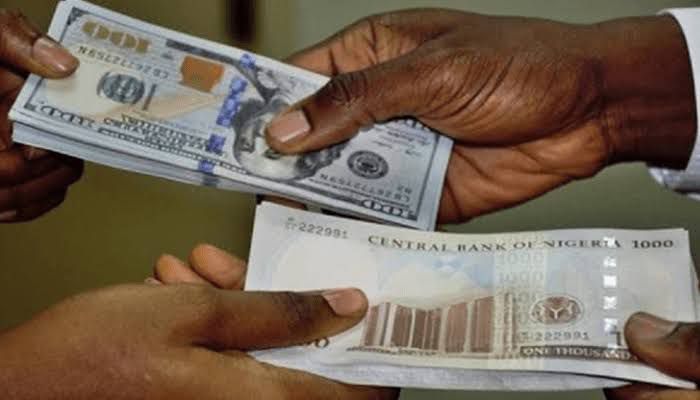
On the foreign exchange front, FBNQuest expects the naira to depreciate further to N1,662/$ by the end of the year. The analysts cite uneven foreign portfolio inflows and growing external risks as key reasons for the local currency’s vulnerability.
“The CBN’s sustained interventions have helped stabilise the currency, but at the cost of depleting reserves,” the report noted.
Since January, the naira has traded within a relatively narrow band, averaging N1,544.25/$, with a brief strengthening to N1,477.72/$. It closed at N1,533.74/$ on Friday, August 1.
The analysts cautioned that the naira’s short-term stability may be threatened unless structural FX liquidity issues are resolved. This includes reducing reliance on foreign portfolio inflows and strengthening export diversification.
Despite recent improvements, inflation remains a key concern. FBNQuest projects that Nigeria’s headline inflation rate could rise to 32.3% by December 2025 due to a low base effect from December 2024 — a technical spike that doesn’t reflect new inflationary pressures, according to the report.
However, analysts are optimistic that inflation will decline afterwards, supported by moderating fuel and food prices. June 2025 marked the third straight month of declining inflation, with the rate falling to 22.2%, the lowest in nearly two years.
In light of elevated inflation and FX risks, the report expects the Central Bank of Nigeria (CBN) to maintain a tight monetary policy stance through the rest of the year.
“A hold stance remains our base case, but we acknowledge the possibility of modest policy easing later in the year — likely limited to 25–50bps if inflation conditions soften materially,” FBNQuest stated.
The CBN has so far relied on high-interest rates and targeted FX interventions to lure foreign investors and stabilize the naira. However, this has come at the expense of slowing credit growth and increasing debt service costs.
The forecast underscores Nigeria’s struggle to balance economic growth with currency stability and inflation management. While the services sector continues to be a strong growth engine, risks from FX market instability, inflation volatility, and external shocks remain pressing.
FBNQuest’s outlook suggests that achieving higher growth — such as the Federal Government’s ambitious 7% GDP growth target — would require unlocking value in other underutilized sectors, particularly oil and gas, manufacturing, and agriculture.
Bottom line: Nigeria’s economy is on track to maintain its recovery trajectory in 2025, but fiscal and monetary policymakers face tough trade-offs between growth, inflation, and currency stability. How they manage these tensions will define the pace and quality of the country’s economic transformation in the coming months.
About the Author


