
Europe taps Dangote Refinery amid deepening jet fuel crisis
A deepening global aviation fuel shortage has forced Europe to look beyond its traditional supply chains, with Nigeria’s Dangote Refinery emerging as a critical alternative source amid escalating geopolitical tensions in the Middle East.
The disruption, largely linked to instability around the Strait of Hormuz, has significantly constrained the flow of refined petroleum products from the Persian Gulf, triggering a sharp spike in jet fuel prices and intensifying competition among buyers.
Industry data indicates that European markets are grappling with a widening supply gap, as traditional suppliers struggle to maintain consistent output and shipping routes become increasingly volatile.
Supply disruption reshapes global fuel trade
The jet fuel crisis has exposed Europe’s vulnerability to geopolitical shocks, particularly its reliance on imports from the Middle East. With shipments from the Gulf region facing logistical and security challenges, energy traders have been forced to seek alternative supply routes.
While the Atlantic Basin—including the United States and parts of West Africa—has attempted to bridge the gap, analysts note that these regions lack the immediate capacity to fully offset the disruption.
This supply imbalance has led to increased demand for high-capacity refineries capable of producing aviation-grade fuel at scale, placing the Dangote Refinery at the centre of global attention.
Dangote Refinery’s strategic positioning
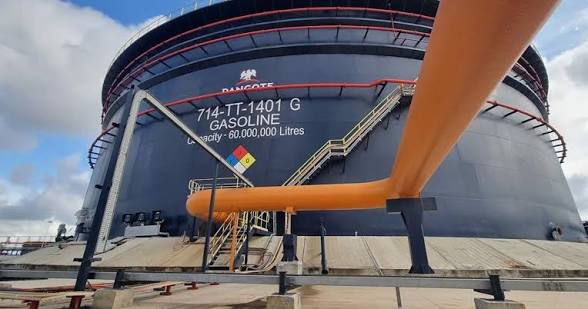
Owned by Africa’s richest man, Aliko Dangote, the refinery has rapidly evolved into one of the largest single-train refining facilities in the world, with the capacity to process 650,000 barrels of crude oil per day.
Since reaching full operational capacity earlier in 2026, the facility has expanded its export footprint, supplying refined products across Africa and increasingly attracting interest from international markets.
Energy experts say the refinery’s scale, proximity to European markets, and ability to produce high-quality fuels meeting global standards make it a viable alternative supplier during the current crisis.
“The Dangote Refinery is uniquely positioned to respond to this type of supply shock,” a market analyst said. “Its location in West Africa offers shorter shipping routes compared to the Middle East, which is a significant advantage in times of disruption.”
Rising demand from European buyers
European importers, facing dwindling inventories and rising demand for air travel, are reportedly increasing engagements with suppliers in the Atlantic Basin, including Nigeria.
The shift marks a notable change in global trade flows, as Europe traditionally relies heavily on Middle Eastern refiners for its jet fuel requirements.
With aviation activity rebounding and summer travel demand approaching, the urgency to secure reliable fuel supplies has intensified.
Market intelligence suggests that spot cargoes from alternative regions are being snapped up quickly, with buyers willing to pay premium prices to avoid supply shortfalls.
Price volatility and economic implications
The tightening supply has pushed jet fuel prices to multi-year highs, adding pressure on airlines already grappling with rising operational costs.
Industry stakeholders warn that sustained price increases could lead to higher airfares, reduced flight frequencies, and broader economic ripple effects across tourism and logistics sectors.
For Nigeria, however, the situation presents a significant opportunity. Increased exports of refined products could boost foreign exchange earnings and strengthen the country’s position in the global energy market.
Analysts believe that if sustained, this trend could accelerate Nigeria’s transition from a crude oil exporter to a major player in refined petroleum trade.
Challenges and capacity constraints
Despite its advantages, the Dangote Refinery faces the challenge of balancing domestic supply obligations with rising international demand.
Nigeria’s local market still requires substantial volumes of refined products, and any significant diversion of output to export markets could raise concerns about domestic availability.
However, industry insiders insist that the refinery’s production strategy was designed to accommodate both domestic consumption and export commitments.
“There is sufficient capacity to serve multiple markets,” a source familiar with the refinery’s operations said. “The facility was built with scalability and flexibility in mind.”
Long-term impact on global energy dynamics
The current crisis could have lasting implications for global energy trade patterns. As buyers diversify supply sources to mitigate risk, regions like West Africa may gain greater prominence in the global refining landscape.
For Europe, the shift highlights the need to reassess energy security strategies and reduce overdependence on specific regions.
For Nigeria, it represents an opportunity to consolidate its position as a reliable supplier of refined products, leveraging its strategic location and growing refining capacity.
A pivotal moment for Nigeria’s energy sector
The surge in demand from Europe underscores the strategic importance of the Dangote Refinery in the evolving global energy market.
As geopolitical uncertainties continue to reshape supply chains, the refinery’s role is expected to expand, positioning Nigeria as a key player in addressing global fuel shortages.
Ultimately, the ability of Nigeria to sustain this momentum will depend on maintaining production efficiency, ensuring domestic supply stability, and capitalising on emerging export opportunities.
For now, Europe’s pivot to Nigeria signals a new chapter in global energy trade—one where African refining capacity plays a central role in stabilising international markets.
About The Author

4777cxlogin, logging in was pretty smooth so far. I’m inside now! Find it here: 4777cxlogin
jljl388login is pretty straightforward. Logged in no probs. You can log in too right here: jljl388login
Is hindubetgame any good? I’m always looking for new options and this one popped up. Looking for honest opinions! Give it a look yourself at hindubetgame