Europe is preparing to lead a multinational force in Ukraine under a bold US-backed proposal for security guarantees, a move that could mark a significant step toward ending years of devastating conflict.
Talks in Berlin this week between Volodymyr Zelenskyy, European leaders, and US envoys suggested real progress, although crucial differences over the future of Ukrainian territories occupied by Russia remain unresolved.
The proposed multinational force would include European troops working alongside US support to assist in regenerating Ukraine’s armed forces, securing the country’s skies, and ensuring safer maritime operations.
Officials said the coalition would operate within Ukraine, signaling a tangible Western commitment to the country’s defense while stopping short of direct US troop deployments.
US officials emphasized that the United States would oversee a ceasefire monitoring and verification mechanism, designed to provide early warning of any renewed Russian aggression.
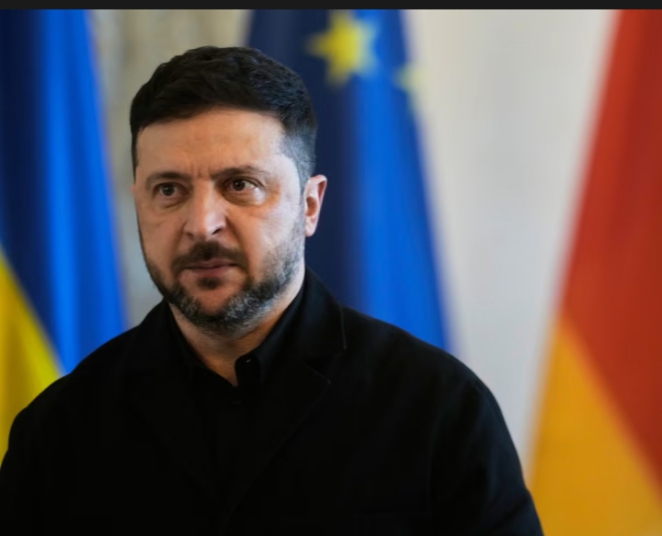
This arrangement aims to prevent escalation while giving Ukraine confidence in the durability of international support. The package is being described as the most robust set of security guarantees Ukraine has ever seen, resembling NATO’s Article 5 protections.
President Zelenskyy described the discussions as challenging but productive, noting that they brought “real progress” on the issue of security guarantees. However, he acknowledged that differences remain over the eastern Donbas region, where Russia still occupies significant territory.
“There has been sufficient dialogue on the territory, and frankly, we still have different positions,” he told reporters after the talks.
Donald Trump, who engaged in “very long and very good” conversations with Zelenskyy and European leaders, hinted at possible compromises over Ukraine’s eastern regions but did not disclose details of direct talks with Vladimir Putin.
Trump suggested that Ukraine might need to make concessions on Donbas in exchange for the security guarantees, a position Zelenskyy has previously resisted.
European leaders, including Germany’s Friedrich Merz, France’s Emmanuel Macron, and the UK’s Keir Starmer, stressed their readiness to contribute forces and resources.
In a joint statement, they confirmed that a coalition of the willing, supported by the United States, could play a central role in stabilizing Ukraine and deterring future Russian incursions.
The proposed security guarantees would allow Ukraine to maintain a standing army of 800,000 troops, while European countries commit to legally binding measures to restore peace in the event of renewed aggression.
This comprehensive approach is designed to reassure Kyiv that its sovereignty will be defended without requiring NATO membership, which has been a point of contention with Moscow.
The United States’ involvement is primarily in a supervisory and logistical capacity, providing oversight of ceasefire measures and early-warning systems.
US officials stressed that no American ground forces would be sent as part of the deal, though Washington is actively engaged in shaping the framework to prevent further escalation.
Senior diplomats Steve Witkoff and Jared Kushner played key roles in facilitating discussions in Berlin, working to find common ground between Ukraine and European partners.
The Berlin meetings highlighted Germany’s central role as host of the negotiations, with Merz emphasizing that the legal and material guarantees on the table were “really considerable.”
The Ukrainian president welcomed the discussions as productive, praising the efforts to craft a peace plan that could endure while avoiding further territorial concessions.
Despite progress, Moscow remains cautious. Kremlin spokesperson Dmitry Peskov reiterated Russia’s view that NATO expansion, particularly Ukraine’s aspirations to join the alliance, represents a major security threat.
Russia is awaiting detailed briefings on the Berlin discussions, and officials have signaled that Moscow’s position on the occupied territories will remain a sticking point.
Zelenskyy indicated he would consider pausing Ukraine’s NATO membership ambitions if legally binding Western security guarantees are implemented.
Such a move could satisfy some of Moscow’s security concerns while maintaining Ukraine’s sovereignty and defensive capabilities.
Yet questions about the Zaporizhzhia nuclear power plant and front-line arrangements highlight the continuing complexity of negotiations.
The security package has been praised by US officials as unprecedented in strength, intended to prevent renewed aggression and reassure Ukraine of long-term support.
European leaders also emphasized political and economic dimensions, including backing Ukraine’s EU accession and exploring the use of frozen Russian assets to fund reconstruction.
Britain’s Prime Minister Keir Starmer underscored the importance of Western guarantees, warning that any deal lacking robust security arrangements would be doomed.
“Putin has shown time and again that he will keep coming back for more if he sees the chance,” Starmer said, highlighting the need for enforceable commitments from European allies.
Meanwhile, MI6 head Blaise Metreweli described Russia as aggressive and expansionist in her first public remarks, reinforcing the argument for a multinational deterrent force in Ukraine.
The European Union is also working to finalize a long-term plan to finance Ukraine’s recovery, a process that will involve careful coordination among member states.
The establishment of an International Claims Commission will further signal Europe’s commitment to Ukraine, addressing compensation for billions of dollars in damage caused by Russian attacks and alleged war crimes. Such measures aim to reinforce the credibility of international guarantees and deter future violations.
Trump has set ambitious timelines, targeting Christmas as a moment for a “full understanding” on the peace plan. This adds pressure to negotiators to reach agreements on security guarantees, territorial arrangements, and operational oversight, while navigating deep-seated disagreements over the Donbas region.
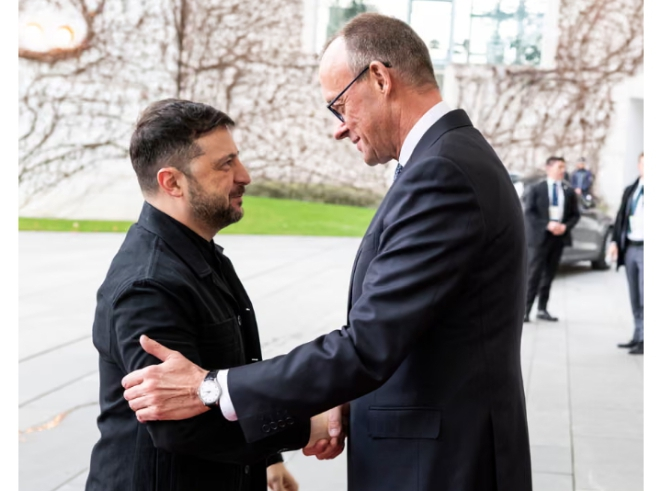
Although obstacles remain, officials expressed cautious optimism that a workable framework could emerge. The Berlin talks marked the closest alignment toward a sustainable peace process since Russia’s large-scale invasion in 2022.
The combination of European military leadership, US-backed oversight, and strong legal guarantees could provide the structure necessary to protect Ukraine’s sovereignty and restore stability to the region.
If successfully implemented, Europe leading a multinational force in Ukraine would represent a historic precedent for collective security and international cooperation. The arrangement could deter future Russian aggression while setting a benchmark for Western commitment to allied nations facing threats.
For Kyiv, the proposed plan offers the possibility of robust defense without surrendering territory unnecessarily, and for Moscow, it provides a framework for negotiations with legal and operational clarity.
The coming weeks will be decisive. Leaders must resolve disagreements on Donbas, nuclear power operations, and the mechanisms for enforcement of security guarantees.
While the US, European allies, and Ukraine appear aligned on the overarching strategy, the details will ultimately determine whether this initiative can deliver a durable peace or simply mark another round of stalled diplomacy.
In the meantime, the talks themselves symbolize a renewed focus on collaboration, signaling that Europe is ready to shoulder significant responsibility in global security matters.
With the support of the United States, this multinational force could become both a shield and a stabilizer, providing Ukraine with tangible protection and offering Moscow a predictable, enforceable framework for engagement.
As discussions continue, the stakes extend far beyond Ukraine. The outcome will influence European security architecture, NATO’s strategic posture, and the broader international balance of power.
The willingness of European nations to lead a multinational effort, backed by US oversight, may redefine how the West responds collectively to aggression in the 21st century.
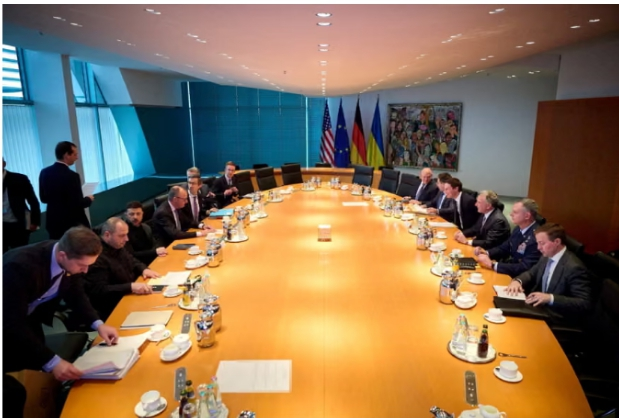
While challenges persist, the proposed multinational force and US-backed security guarantees represent a historic convergence of diplomacy, military planning, and strategic foresight.
If realized, this plan could help Ukraine secure its future while offering Europe a critical opportunity to assert leadership in defending international norms and preventing further destabilization on the continent.
Read also: Trump pushes Nato-style security guarantee for Ukraine as peace talks advance
About The Author