The European Union has unveiled a groundbreaking plan to raise 90 billion euros ($105bn) for Ukraine’s defense, proposing the use of frozen Russian assets or international loans.
The plan, announced by the European Commission on Wednesday, offers two approaches to support Ukraine’s war effort against Russia in 2026 and 2027.
The first option involves the EU borrowing funds from private markets to lend to Kyiv, a more conventional method of financing the country’s ongoing military and reconstruction needs.
The second, preferred approach is a “reparations loan,” which would leverage Russian state assets frozen in the EU since Moscow’s 2022 invasion of Ukraine, marking a historic financial initiative.
Commission officials emphasized that these options demonstrate Europe’s commitment not only to defending Ukraine but also to securing broader European stability and promoting long-term peace.
“Two-thirds of Ukraine’s financing needs for the next two years could be met through this plan, totaling 90 billion euros,” Commission President Ursula von der Leyen told reporters in Brussels.
She added that the remaining one-third of Ukraine’s funding requirements would be expected from international partners, further distributing financial responsibility across supportive nations.
Von der Leyen stressed the plan’s dual purpose: ensuring Ukraine can defend itself and incentivizing Russia to engage seriously in peace negotiations to end the ongoing conflict.
The reparations loan proposal considers Belgium’s concerns, whose financial institution Euroclear holds the majority of frozen Russian assets, but Brussels has yet to fully endorse the plan.
France, Germany, Sweden, and Cyprus also hold significant Russian assets, which could be tapped under the EU scheme to fund loans to Ukraine, officials indicated.
The Commission emphasized that the loan would not constitute confiscation; Ukraine would only repay the amount if Russia eventually fulfills reparations obligations for war damage inflicted.
Approval of the frozen assets plan would require 15 of 27 EU member states to vote in favor, a threshold the Commission hopes to achieve at a December 18 EU summit.
The alternative of borrowing from international markets generally requires unanimity among EU members, a potential obstacle given Hungary’s longstanding pro-Russia stance and previous opposition to Ukrainian funding.
Belgium has consistently voiced skepticism over the reparations loan, warning that using 140 billion euros in frozen Russian assets could risk legal disputes and complicate peace negotiations.
Brussels has demanded that EU members agree to cover all potential legal costs stemming from Russian lawsuits challenging the loan, highlighting the unprecedented nature of the plan.
Belgian Foreign Minister Maxime Prevot described the proposal as risky, asserting that the EU should instead pursue market borrowing to meet Ukraine’s urgent financial needs without provoking legal challenges.
Russia has condemned the EU initiative, describing any use of its frozen assets as theft and threatening up to 50 years of litigation should the plan be implemented.
VTB Bank head Andrei Kostin warned that the bloc’s attempt to access Russian funds could trigger protracted legal battles, signaling Moscow’s firm opposition to any asset-based funding.
Despite legal uncertainties, von der Leyen noted that U.S. Treasury Secretary Scott Bessent has expressed support for the reparations loan, reflecting transatlantic backing for Ukraine’s financial security.
The EU proposal exists alongside broader efforts to reduce dependence on Russian energy, with Brussels announcing a phase-out of Russian gas imports by late 2027.
The agreement sets a timeline for halting LNG imports by 2026 and pipeline gas by November 2027, aiming to reduce reliance on a supplier perceived as politically and economically unreliable.
Von der Leyen described the energy move as a step toward full European energy independence, claiming it would deplete funds Russia relies on for military operations in Ukraine.
Hungary and Slovakia, heavily reliant on Russian energy, have voiced opposition, warning that alternatives could increase costs and destabilize their national economies.
The EU plan to fund Ukraine with frozen Russian assets marks an unprecedented legal and financial maneuver, one that could reshape Europe’s approach to conflict funding.
Supporters argue the plan is both a strategic investment in Europe’s security and a method to accelerate peace by increasing the costs of Russia’s war of aggression.
Critics caution that legal challenges, both domestic and international, could delay or derail funding, leaving Ukraine in a vulnerable position during critical military campaigns.
The reparations loan is distinct from standard sanctions, designed to directly benefit Ukraine rather than punish Russia, though Moscow perceives any such measures as illegitimate.
The proposal also complements ongoing discussions about U.S. and EU coordination in Ukraine’s financing, including previously suggested frameworks under the Trump administration’s 28-point peace plan.
Observers note that leveraging frozen Russian assets for loans could establish a precedent for holding aggressor states financially accountable in future conflicts.
Ukrainian officials have welcomed the EU plan, framing it as a demonstration of European solidarity and a tool to sustain military operations and civil administration in war-affected regions.
Von der Leyen’s office stressed that the loan mechanism allows Ukraine to negotiate peace from a position of strength, reinforcing the country’s sovereignty and international standing.
With EU member states divided, Brussels faces a delicate balancing act between advancing Ukraine’s interests and managing internal legal, political, and energy-related concerns.
The European Commission’s plan represents both an economic and diplomatic gamble, seeking to leverage frozen assets while maintaining unity among EU nations with differing views on Russia.
Legal scholars highlight the unprecedented nature of the reparations loan, noting the potential for long-term litigation but also the symbolic impact of using aggressor funds to aid victims of war.
Ukraine’s leaders have repeatedly called for European partners to accelerate financial support, emphasizing that sustained funding is critical to maintaining frontline resilience and civilian services.
As the EU navigates approval procedures, December 18 will be a key date for member states to formally decide whether to commit to the frozen assets loan or alternative market borrowing.
The outcome could influence the broader geopolitical balance, including NATO support, transatlantic relations, and Russia’s strategic calculations in ongoing peace negotiations.
Analysts predict that successful adoption of the EU plan could increase pressure on Russia to negotiate seriously, while delays or rejections might embolden Moscow and prolong hostilities.
Beyond Ukraine, the proposal raises questions about the EU’s capacity to unify behind innovative financial instruments in response to global crises, setting a potential model for future conflicts.
Von der Leyen concluded that the EU’s approach reflects both solidarity with Ukraine and a strategic vision for Europe, combining financial ingenuity with long-term security considerations.
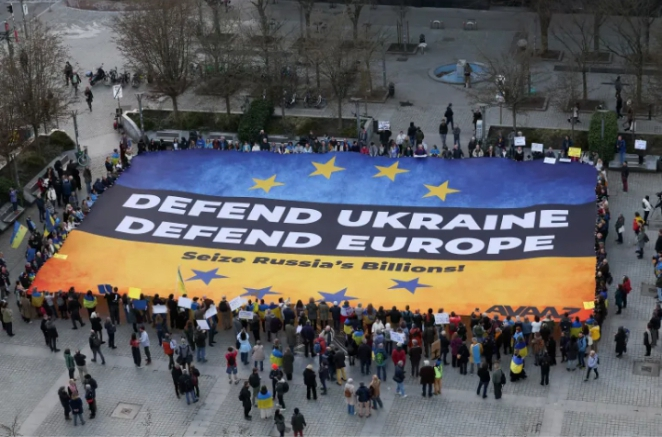
The reparations loan plan remains controversial but signals the EU’s determination to assert influence, sustain Ukraine’s defense, and explore new avenues for conflict accountability.