

Voters in Ecuador have overwhelmingly rejected the return of foreign military bases, with early results showing nearly two-thirds of ballots cast a “no” vote against reopening such installations.
The referendum represents a major political setback for President Daniel Noboa, who has argued that foreign military bases and US military cooperation are critical to combating organized crime.
Noboa addressed the results on X, stating, “We respect the will of the Ecuadorian people. Our commitment to security and justice will continue, with or without foreign military bases.”
The rejection blocks the United States from returning to its former airbase at Manta, which served as a key hub for anti-drug operations along Ecuador’s Pacific coast.
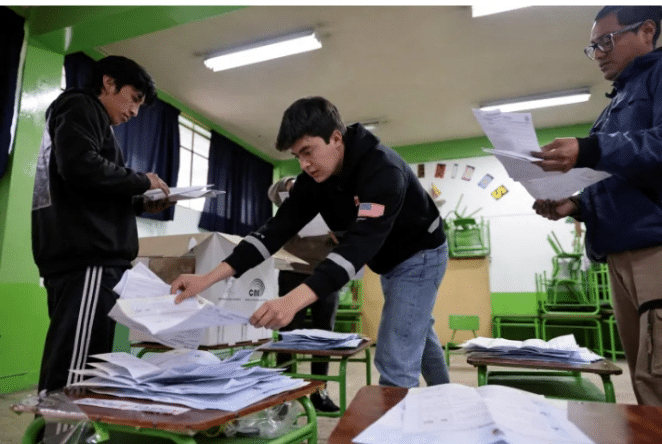
Ecuador first banned foreign military bases in 2008, and voters have consistently expressed concerns about sovereignty, local abuses, and disruptions caused by foreign troops stationed in the country.
Alongside the military base question, citizens voted on a measure to convene a constitutional assembly, which was also rejected, with more than 61 percent of voters opposing a rewrite of Ecuador’s constitution.
Other referendum proposals, including reducing public funding for political parties and cutting the National Assembly from 151 to 73 legislators, were similarly defeated by a wide margin.
The vote occurs amid unprecedented violence in Ecuador, as drug trafficking gangs attack politicians, journalists, and public officials while competing for control over ports and coastal cities.
President Noboa has deployed soldiers in public spaces and prisons, carried out high-profile raids on cartel strongholds, and repeatedly declared states of emergency to address rising crime.
In the first half of 2025, Ecuador recorded 4,619 murders, the highest in recent history, according to the Organized Crime Observatory, highlighting the urgent security challenges facing the country.
The US military has conducted targeted air strikes on suspected drug-smuggling vessels, a policy endorsed by Noboa, but which has drawn criticism from voters wary of foreign interference and civilian harm.
Alessandro Rampietti, reporting from Quito, said Ecuadorians fear the consequences of foreign military bases, recalling incidents such as the sinking of local fishing boats and mistreatment of civilians near past installations.
“People are saying we can protect our country with our own army and police,” Rampietti explained. “The deeper issues are corruption and weak law enforcement, not the absence of foreign military bases.”
Michael Shifter, a senior fellow at the Inter-American Dialogue, called the referendum result a “major setback” for Noboa, noting widespread public mistrust toward the US and its military interventions in Ecuador.
“The Ecuadorian people highly value their sovereignty and independence,” Shifter said. “They are skeptical of US intentions, especially given recent strikes in the Caribbean and Pacific, which have heightened suspicion.”
Despite this, Ecuador remains a strategic partner for US counter-narcotics efforts, and authorities stressed that domestic operations and intelligence-sharing agreements will continue regardless of the referendum outcome.
Last year, Noboa ratified two agreements allowing joint military operations with the US, including aerial interception of illegal shipments of drugs and weapons off Ecuador’s coast.
US Homeland Security Secretary Kristi Noem toured military facilities in Manta and Salinas alongside Noboa, emphasizing the importance of cooperation in combatting regional trafficking networks.
The referendum also reflects long-standing societal concerns about foreign military bases, including accusations of increases in prostitution and civil rights violations in communities near prior installations.
“Ecuadorians remember abuses committed during past foreign military base operations,” Rampietti noted. “Sovereignty and human dignity remain more important than external intervention, even for security purposes.”
Sunday’s vote coincided with the arrest of the notorious drug kingpin “Pipo,” who had faked his death and evaded authorities by hiding in Europe for years.
Interior Minister John Reimberg confirmed that Pipo was detained in Spain through a joint operation between Ecuadorian and Spanish police, highlighting that domestic efforts against gangs remain effective.
Even with foreign military bases blocked, Ecuador will continue intelligence sharing and joint operations with the US, though direct deployment of foreign troops on Ecuadorian soil will not occur.
Analysts argue the referendum underscores the tension between the urgent need to combat crime and the Ecuadorian public’s insistence on sovereignty and national control over security matters.
President Noboa now faces the challenge of balancing public opposition to foreign military bases with rising criminal threats, demanding strengthened local law enforcement and robust legal reforms.
Observers say the vote sends a clear signal: Ecuadorians insist on sovereignty, transparency, and accountability in security measures, rejecting proposals that could compromise independence or civil protections.
“This is a historic moment,” Shifter commented. “Ecuadorians are asserting control over their territory and refusing foreign dominance, even amid serious threats from drug trafficking gangs and criminal networks.”
Ecuador rejects foreign military bases while reaffirming its constitutional ban, reflecting the country’s determination to prioritize local solutions and protect citizens from foreign interference.
The referendum reinforces the political voice of citizens, who clearly prefer domestic strategies over foreign military interventions in combating crime and maintaining national security.
With rising violence, drug trafficking, and complex political pressures, Ecuador must navigate public sentiment while ensuring security, demonstrating that sovereignty can coexist with effective anti-crime operations.
Despite international support, including from the US, Ecuadorians have made it clear that foreign military bases are unacceptable, emphasizing national pride, self-determination, and respect for constitutional principles.
The outcome is likely to influence regional debates on military cooperation, signaling that public consent is essential before foreign forces can operate in sovereign nations for security purposes.
Ecuador rejects foreign military bases, demonstrating its commitment to constitutional sovereignty while signaling to regional neighbors that domestic control over military affairs is non-negotiable.
About the Author





Thanks for sharing. I read many of your blog posts, cool, your blog is very good.
Thank you