

Federal High Court in Abakaliki nullifies Ebonyi local government elections, ruling they breached the Electoral Act and ordering fresh polls in line with law.
The Federal High Court sitting in Abakaliki, the capital of Ebonyi State, has declared the Ebonyi local government elections conducted in July 2024 null and void.
The court ruled that the elections, which brought the current local council chairmen and councillors into office, violated key provisions of the Electoral Act and therefore could not stand.
Delivering the judgment, Justice Hillary Oshomah held that the Ebonyi local government elections failed to comply with the constitutional framework and established electoral guidelines.
According to him, the exercise conducted by the Ebonyi State Independent Electoral Commission (EBSIEC) was fraught with irregularities, absence of transparency, and disregard for statutory procedures.
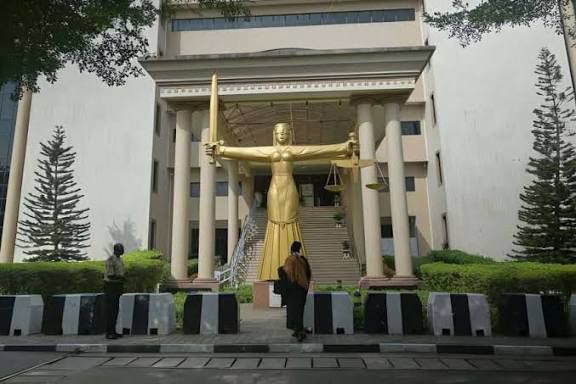
Justice Oshomah emphasized that the integrity of any democratic election is tied to the rule of law.
He noted that both the Electoral Act and the Nigerian Constitution clearly outline procedures for credible local government polls, and any deviation from those standards automatically invalidates the outcome.
As a result, the court voided and cancelled the Ebonyi local government elections, declaring that the chairmen and councillors produced through that process had no legal legitimacy to occupy public office.
The judge further ordered that EBSIEC and the Ebonyi State Government—listed as the second and third respondents—must not organize any future local elections unless they strictly adhere to the provisions of the law.
The case was filed by two plaintiffs, represented by counsels Hamilton Ogbodo and Mudi Erhenede.
They had approached the court to challenge what they described as a “sham election” that excluded opposition parties and failed to meet the minimum requirements for democratic participation.
The plaintiffs argued that the conduct of EBSIEC undermined fairness, transparency, and citizens’ right to choose their leaders freely.
In his detailed ruling, Justice Oshomah granted most of the reliefs sought by the plaintiffs and issued consequential orders reinforcing the supremacy of the law.
He stressed that electoral bodies must be independent, impartial, and guided by the principles of justice, rather than political influence or state interference.
Reacting to the judgment, counsel to the first plaintiff, Samuel Udeogu, hailed the court for what he called a “courageous affirmation of democracy.”
According to him, the decision was a victory not only for his clients but also for all Nigerians who believe in the sanctity of free and fair elections.
“This judgment has reaffirmed that the judiciary remains the last hope of the common man.
“The ruling on the Ebonyi local government elections shows that impunity has limits and that those who manipulate electoral processes must be held accountable,” Udeogu said.
Legal analysts have described the judgment as a watershed in Nigeria’s democratic evolution.
Constitutional lawyer Dr. Nnamdi Okorie noted that state governments often compromise the independence of their electoral commissions to achieve predetermined results.
He commended the Federal High Court for upholding the rule of law, saying the verdict would discourage future abuses of electoral power.
“Many local government elections in Nigeria have been reduced to political rituals, often won overwhelmingly by ruling parties.
“This ruling on the Ebonyi local government elections is a reminder that democracy must not be a one-party affair. It sets a precedent that other states must emulate if grassroots democracy is to thrive,” Dr. Okorie said.
Civil society groups also welcomed the decision, describing it as a victory for accountability and democratic renewal.
The Coalition for Electoral Integrity (CEI), in a statement released in Abakaliki, praised Justice Oshomah for delivering a fair and fearless verdict.
The organization urged the Ebonyi State Government to respect the ruling and prepare for a credible electoral process that reflects the true will of the people.
CEI spokesperson, Chika Nwankwo, said: “This judgment restores confidence in the judiciary and in the democratic process. It signals an end to the culture of impunity where local government elections are manipulated. The people of Ebonyi deserve a genuine opportunity to elect their leaders freely.”
Observers believe the nullification of the Ebonyi local government elections will reshape the state’s political environment.
Political parties are now expected to return to the drawing board to prepare for possible fresh elections under stricter legal supervision.
The decision also highlights the need for broader reforms in state electoral commissions across Nigeria to ensure their independence from executive control.
As of the time of reporting, the Ebonyi State Government and the EBSIEC have not issued official statements regarding the court ruling.
However, sources within the government indicate that discussions are underway on whether to appeal the decision.
Legal experts note that an appeal remains a constitutional right, but compliance with the current judgment is mandatory until overturned by a higher court.
Meanwhile, many residents of Ebonyi State have expressed satisfaction with the outcome. For them, the court’s decision represents a step toward restoring credibility in local governance.
Some citizens believe the ruling will encourage greater political participation, while others see it as a deterrent against future electoral malpractice.
The Federal High Court’s verdict stands as a bold reaffirmation of Nigeria’s commitment to democratic governance, transparency, and the rule of law.
As the state prepares for a new phase of electoral activity, the hope among citizens and observers is that future elections in Ebonyi will be conducted with fairness, openness, and respect for the people’s mandate.
The judgment has not only invalidated an unlawful process but also reignited conversations about the sanctity of local government administration in Nigeria.
It serves as a powerful reminder that democracy is not merely about holding elections—it is about holding credible elections that reflect the true will of the people.
About The Author


