Proceedings at the Federal High Court in Maitama, Abuja, took a significant turn as fresh testimony shed light on a DSS investigation into alleged online blackmail targeting the Chairman of the Economic and Financial Crimes Commission (EFCC).
A witness from the Department of State Services provided a detailed account of how digital evidence was obtained and analysed, forming the backbone of the prosecution’s case.
The witness, Yusuf Adams, who serves in the Economic Intelligence and Investigation Department of the DSS, appeared as the first prosecution witness before Justice Joyce Abdulmalik of the Federal High Court.
He told the court that the matter began with a formal petition submitted by the Economic and Financial Crimes Commission.
According to him, the anti-corruption agency alleged that Moses Oddiri had circulated damaging claims on social media accusing its Chairman, Mr. Ola Olukoyede, of misappropriating over ₦4 billion.
The disputed funds were described as royalties released by Heritage Operational Services Limited for the benefit of the Orogun Community in Delta State.
The EFCC had reportedly recovered the money as part of its statutory duties.
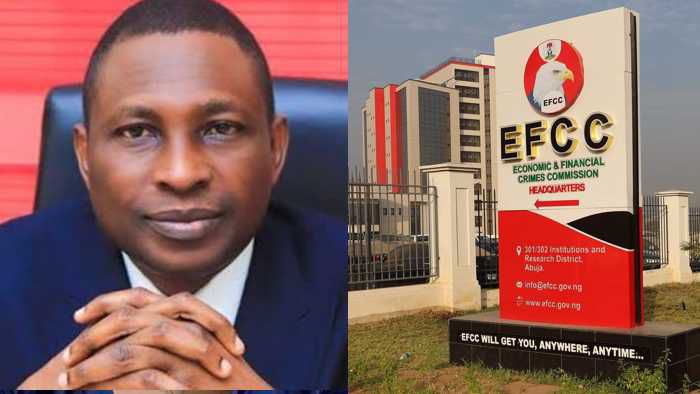
However, online videos allegedly posted by the defendant claimed that the EFCC Chairman intercepted and diverted the funds meant for the community.
Adams explained that once the petition was received on September 23, 2025, his director directed a comprehensive DSS investigation into the claims.
The investigative team began by examining the defendant’s mobile device and reviewing his Facebook activity.
During this process, several video recordings were downloaded. In the clips, the defendant allegedly repeated the accusations against the EFCC Chairman, describing the matter as financial misconduct.
The witness informed the court that the DSS investigation did not stop at digital content retrieval.
The team also sought documentary evidence to determine whether there was any factual basis to the allegations.
Formal requests were sent to First City Monument Bank (FCMB) and Zenith Bank for bank statements, payment records, and related financial documents connected to the royalty disbursement.
In addition, investigators approached the Corporate Affairs Commission for incorporation documents relating to community development entities operating within Oil Mining Lease (OML) 30 in Delta State.
Among the entities examined was the Orogun Kingdom Community Trust, reportedly registered by the defendant.
This step, Adams noted, was necessary to verify the legitimacy of the organisations and trace any official financial relationships.
The court also heard that the investigative team obtained copies of correspondence previously exchanged between the defendant and the EFCC.
Included in these documents were letters of admonition issued by the commission in response to a petition written by the defendant.
That petition accused the EFCC Chairman of wrongdoing and was reportedly addressed to the Serious Fraud Office in the United Kingdom.
Furthermore, the DSS obtained a letter from Wahab Shittu (SAN), legal counsel to the EFCC Chairman, demanding a retraction of the alleged defamatory statements.
Adams stated that all these materials were compiled and assessed before the team prepared a preliminary report for submission to senior officials.
As part of procedural compliance, a certificate of compliance was filed to validate the electronic evidence recovered during the DSS investigation.
Adams added that the team also sought clarification from the Nigerian Upstream Petroleum Regulatory Commission, the statutory regulator overseeing petroleum operations, to confirm details surrounding the royalty payments.
The arrest of the defendant followed weeks of inquiry. According to Adams, Moses Oddiri was apprehended in Lagos on November 10, 2025, and transported to the DSS office for questioning.
He said the interview was recorded audiovisually and conducted in the presence of a legal aid counsel.
During the session, the defendant reportedly made a voluntary statement under caution. Other individuals connected to the matter were also invited for questioning.
When the case was called, prosecution counsel C.S. Orubor informed the court that the matter was scheduled for the commencement of trial and consideration of bail.
He indicated that the prosecution was prepared to proceed, stressing that its witness was present and ready to testify.
However, defence counsel M. Adeniran objected to the immediate start of the cybercrime trial, arguing that his client had remained in DSS custody without adequate access to legal representation.
He told the court that he had been unable to properly consult with the defendant and therefore could not effectively prepare a defence.
The defendant also addressed the court, stating that his lawyer had not been fully briefed on the details of the case.
Adeniran maintained that proceeding under such circumstances would compromise the fairness of the trial.
In response, Orubor insisted that the defence had been duly served with all relevant materials, including the charge and supporting documents.
He argued that the defence had attended previous proceedings and was aware that the matter was slated for hearing.
After reviewing the submissions, Justice Abdulmalik confirmed that the charges had been properly served and endorsed. She ruled that the trial would proceed despite the objections raised.
The case was subsequently adjourned until March 13 for continuation of hearing and determination of the bail application.
Oddiri faces a two-count charge under Section 24(1) of the Cybercrimes (Prohibition, Prevention, etc.) (Amendment) Act 2024.
The charges centre on alleged online publication of false information said to have harmed the reputation of the EFCC Chairman.
As the proceedings continue, attention remains focused on how the Facebook blackmail allegations will be tested in court and whether the evidence gathered during the DSS investigation will withstand judicial scrutiny.
Ireport247news