

Customs auction N14.8m petrol in Lagos as anti-smuggling crackdown intensifies
The Nigeria Customs Service has escalated its enforcement drive against fuel smuggling with the public auction of seized petroleum products valued at nearly N15m, reinforcing ongoing efforts to curb illegal cross-border trade and stabilise domestic supply.
The exercise, conducted under the agency’s special anti-smuggling initiative, Operation Whirlwind, took place in Ikeja, where officials disposed of thousands of litres of Premium Motor Spirit (PMS) intercepted during coordinated operations across border communities.
Customs auction N14.8m petrol in Lagos
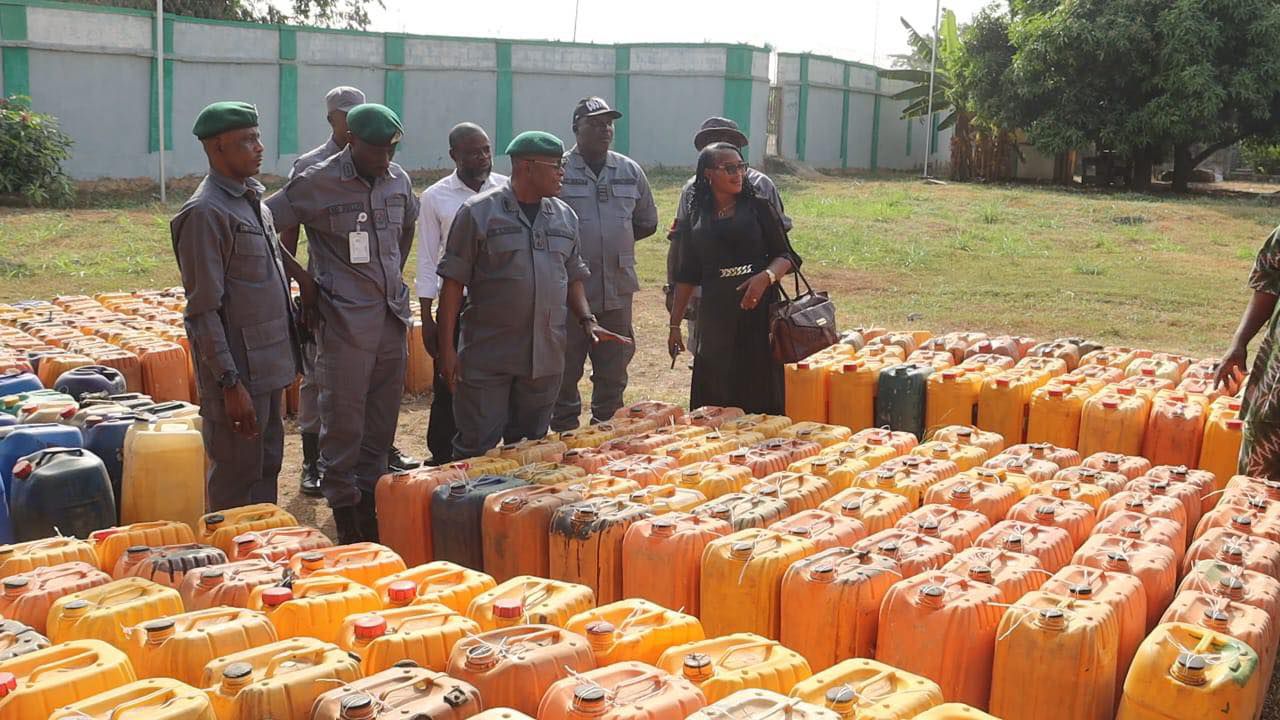
The Customs auction N14.8m petrol in Lagos operation involved the sale of approximately 14,875 litres of PMS, which had been seized while being diverted for illegal export to neighbouring countries.
Speaking during the exercise, the National Coordinator of Operation Whirlwind, Abubakar Aliyu, disclosed that the fuel was confiscated within the Lagos/Ogun corridor following intelligence-led operations targeting smuggling networks.
According to him, the seized products were packaged in 595 jerrycans and intercepted at multiple flashpoints, including border routes notorious for illicit fuel movement. These locations form part of a wider network of smuggling corridors stretching across Nigeria’s southwestern frontier.
Aliyu explained that the auction was conducted in line with regulatory provisions to ensure transparency and accountability while preventing the re-entry of seized goods into illegal channels.
Smuggling networks dismantled in border operations
Authorities revealed that the seizures were the result of sustained surveillance and coordinated enforcement carried out over a four-week period.
Intelligence reports enabled operatives to identify and dismantle an organised network involved in siphoning petroleum products out of the country.
The illegal trade, often driven by price differentials between Nigeria and neighbouring markets, continues to pose a significant threat to the nation’s energy security and economic stability.
Officials stressed that the Customs auction N14.8m petrol in Lagos is part of a broader strategy to disrupt these networks by not only intercepting products but also ensuring their lawful redistribution within the domestic economy.
By auctioning the fuel to the public, authorities aim to reintegrate the products into legitimate supply chains, thereby mitigating potential shortages and discouraging further smuggling attempts.
Economic impact of petroleum smuggling
Industry stakeholders have consistently warned that fuel smuggling undermines Nigeria’s fiscal position by eroding government revenue and distorting supply dynamics. It also contributes to artificial scarcity, often leading to price volatility in local markets.
Aliyu described the practice as a serious economic offence, noting that it fuels criminal enterprises while weakening national institutions responsible for regulating the petroleum sector.
He added that beyond financial losses, the illicit trade has broader security implications, as proceeds are sometimes linked to transnational criminal activities.
The Customs auction N14.8m petrol in Lagos therefore serves not only as a disposal mechanism but also as a deterrent signal to operators engaged in illegal exportation.
Strengthened inter-agency collaboration
Customs authorities attributed recent operational successes to enhanced collaboration among key government institutions. The Office of the National Security Adviser, led by Nuhu Ribadu, was commended for improving coordination and intelligence-sharing among enforcement agencies.
Regulatory oversight from the Nigerian Midstream and Downstream Petroleum Regulatory Authority has also played a critical role in ensuring that enforcement activities align with industry standards and legal frameworks.
Additionally, the leadership of the Comptroller-General of Customs, Adewale Adeniyi, was credited with strengthening institutional capacity and driving reforms within the service.

These collaborative efforts have resulted in improved monitoring of petroleum distribution channels and more effective disruption of smuggling syndicates.
Transparency in auction process
To maintain public trust, officials emphasised that the auction process was conducted under strict supervision, with participation from security agencies, civil society organisations, and media representatives.
This multi-stakeholder approach is designed to eliminate opacity in the disposal of seized goods while reinforcing accountability within the system.
Aliyu noted that adherence to due process remains central to Operation Whirlwind’s mandate, ensuring that enforcement actions do not compromise legal standards or public confidence.
Call for community support
Customs authorities have also called on residents of border communities to play a more active role in combating smuggling by providing timely and credible information.
Given the complexity of smuggling networks, officials believe that community intelligence is essential for identifying emerging routes and preventing illegal activities before they escalate.
The Customs auction N14.8m petrol in Lagos underscores the importance of collective responsibility in safeguarding national resources, particularly in sectors as critical as energy.
Sustaining momentum in enforcement
As Nigeria continues to grapple with the challenges of fuel distribution and energy security, enforcement agencies have reiterated their commitment to sustaining momentum in anti-smuggling operations.
Operation Whirlwind, described as intelligence-driven and proactive, is expected to expand its reach across other high-risk zones in the coming months.
Officials warned that the era of unchecked smuggling is over, signalling a tougher stance against offenders and a renewed focus on protecting the country’s economic interests.
With ongoing reforms in the petroleum sector and improved regulatory oversight, stakeholders remain optimistic that sustained enforcement will gradually reduce the scale of illegal fuel exports.