Nigeria’s cocoa industry is facing a potential downturn as the 2024/2025 main-crop season shows signs of declining production due to adverse weather patterns and a resurgence of black pod disease in key producing states.
Analysts and farmers alike warn that the combined impact of these challenges could significantly affect national cocoa output, threatening income for local farmers and the broader agricultural economy.
Cocoa Output Threatened by Black Pod Disease and Erratic Weather
The H2 focus keyword, cocoa output, is under pressure, particularly in Cross River State, a major cocoa-producing region accounting for approximately 26 percent of Nigeria’s total production.
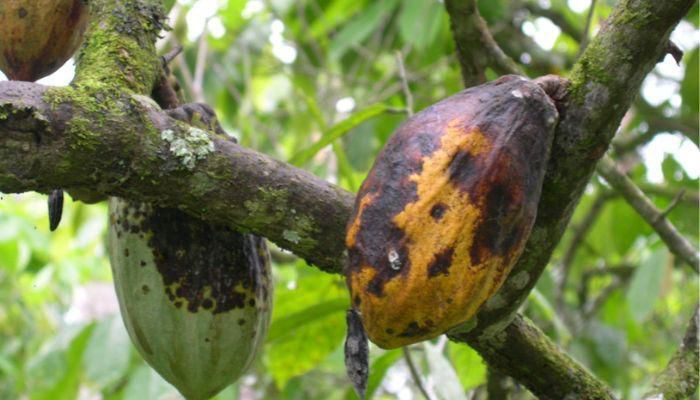
Farmers in Ikom, one of the state’s primary cocoa-growing areas, report widespread infestation of black pod disease, which has severely damaged cocoa trees and reduced fruit yield.
Short, heavy rainfall events have compounded the problem across several cocoa-producing states, including Ondo, Ekiti, and Ogun.
Experts say that these erratic rainfall patterns negatively affect the flowering and pod-setting stages of cocoa trees, ultimately diminishing the amount of harvestable cocoa beans.
“Farmers are facing a tough season,” said Adeola Adegok, a cocoa farmer in Cross River.
“The combination of black pod disease and unpredictable rains has destroyed a significant portion of our crop. If this continues, national cocoa output will be substantially lower than last season.”
Implications for Nigeria’s Cocoa Industry and Farmgate Prices
The expected decline in cocoa output is likely to reverberate across the agricultural value chain. Market analysts warn that reduced production may put upward pressure on prices at both farmgate and international levels.
Already, preliminary reports indicate a 44 percent drop in farmgate prices compared to the previous season, which is affecting farmers’ earnings and the profitability of cocoa ventures.
Nigeria has historically been a significant player in the global cocoa market, supplying beans for domestic processing and export.
A sharp reduction in output could undermine Nigeria’s competitiveness in the international cocoa trade, forcing the country to rely more heavily on imported cocoa to meet domestic demand in processing industries.
Industry stakeholders highlight the importance of mitigating disease outbreaks and implementing effective crop management strategies to sustain cocoa output.
Integrated pest management programs and the timely application of fungicides are recommended to combat black pod disease and improve crop resilience.
Government and Cocoa Board Interventions
The newly established Cocoa Board of Nigeria has been tasked with revitalizing the sector through enhanced monitoring, technical support, and farmer education programs.
The board is expected to introduce initiatives aimed at improving cocoa output by promoting disease-resistant cocoa varieties, improving access to high-quality fertilizers, and implementing irrigation solutions in regions affected by unpredictable rainfall.
A spokesperson for the Cocoa Board stated, “Our priority is to support farmers in maximizing their yield despite challenges.
By introducing modern cultivation techniques and better disease management practices, we hope to stabilize cocoa output and ensure sustainable growth for the industry.”
The board’s efforts are also expected to focus on strengthening the country’s export potential.
By improving the quality and quantity of cocoa beans, Nigeria aims to secure stronger positions in global markets, increase foreign exchange earnings, and stimulate local processing industries.
Farmers’ Experiences and Local Solutions
Farmers across Cross River, Ondo, and Ogun states are already adopting practical measures to counteract losses in cocoa output.
These measures include pruning infected pods, clearing undergrowth to reduce humidity that encourages fungal growth, and planting new hybrid cocoa varieties that show higher resistance to black pod disease.
Despite these interventions, challenges remain. Many farmers cite limited access to finance, delayed distribution of inputs, and lack of technical support as obstacles to sustaining high yields.
Cooperatives and local farmer associations are stepping in to bridge gaps by facilitating bulk procurement of fungicides, sharing best practices, and advocating for government support at the state and federal levels.
Outlook for Nigeria’s Cocoa Industry
Analysts predict that while the current season may see a decline in cocoa output, long-term prospects for the industry remain promising if interventions are implemented effectively.
Strategic support from the Cocoa Board, adoption of modern farming techniques, and improved disease management could help Nigeria recover lost production and strengthen its role in the global cocoa market.
“While short-term challenges are significant, the structural potential of Nigeria’s cocoa sector is robust,” said Dr. Folake Adeyemi, an agricultural economist.
“With the right policies, investment in technology, and farmer engagement, Nigeria can maintain a stable cocoa output and increase competitiveness in both domestic and international markets.”
As the main-crop season progresses, stakeholders will be closely monitoring yields, disease outbreaks, and weather patterns to gauge the actual impact on national cocoa output.
The coming months will be critical in determining whether the country can sustain its cocoa production goals amid mounting climatic and biological pressures.
About The Author