China reiterates Taiwan claim during a tense but carefully choreographed phone conversation between Xi Jinping and Donald Trump, setting the tone for renewed geopolitical friction across Asia.
China’s leader reportedly stressed that Taiwan’s status remains a “core national interest,” reaffirming Beijing’s long-standing position even as China reiterates Taiwan claim defiantly on the global stage.
Trump responded cautiously, with aides saying the president sought to “maintain stability” despite mounting Taiwan security concerns that have unsettled Washington’s diplomatic and military planning.
Analysts said the Xi–Trump diplomatic call underscored how China reiterates Taiwan claim at every high-level interaction, signalling Beijing’s unwavering determination to shape the island’s political future.
Chinese state media described the exchange as “frank and constructive,” though foreign policy observers argued it highlighted rising US–China strategic tension that neither side appears ready to ease.
Xi reportedly reminded Trump that Taiwan’s return was an “integral part of the post-war international order,” a phrase Chinese officials often invoke when China reiterates Taiwan claim publicly.
Trump, according to American officials, avoided making commitments, choosing instead to emphasise cooperation, even as Indo-Pacific stability debate continues to overshadow broader bilateral discussions.
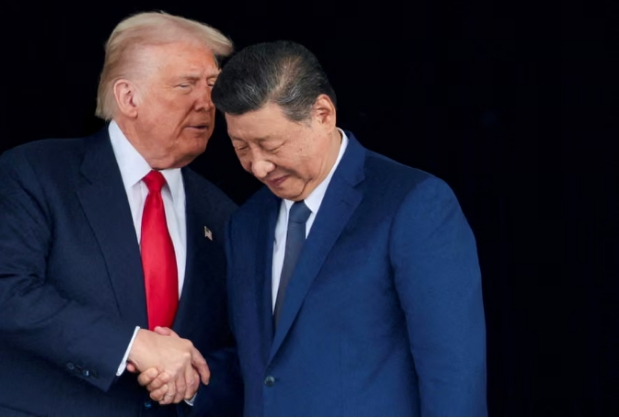
Taipei reacted swiftly, with Premier Cho Jung-tai stating boldly that “returning to China is not an option,” underscoring the island’s fierce resistance whenever China reiterates Taiwan claim internationally.
Cho insisted Taiwan remains “sovereign, democratic and unyielding,” arguing that Beijing’s stance threatens regional peace and intensifies the long-running Indo-Pacific stability debate among global powers.
Japan also entered the political fray, warning that any forced reunification attempt could destabilise the region, a point the prime minister stressed repeatedly amid rising Taiwan security concerns everywhere.
The Xi–Trump diplomatic call came at a sensitive moment, with China engaged in a bitter dispute with Japan that has spilled into trade, tourism, and cultural ties.
Tokyo has accused Beijing of weaponising economic pressure, while Chinese officials insist Japan’s remarks about potential military intervention breached diplomatic norms and escalated US–China strategic tension unnecessarily.
Trump reportedly briefed Japan’s leader shortly after the call, emphasising “alliance strength” as the Indo-Pacific stability debate shapes how Washington navigates Beijing’s increasingly assertive posture.
On trade, Xi urged Trump to “keep up the momentum” following their earlier meeting, signalling China’s desire to stabilise markets even while China reiterates Taiwan claim decisively.
Officials in Beijing praised the “positive trajectory” of recent economic talks, though experts warned political tensions over Taiwan could undermine progress if not managed with extraordinary diplomatic discipline.
The United States confirmed intentions to reduce tariffs on several Chinese imports, a gesture welcomed by businesses hoping to avoid another costly spiral of US–China strategic tension soon.
Beijing pledged to purchase millions of metric tons of American soya beans, illustrating how economic interdependence persists despite persistent Taiwan security concerns dominating political conversation.
Xi insisted economic cooperation and political disagreements can “coexist,” though critics argue this optimism fades whenever China reiterates Taiwan claim, injecting uncertainty into discussions meant to rebuild trust.
Washington’s treasury secretary said both countries were working to secure long-term rare-earth supply arrangements, hinting at progress despite the Indo-Pacific stability debate shaping strategic planning.
The rare-earth sector remains vital for electronics, automotive manufacturing, and defence capabilities, making the issue a focal point amid heightening US–China strategic tension that shows no signs of easing.
Diplomats said the Xi–Trump diplomatic call also covered Ukraine, with both leaders acknowledging the conflict’s global implications, even while Taiwan security concerns overshadowed broader security discussions.
Beijing portrayed itself as a neutral party seeking peace, though sceptics argue China’s ambitions elsewhere, especially when China reiterates Taiwan claim, undermine its claims of impartiality.
Trump suggested both nations must “focus on the big picture,” a remark analysts interpreted as an attempt to restore calm during a volatile Indo-Pacific stability debate.
Observers said Xi adopted a confident tone, emphasising China’s regional leadership and reiterating the island’s political significance—a theme consistent whenever China reiterates Taiwan claim in major diplomatic settings.
The call followed their October meeting, the first since 2019, which produced a tentative trade understanding intended to reduce friction in areas heavily impacted by US–China strategic tension.
Still, experts said economic cooperation cannot overshadow the central issue that surfaced repeatedly when China reiterates Taiwan claim, fuelling strategic uncertainty from Tokyo to Washington.
Taiwanese officials said the island will continue strengthening defence partnerships, especially with the United States, as Taiwan security concerns intensify under China’s expanding military presence.
“Taiwan will not compromise its sovereignty,” Cho declared, adding that Beijing’s statements merely hardened the island’s resolve despite constant Indo-Pacific stability debate among world powers.
The Xi–Trump diplomatic call sparked renewed global interest, with European diplomats warning that miscalculations could carry “historic consequences” for international security if competing narratives continue unchecked.
NATO officials privately expressed concern that the political rhetoric, especially when China reiterates Taiwan claim repeatedly, could encourage riskier military manoeuvres around the island.
Chinese analysts countered, stating Beijing has acted “responsibly and transparently,” arguing foreign powers are the true source of US–China strategic tension threatening regional stability.
Military experts noted a surge in patrol activity across the Taiwan Strait, a development they linked to rising Taiwan security concerns despite ongoing diplomatic signals of restraint.
The United States has signalled readiness to continue arms support to Taipei, reinforcing defence capabilities in ways that further entrench the Indo-Pacific stability debate between rival powers.
Both Washington and Beijing insisted their conversation ended positively, with officials noting a shared willingness to prevent escalation even while underlying disagreements remain profound.
The call is expected to frame future negotiations, particularly as China reiterates Taiwan claim consistently, ensuring the issue remains central to global diplomatic analysis.
Analysts said neither side can afford open conflict, but political pressures ensure Taiwan’s future will remain the defining question shaping US–China strategic tension for years.
The White House confirmed that Trump will visit China in April, a trip expected to test whether diplomatic momentum can survive persistent Taiwan security concerns.
Beijing said Xi will later travel to Washington, although Chinese officials remained cautious, noting schedules could change depending on the Indo-Pacific stability debate.
International observers warned that symbolic state visits may soothe tensions temporarily, yet long-term stability requires political compromise unlikely while China reiterates Taiwan claim in every negotiation.
Experts argued Taiwan’s leaders must prepare for a future defined by sustained geopolitical pressure, heightened military vigilance, and sharper rhetorical exchanges between Washington and Beijing.
Global markets responded cautiously to the call, with investors weighing trade optimism against enduring uncertainties fueled by US–China strategic tension that repeatedly unsettles supply chains.
Economic analysts said cooperation on soya beans and minerals offers “encouraging signals,” yet these gains risk reversal whenever China reiterates Taiwan claim on major political stages.
Diplomats concluded the call achieved limited progress but served as a reminder that the Indo-Pacific stability debate will continue dominating strategic discourse worldwide.
International relations scholars said the conversation demonstrated how Taiwan remains the linchpin issue, ensuring high-stakes diplomacy intensifies whenever China reiterates Taiwan claim fundamentally.
About The Author