

Nigeria’s monetary policy outlook is facing renewed uncertainty as global geopolitical tensions threaten to disrupt recent gains in inflation control and currency stability.
Fresh signals from the apex bank indicate that policymakers are reassessing the trajectory of interest rates amid rising oil prices and shifting global financial conditions, both of which could reshape economic expectations in the coming months.
Cardoso flags Middle East war as risk to inflation, rate cut
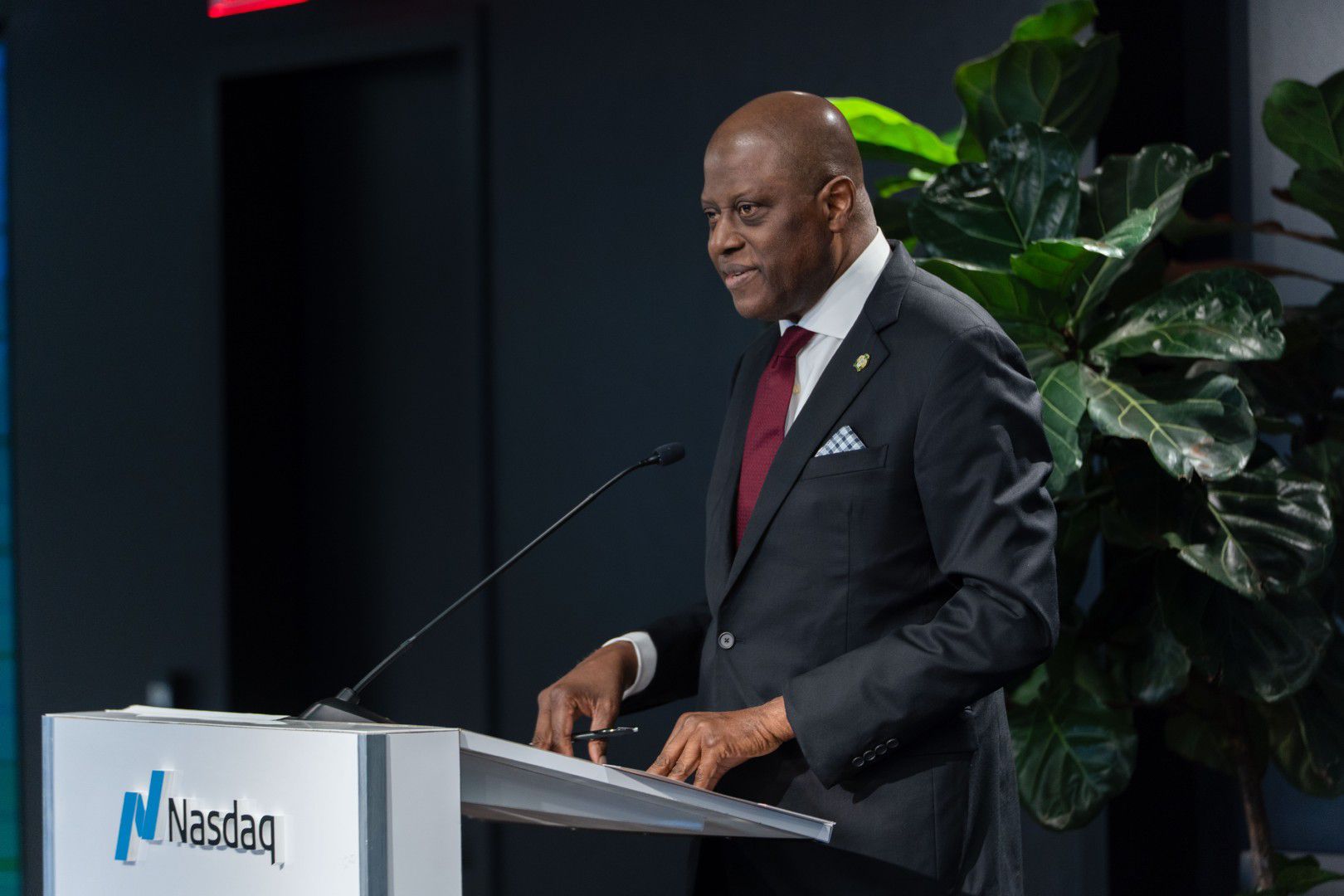
The policy caution became evident as Cardoso flags Middle East war as risk to inflation, rate cut, warning that escalating tensions involving the United States, Israel, and Iran could complicate Nigeria’s macroeconomic outlook.
Governor Olayemi Cardoso of the Central Bank of Nigeria stated that geopolitical shocks are likely to transmit into the domestic economy primarily through higher energy prices and tighter global financial conditions.
These variables, he noted, are critical inputs in determining the direction of monetary policy ahead of the next rate-setting meeting.
Oil price surge presents mixed economic outcomes
The development that Cardoso flags Middle East war as risk to inflation, rate cut highlights the dual nature of rising oil prices for Nigeria’s economy.
On one hand, higher crude oil prices—currently trading above $100 per barrel—could boost export earnings and improve the country’s balance of payments, given Nigeria’s reliance on oil revenues.
On the other hand, elevated energy costs could feed into domestic inflation, particularly through higher fuel prices, transportation costs, and imported goods.
Economic analysts say this creates a policy dilemma for the central bank, which must balance growth-supporting measures with inflation control.
Inflation outlook remains fragile
Despite recent progress in moderating inflation, risks remain elevated.
Nigeria’s headline inflation rate declined for the 12th consecutive month to 15.06 per cent in February 2026, reflecting the impact of tighter monetary policy and improved exchange rate stability.
However, as Cardoso flags Middle East war as risk to inflation, rate cut, there are growing concerns that imported inflation could reverse these gains.
The country’s dependence on imported refined petroleum products and dollar-denominated goods makes it particularly vulnerable to external price shocks.
Experts warn that sustained increases in global oil prices could quickly translate into higher domestic prices, undermining recent disinflation trends.
Exchange rate and external reserves under watch
Another key transmission channel identified by the central bank is global risk sentiment.
Periods of geopolitical uncertainty typically lead to reduced investor appetite for emerging markets, resulting in capital outflows and tighter financial conditions.
As Cardoso flags Middle East war as risk to inflation, rate cut, the central bank is closely monitoring potential impacts on the naira and external reserves.
Although the naira recently strengthened to around N1,345 per dollar, analysts caution that any reversal in foreign portfolio inflows could exert renewed pressure on the currency.
Maintaining exchange rate stability remains a critical priority for policymakers, given its direct link to inflation and investor confidence.
Monetary policy stance likely to remain cautious
The central bank’s current benchmark interest rate stands at 26.50 per cent, following an aggressive tightening cycle aimed at curbing inflation and stabilising the currency.
The latest comments suggest that policymakers may adopt a cautious approach rather than rushing into rate cuts, despite improving macroeconomic indicators.
As Cardoso flags Middle East war as risk to inflation, rate cut, the apex bank appears focused on preventing second-round inflation effects that could arise from sustained global shocks.
Market participants had begun to anticipate a gradual easing cycle in 2026, but the evolving geopolitical landscape may delay such expectations.
Progress in economic reforms provides buffer
Despite external risks, the central bank maintains that Nigeria is better positioned to withstand shocks compared to previous years.
Cardoso highlighted ongoing reforms, including improvements in foreign exchange market functionality, rebuilding of external reserves, and a return to more orthodox monetary policy practices.
These measures have contributed to restoring investor confidence and enhancing the resilience of the financial system.
However, analysts note that while these buffers are important, they may not fully insulate the economy from prolonged global volatility.
Investor sentiment and capital flows
The broader concern is how global investors respond to heightened uncertainty.
A sustained risk-off environment could reduce capital inflows into Nigeria’s financial markets, affecting liquidity and increasing borrowing costs.
This aligns with recent trends observed in the Eurobond market, where yields have risen amid shifting investor sentiment.
As Cardoso flags Middle East war as risk to inflation, rate cut, policymakers must navigate a delicate balance between maintaining investor confidence and addressing domestic economic pressures.
Outlook for Nigeria’s monetary policy
Looking ahead, the trajectory of interest rates will depend largely on how geopolitical developments unfold.
If tensions ease and oil prices stabilise, there may be room for gradual rate cuts later in the year.
However, if the conflict intensifies and sustains upward pressure on global energy prices, the central bank may be forced to maintain or even tighten its current stance.
Ultimately, the development that Cardoso flags Middle East war as risk to inflation, rate cut underscores the interconnected nature of global and domestic economic forces.
As Nigeria continues its path toward macroeconomic stability, external shocks remain a critical variable shaping policy decisions and economic outcomes.

About The Author
