

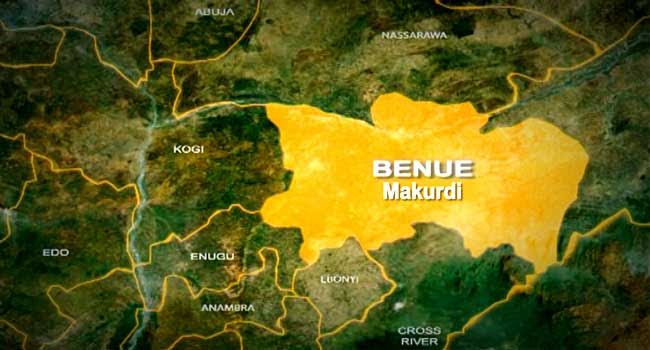
A farmer in Katsina-Ala Local Government Area of Benue State has reportedly abandoned his farmland and gone into hiding after suspected bandits allegedly demanded N500,000 before allowing him to return to his farm and harvest his crops.
The farmer, whose name was not disclosed, is from Mbagena Council Ward in Katsina-Ala, an area where residents have reportedly been subjected to repeated attacks, threats and ransom demands by suspected local bandits.
The latest incident has left the farmer unable to access a significant portion of his agricultural produce, raising concerns about the impact of insecurity on farming and the livelihood of rural residents in the community.
His son, John James, a 300-level student of Benue State University, narrated the family’s ordeal during a capacity-building workshop held in Makurdi.
The programme, organised by the Socio-Economic Rights and Accountability Project (SERAP), focused on safety and security rights, accountability and access to justice.
According to James, his father, who combines farming with public service, became a target of the suspected bandits about two weeks ago when armed men allegedly invaded his residence at night.
He said the attackers demanded N500,000 from his father and warned him to produce the money within three days.
The farmer reportedly explained to the attackers that he did not have the money readily available. He appealed for more time, explaining that he was depending on the proceeds from his farm produce to raise the required amount.
Following his plea, the deadline was reportedly extended to one week.
James said his father had returned to the community partly because he needed to harvest his groundnut, beniseed, soybean and other crops. The produce, he explained, was expected to provide the money needed to meet the ransom demand.
However, the situation became more dangerous when the suspected attackers returned while the farmer was away.
James said his father had travelled to attend a burial ceremony around Katsina-Ala town when the assailants reportedly went back to his residence and abducted his mother.
The attackers allegedly accused the farmer of deliberately delaying the payment and took out their anger on his wife.
James said his mother was later released after one of the abductors reportedly pleaded with the others to let her go because she was crying and visibly distressed.
Her release, however, did not come without alleged physical abuse.
“She was freed but not without being tortured. As I talk to you now, my mother is suffering emotionally and physically from the pains she suffered in the course of the torture,” James said.
Following the incident, the family reportedly turned to friends and relatives for assistance in raising the money being demanded.
James said his father eventually succeeded in gathering N200,000, which he took to the suspected bandits at midnight on Thursday.
The farmer apparently hoped the payment would put an end to the threats and enable him to return to his farm.
Instead, the attackers allegedly told him that the N200,000 was insufficient.
According to James, they maintained that his father must complete the payment to N500,000 before he could be allowed to return freely to his farmland and harvest the remaining crops.
“When my father returned and handed them the money, they said it was not enough, that he had to complete it to N500,000 before he would be allowed to harvest anything from his farm,” he said.
The demand has reportedly placed the farmer in a difficult position. While he still owes N300,000, his inability to access the farm means he cannot easily harvest and sell the crops that could help him raise the outstanding amount.
James said the continued threats have also forced his father to leave the area for his own safety.
“They are still threatening my father for the remaining amount, and he is on the run for fear of the unknown. He can’t go back to harvest everything now until he gets all the money,” he added.
The incident, according to James, is not an isolated case in the community.
He alleged that residents have for some time been dealing with attacks, theft, intimidation and other forms of criminality linked to suspected local bandits.
James further claimed that some of the suspected attackers are not strangers to the community, alleging that certain residents recognise them because they are believed to come from the same area.
“These people are moving freely in our vicinity, and they are local bandits. In fact, some of them are known to the villagers because they are from the same community,” he said.
The student said his father had previously suffered attacks in the area, although the latest incident represented a different level of threat because the suspected bandits allegedly tied access to his farmland to the payment of a ransom.
“Other villagers suffer a similar fate regularly. However, it’s the first time my father has been charged a ransom for harvest. But he had been attacked several times where his money and goods were carted away,” James said.
The situation has also reportedly affected the willingness of residents to seek help from law enforcement agencies.
James alleged that many villagers are reluctant to report incidents because of fear of retaliation.
He claimed that residents who had previously attempted to involve the police were subsequently targeted by the suspected bandits, leaving others afraid to take similar steps.
“The villagers hardly report to police because those who attempted were killed by the bandits,” he alleged.
Beyond the immediate hardship faced by the farmer and his family, the incident illustrates the wider consequences insecurity can have on agricultural communities.
For farmers who depend largely on their harvest for income, being prevented from reaching their farms can result in significant financial losses.
In this case, the farmer is reportedly caught between the need to raise money for the ransom demand and the inability to freely access the crops that could provide him with funds.
The alleged situation also highlights the vulnerability of rural households where security concerns can affect not only farming activities but also movement, family life and access to economic opportunities.
The experience was shared at the SERAP workshop as participants discussed the rights of citizens in relation to safety and security, as well as the need for accountability and access to justice.
The workshop offered community members an opportunity to speak about the challenges they face and to consider possible avenues for seeking protection and redress.
For the farmer’s family, however, the immediate challenge remains unresolved. His mother is reportedly dealing with the consequences of the alleged assault, while his father remains away from home and unable to freely access his farmland.
The N300,000 balance allegedly demanded by the suspected bandits also remains outstanding, leaving the farmer uncertain about when, or whether, he will be able to return to harvest the crops on which his livelihood depends.
About The Author
