

Bangladesh’s ousted prime minister, Sheikh Hasina, was sentenced to death in absentia by a Dhaka court for crimes against humanity during the 2024 student uprising.
The tribunal, comprising three judges, found Hasina responsible for ordering lethal force, drones, and helicopters against protesters, marking one of the nation’s deadliest political crises.
Justice Golam Mortuza Mozumder declared, “The accused prime minister committed crimes against humanity by directing attacks on civilians, an atrocity we cannot overlook or excuse.”
Hasina has been living in exile in India since fleeing Bangladesh last year, rejecting all tribunal charges and calling the trial a “politically motivated charade.”
During the uprising, initially a student protest, violence quickly escalated into nationwide demonstrations, challenging Hasina’s 15-year rule, widely criticized for authoritarianism and widespread human rights abuses.
Families of victims attended the verdict, some weeping openly, demanding justice for lost loved ones, including Golam Rahman, whose son died in police gunfire.
Rahman said, “The death sentence for Hasina is the only acceptable verdict for my child. Nothing will bring him back, but truth must prevail.”
Alongside Hasina, former home minister Asaduzzaman Khan was convicted, as well as ex-police chief Chowdhury Abdullah al-Mamun, who cooperated with prosecutors and received a lesser sentence.
Prosecutors described Hasina as “the mastermind, conductor, and superior commander” of the violent July and August operations against civilians across Dhaka and other regions.
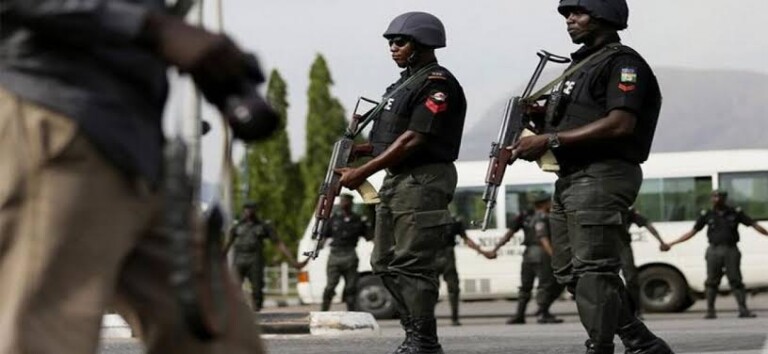
Security measures were tightened across Dhaka in anticipation of unrest, with police, army, and paramilitaries cordoning off the tribunal and enforcing shoot-on-sight orders for violent actors.
Days before the verdict, crude bombs were detonated across the capital, illustrating the volatile political environment following the months-long student-led uprising and ongoing unrest.
Tribunal proceedings were broadcast live to ensure transparency, showing video evidence of Hasina’s orders directly linking her office to deadly street operations across Bangladesh.
Audio recordings presented in court were central to the case, connecting prime ministerial directives to actions by police and security forces, reinforcing her personal responsibility.
The student uprising became known as the “July revolution,” symbolizing the population’s anger at corruption, enforced disappearances, torture, and authoritarian governance under Hasina’s tenure.
Human rights organizations reported that up to 1,400 civilians were killed during the unrest, making it the deadliest political violence in Bangladesh since independence in 1971.
Abu Sayeed, a university student killed at close range, became a rallying figure for protesters, with his death captured on camera and widely circulated in Dhaka.
Prosecutors cited Sayeed’s killing to highlight Hasina’s direct role, describing her as orchestrating a campaign of violence and intimidation across the capital and beyond.
The interim government, led by Nobel laureate Muhammad Yunus, prioritized Hasina’s prosecution, appointing Mohammad Tajul Islam as chief prosecutor to ensure accountability and a credible tribunal.
Hasina’s son, Sajeeb Wazed, warned Reuters that his mother would not remain silent: “She’s upset, angry, outraged, and determined to fight back by whatever means necessary.”

The Awami League, banned from the upcoming February elections, has vowed to resist the interim government, promising political unrest and challenging the legitimacy of the tribunal.
International reactions have been mixed, with India providing protection for Hasina in exile while rejecting extradition requests, emphasizing regional diplomacy and security concerns.
United Nations officials stressed that the death sentence must adhere to international legal norms, reminding the interim government to uphold human rights and fair execution procedures.
Human Rights Watch criticized the tribunal’s legacy, noting that while reforms were made, trials did not meet fully fair-trial standards, yet the death sentence still proceeded.
For families like Golam Rahman’s, the verdict provided a sense of justice and closure after enduring months of grief and public demonstrations demanding accountability.
Rahman added, “We, the families of martyrs, want to see her hanged as an example to future rulers. Let no government target children with impunity.”
The tribunal also emphasized that Mamun, while guilty, would receive leniency due to cooperation, signaling that Bangladesh’s judicial system may consider mitigating circumstances despite capital punishment.
Analysts warn that the verdict may intensify political instability, with factions mobilizing, strikes, and potential violence as Bangladesh prepares for its first post-Hasina election.
The “July revolution” has become a defining moment in Bangladesh’s history, symbolizing a rare citizen-led movement holding entrenched leadership accountable for systemic abuses.
The international community continues to watch closely, with concerns about escalation, human rights safeguards, and the broader regional impact of Hasina’s death sentence in exile.
Bangladesh’s political landscape remains fragile, and the tribunal’s verdict underscores the tension between justice for past crimes and the risk of renewed conflict in Dhaka.
Sheikh Hasina sentenced to death has reignited debates about the balance between accountability and political stability, leaving a divided nation grappling with its democratic future.
For victims’ families, the sentence offers symbolic closure, but questions linger about enforcement, international reaction, and whether future leaders will heed the tribunal’s warning.
The tribunal’s ruling may redefine Bangladesh’s approach to human rights, governance, and civilian protection, shaping political accountability for decades to come.
As Hasina remains in India under protection, Bangladesh faces uncertainty, with elections approaching, opposition resistance growing, and citizens reflecting on a painful but transformative period.
Prosecutors hope the verdict demonstrates that no political leader is above the law, signaling a commitment to justice even amid ongoing unrest and international scrutiny.
Golam Rahman concluded, “We demand that this verdict be respected. It is a statement that leaders cannot turn guns on children and escape punishment.”
The tribunal marks a historic precedent, emphasizing that crimes against humanity, even by former prime ministers, carry consequences, reinforcing Bangladesh’s commitment to legal accountability.

Sheikh Hasina sentenced to death remains the headline that will define Bangladesh’s political and judicial landscape for years, as citizens, leaders, and international observers evaluate the outcome.
About the Author





Thanks for sharing. I read many of your blog posts, cool, your blog is very good. https://www.binance.info/register?ref=JW3W4Y3A