Labour Party vice-presidential candidate in the 2023 general election, Datti Baba-Ahmed, has raised concerns about potential leadership disputes in the African Democratic Congress (ADC) as the party looks ahead to the 2027 presidential election.
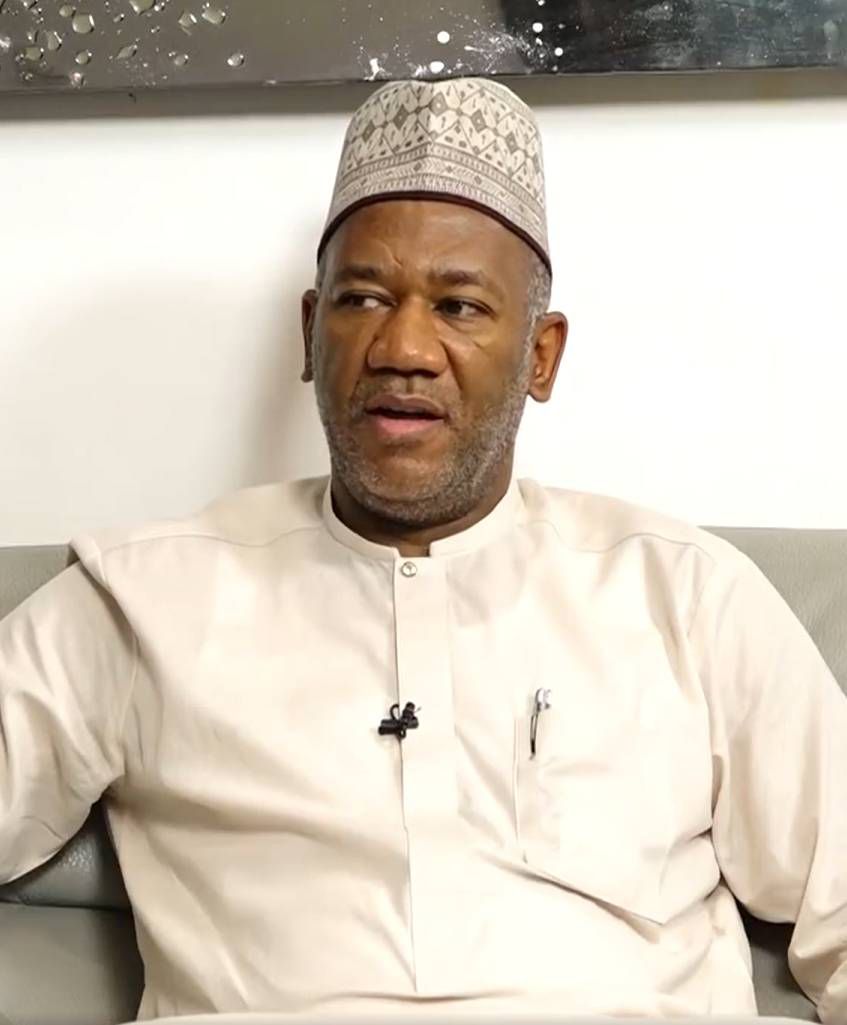
Baba-Ahmed, who ran alongside Peter Obi, warned that without a strong, unifying figure, the party may struggle to select a consensus candidate, potentially triggering internal disagreements that could weaken its position in national politics.
In a recent interview with Trust TV, Baba-Ahmed observed that the ADC currently lacks a dominant political personality capable of commanding the broad support necessary to prevent factional disputes.
“One, they don’t have a Buhari in ADC. If Atiku wins the ticket, others will have a problem with it. If Amaechi wins, others will oppose it. If Obi wins, there will still be disagreements,” he explained.
His assessment highlights the challenges of political consensus-building in parties where no single figure enjoys universal acceptance.
According to Baba-Ahmed, the absence of a unifying leader makes the process of selecting a presidential candidate in ADC particularly delicate.
He compared the situation to past political campaigns in Nigeria, pointing out that leaders such as Muhammadu Buhari or Bola Tinubu had the experience, influence, and strategic focus to unify party stakeholders behind a single ticket.
“Tinubu was focused, resourced, determined, and applied his experience wisely. ADC does not currently have such a figure,” he said.
The former vice-presidential candidate further highlighted historical examples to illustrate the importance of clear political arrangements.
He cited former President Goodluck Jonathan, whose 2011 election involved agreements with northern leaders regarding power rotation.
These arrangements ensured relative stability, as expectations were formally recognized and managed.
In contrast, Baba-Ahmed suggested that the ADC lacks such mechanisms to manage competing ambitions among potential presidential hopefuls, which could heighten internal tensions.
Baba-Ahmed’s warnings underscore a broader challenge facing emerging parties in Nigeria: balancing ambition and party unity.
While ADC has been mentioned as a possible platform for several prominent opposition figures, including Atiku Abubakar, Peter Obi, and Rotimi Amaechi, none currently enjoys the uncontested stature necessary to unify the party.
This situation could lead to prolonged internal negotiations, disagreements, and perhaps even public disputes if multiple aspirants claim legitimacy to represent the party in 2027.
Political analysts have noted that parties with strong personalities often enjoy smoother nomination processes.
Buhari, for example, commanded loyalty across diverse party factions, reducing internal wrangling and allowing him to focus on the general election.
Similarly, Tinubu’s political acumen, network, and resourcefulness enabled him to consolidate support efficiently.
Baba-Ahmed believes that without a comparable figure, ADC may struggle to project cohesion and strength, which could affect its performance in national elections.
Furthermore, Baba-Ahmed warned that the lack of a clear front-runner could encourage stakeholders to challenge nominations openly.
“The absence of a dominant personality means that every high-profile aspirant could face pushback from others claiming they are better suited to lead the party,” he noted.
Such dynamics, if unmanaged, might result in delays in finalizing the party’s candidate, internal factionalism, and reduced voter confidence.
The implications of these challenges are significant, especially as Nigeria’s political environment becomes increasingly competitive.
Emerging parties like ADC must navigate the delicate balance of encouraging participation while maintaining party unity.
Baba-Ahmed’s observations highlight the risks of internal fragmentation if political ambition is not carefully coordinated, emphasizing the need for strategic leadership and negotiation within the party.
Despite these concerns, Baba-Ahmed acknowledged that ADC has potential as a political platform, particularly for opposition voices seeking to challenge established parties.
However, he emphasized that strategic planning, early consensus-building, and the emergence of a unifying figure are essential if the party hopes to mount a credible challenge in the 2027 elections.
Without these elements, he warned, ADC risks internal disputes that could undermine its national credibility and electoral prospects.
Ireport247news
About The Author