

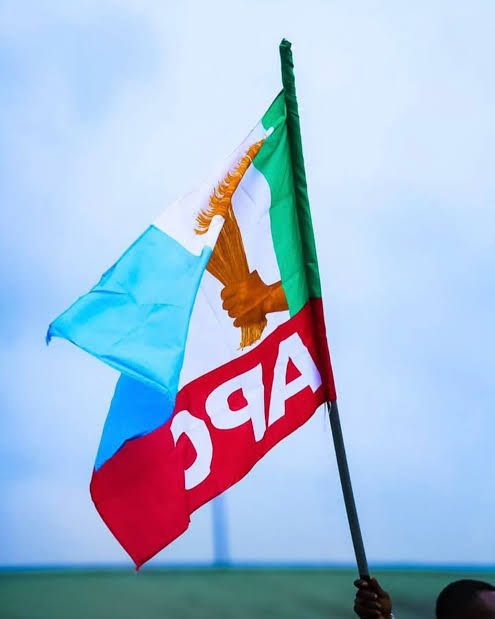
The All Progressives Congress (APC) has moved a step closer to defining its internal power structure as governors elected under its platform gathered in Lagos for crucial deliberations ahead of the party’s national convention in Abuja.
Central to the meeting was the increasingly significant issue of APC zoning, which continues to shape negotiations within the ruling party.
The meeting, held behind closed doors at a prominent venue in Victoria Island, brought together influential stakeholders, including governors and key members of the party’s national leadership.
It was chaired by the head of the Progressive Governors’ Forum, who guided discussions focused on maintaining unity while resolving lingering disagreements over the distribution of party offices.
Sources familiar with the discussions revealed that APC zoning remains a sensitive yet strategic issue.
Party leaders are working to balance regional interests, political loyalty, and electoral considerations as they prepare for the convention.
The aim is to ensure that all geopolitical zones feel adequately represented, thereby reducing the risk of internal conflict.
Beyond the immediate question of zoning, participants also explored the concept of micro-zoning.
This involves allocating positions not just across regions but within states and specific political blocs.
According to insiders, micro-zoning is being considered as a follow-up step once a broader agreement on APC zoning is reached.
This layered approach is expected to address deeper concerns among stakeholders who may feel sidelined under a general zoning formula.
The presence of numerous governors from across the federation underscored the importance of the meeting.
Their participation signals a collective effort to present a united front ahead of the convention.
Observers note that governors play a critical role in influencing party decisions, given their control of state structures and grassroots networks.
Discussions reportedly extended into the night, reflecting the complexity of the issues on the table.
While some progress was said to have been made, sources indicated that negotiations are still ongoing.
The leadership is keen on avoiding divisions that could weaken the party’s cohesion, especially as it looks ahead to future electoral contests.
Interestingly, a faction within the party is said to be advocating for the retention of the current arrangement beyond the next election cycle.
This proposal, though not universally accepted, suggests that some stakeholders are more concerned with stability than restructuring.
However, others argue that periodic adjustments in APC zoning are necessary to reflect changing political realities and maintain fairness.
Political analysts believe the outcome of these deliberations will significantly influence the party’s direction.
A well-negotiated zoning formula could strengthen internal unity and enhance the party’s electoral prospects.
On the other hand, unresolved disagreements might create friction among key players.
The Lagos meeting is part of a broader consultation process involving various party organs.
Stakeholders are expected to continue engagements in the days leading up to the convention. The goal is to arrive at a consensus that will be ratified during the national gathering in Abuja.
For many party members, the emphasis on dialogue is a positive sign. It reflects a willingness to address differences through negotiation rather than confrontation.
As one insider noted, the leadership is determined to “keep the house together,” a phrase that captures the underlying objective of the ongoing talks.
As anticipation builds, attention remains firmly on how the party will conclude its APC zoning discussions.
The decisions taken in this period are likely to shape not only the outcome of the convention but also the party’s internal dynamics in the years ahead.
Ireport247news