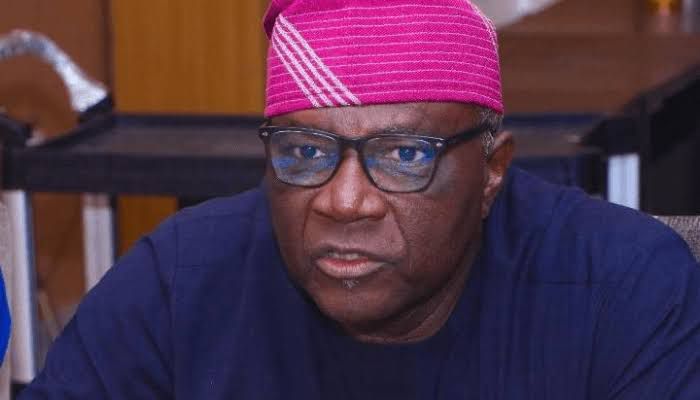
Nigeria’s Defence Minister, General Christopher Musa, has disclosed fresh details about an alleged coup plot that shook the country’s security establishment late last year, revealing that he was personally listed as one of the intended targets.
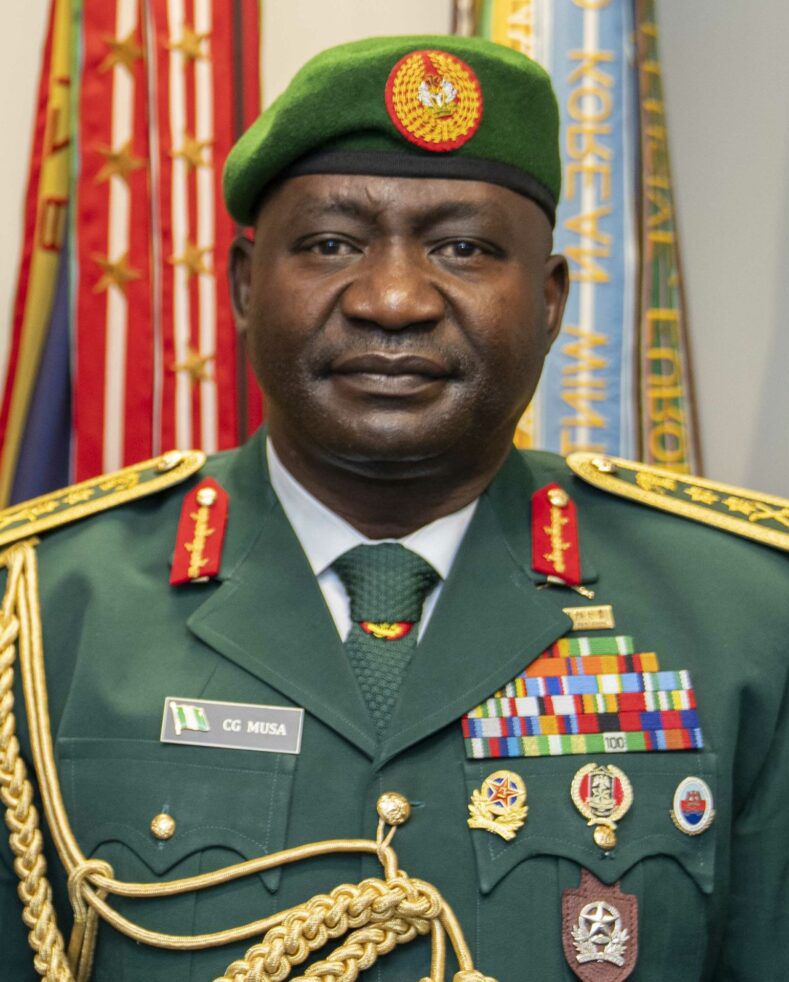
According to the minister, the plan allegedly involved his arrest, with instructions that he should be shot if he refused to cooperate.
General Musa made the disclosure during a television interview on Sunday Politics, bringing new public attention to the alleged coup plot that led to the arrest of several military officers in October.
His comments came shortly after the Armed Forces of Nigeria confirmed that some of those detained would face trial for offences linked to an attempt to destabilise the democratically elected government of President Bola Ahmed Tinubu.
The defence minister, who served as Chief of Defence Staff before his current appointment, said intelligence briefings made it clear that he was among those marked for neutralisation.
He explained that the plotters allegedly planned to detain him early in the operation, adding that lethal force was to be used if he resisted arrest.
Musa stressed that the revelations underscored how serious and far-reaching the alleged coup plot had become before it was uncovered.
In October, military authorities initially announced the arrest of 16 officers over acts of indiscipline and violations of service regulations.
At the time, officials avoided linking the arrests to any wider political conspiracy.
However, as investigations progressed, the military later acknowledged that evidence had emerged suggesting that some of the officers were involved in a coordinated effort to overthrow the government, bringing the alleged coup plot into sharper focus.
The Director of Defence Information, Brigadier General Samaila Uba, stated that findings from ongoing investigations identified a number of the arrested officers as having cases to answer regarding actions inconsistent with the ethics, values, and professional standards expected of members of the Armed Forces of Nigeria.
He confirmed that those implicated would be formally arraigned before a competent military judicial panel, in accordance with the Armed Forces Act and other relevant service regulations.
Beyond the military hierarchy, reports indicated that several senior government officials and prominent individuals were also considered potential targets in the alleged coup plot.
The situation reportedly contributed to heightened security concerns nationwide, including the cancellation of Nigeria’s 65th Independence Anniversary parade, a move that drew widespread public attention and speculation at the time.
Further reports claimed that security operatives carried out a raid on the residence of a former Bayelsa State governor, Timipre Sylva, over suspected links to the unfolding investigation.
While no formal charges were announced in connection with the raid, the development added to the atmosphere of uncertainty and concern surrounding the alleged coup plot, as Nigerians sought clarity on how extensive the plan may have been.
Reacting strongly to the situation, General Musa described those involved as reckless and misguided.
He questioned the judgment of the alleged plotters, stating that it was unrealistic to believe they could successfully challenge the Nigerian Armed Forces or impose military rule on a population that has long resisted authoritarian governance.
According to him, the individuals involved underestimated both the professionalism of the military and the resolve of ordinary Nigerians.
The defence minister further argued that any attempt to return the country to military rule would have met stiff resistance from citizens across the country.
He noted that Nigerians had struggled for years to end military domination of politics, a struggle that eventually led to the restoration of democracy in 1999.
Musa also pointed out that President Tinubu himself was an active participant in the pro-democracy movement, making the idea of a successful coup particularly unrealistic.
Nigeria’s history provides important context for the seriousness of the alleged coup plot.
Between 1966 and 1993, the country experienced a series of military coups and counter-coups that shaped its political trajectory.
Since the return to civilian rule, successive governments have worked to entrench democratic institutions and ensure civilian control over the armed forces.
The latest allegations come at a time when West Africa has witnessed a resurgence of military takeovers and failed coup attempts.
Countries in the region have seen democratic governments overthrown by soldiers citing governance and security challenges.
Reports of a failed coup attempt in neighbouring Benin Republic late last year have further heightened regional concerns.
Against this backdrop, Nigerian authorities say the handling of the alleged coup plot is meant to send a clear signal that unconstitutional changes of government will not be tolerated.
Military leaders have reiterated their commitment to professionalism, discipline, and loyalty to the constitution, as the judicial process moves forward.
Ireport247news
About The Author