

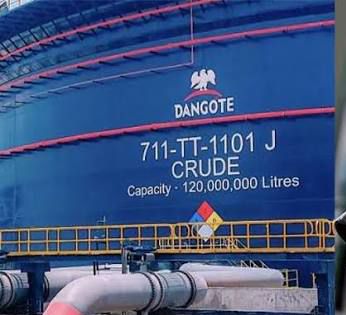
African economies are increasingly pivoting toward local refining capacity as global supply disruptions reshape fuel sourcing dynamics, with the Dangote Refinery emerging as a strategic anchor.
Dangote refinery fuel supply reshapes Africa’s energy security
The race to secure reliable fuel supply across Africa has intensified, as several countries move to reduce their dependence on volatile international markets. At the centre of this shift is the Dangote Petroleum Refinery, which is rapidly evolving from a domestic industrial project into a continental energy hub.
Recent developments indicate that countries such as South Africa and others are actively exploring supply arrangements with the Lagos-based refinery, amid mounting uncertainty in global oil markets. The surge in interest reflects a broader recalibration of energy strategies across Africa, driven by geopolitical tensions and supply chain disruptions linked to instability in the Middle East.
The refinery, with a processing capacity of 650,000 barrels per day, is now positioned as a critical alternative to traditional fuel import routes, particularly those originating from the Persian Gulf. Industry observers note that the shift marks a turning point in Africa’s long-standing reliance on distant suppliers for refined petroleum products.
Energy security concerns have intensified following disruptions tied to the Iran conflict in Middle East, which have significantly affected the stability of global supply chains. As a result, governments are prioritising availability over cost, a departure from conventional procurement strategies that were largely price-driven.
Chairman of the Dangote Group, Aliko Dangote, underscored this reality, noting that access to fuel has become more critical than pricing considerations in the current climate. His remarks reflect a growing consensus among policymakers that energy resilience is now central to economic stability.
For countries like South Africa, which remains one of the continent’s largest fuel consumers, diversifying supply sources has become an urgent priority. Government officials have signalled a strategic shift toward sourcing refined products from within Africa, particularly from Nigeria, to mitigate risks associated with external shocks.
Beyond South Africa, other African nations are reportedly in advanced discussions or making inquiries to secure supply agreements with the refinery. The urgency stems from fears that continued disruptions in traditional supply corridors could trigger fuel shortages, inflationary pressures, and broader economic instability.
Analysts say the Dangote refinery fuel supply advantage lies not only in its scale but also in its geographic proximity. By reducing transportation costs and delivery timelines, the facility offers a more stable and efficient supply chain compared to imports from Europe or the Middle East.
This development also signals a deeper structural shift in Africa’s energy landscape. For decades, the continent exported crude oil while importing refined products, a paradox that exposed economies to external vulnerabilities. The emergence of large-scale refining capacity within Africa is now beginning to reverse that trend.
In Nigeria, the impact has already been significant. The refinery has helped stabilise domestic fuel availability, reducing the frequency of shortages that once plagued the downstream sector. Petrol, diesel, and aviation fuel are now supplied locally at scale, ensuring consistent distribution across the country.
However, the transition has not been without challenges. Despite improved supply stability, fuel prices have remained elevated, reflecting global crude oil dynamics and foreign exchange pressures. Recent price adjustments have sparked concerns among consumers and businesses, particularly as transportation and production costs continue to rise.
Nevertheless, stakeholders argue that the long-term benefits outweigh the short-term price volatility. By strengthening local refining capacity, Nigeria is better insulated from external shocks, while also positioning itself as a key exporter of refined products within Africa.
The broader continental implications are equally significant. Increased reliance on the Dangote refinery fuel supply could enhance regional integration, reduce dependence on imports from outside Africa, and support intra-African trade under frameworks such as the African Continental Free Trade Area.
Experts also highlight the potential for the refinery to catalyse further investments in energy infrastructure, including storage, distribution, and logistics networks. As demand grows, additional capacity expansion and complementary projects may emerge to support the evolving ecosystem.
Moreover, the shift aligns with global trends toward supply chain resilience, where countries prioritise diversification and localisation to manage risks. For Africa, this represents an opportunity to redefine its role in the global energy market—not just as a supplier of crude oil, but as a producer of refined products.
As geopolitical tensions persist and global energy markets remain unpredictable, the importance of reliable, regionally anchored supply sources is expected to grow. In this context, the Dangote refinery is not just a national asset but a strategic continental resource.