Former Attorney General Abubakar Malami raises alarm as EFCC raids his homes and offices, linking the action to unresolved controversy surrounding Chapter 9 of the Salami Report.
Fresh controversy has erupted around Nigeria’s anti-corruption architecture following coordinated raids by operatives of the Economic and Financial Crimes Commission (EFCC) on properties linked to former Attorney General of the Federation, Abubakar Malami, SAN.
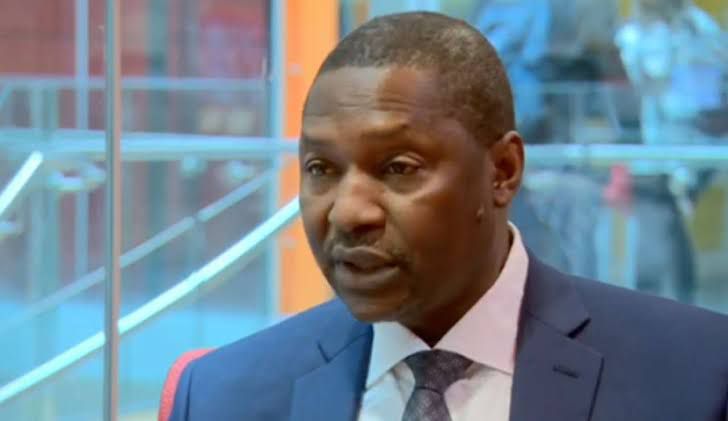
The development has triggered public debate about due process, transparency, and the unresolved issues surrounding the Justice Ayo Salami Judicial Commission of Inquiry Report.
According to a statement released on December 17 by Malami’s media aide, Mohammed Doka, EFCC officials simultaneously stormed the former justice minister’s private residences and legal offices in Abuja and Kebbi State.
The operation, which reportedly took place on December 16, was described as sudden and carried out without any prior notice, invitation, or formal request for cooperation.
The statement claimed that the search was specifically targeted at documents allegedly connected to Chapter 9 of the Salami Report, a section that has remained contentious years after the judicial panel submitted its findings.
The focus on that particular chapter has raised eyebrows, especially given the timing of the raids.
Malami’s camp expressed concern that the EFCC action followed closely after public calls for the commission’s chairman to recuse himself from matters relating to the Salami Report due to alleged bias.
They argued that the sequence of events creates the impression of intimidation or retaliation rather than a neutral investigative process.
Describing the situation as deeply troubling, Malami warned that the safety of his staff and associates could be at risk if such actions continue unchecked.
He maintained that the manner in which the raids were conducted sends a dangerous signal about the use of state power against individuals who raise uncomfortable questions about governance and accountability.
The former attorney general further challenged Nigerians and the media to interrogate the broader implications of the raids.
Among the questions he posed were why law enforcement agencies would resort to surprise searches instead of following established legal procedures, especially when dealing with a senior legal practitioner and former chief law officer of the federation.
He also questioned the legal authority under which EFCC operatives allegedly narrowed their search to Chapter 9 of the Salami Report, asking whether the action was supported by a valid court order or based on discretionary enforcement.
According to him, transparency in such matters is critical to maintaining public trust in anti-corruption institutions.
Another issue raised was the prolonged secrecy surrounding the Salami Report itself. Despite being submitted several years ago, key sections of the document, particularly Chapter 9, have not been made public.
Malami argued that this secrecy has fueled speculation, suspicion, and political manipulation, turning what should have been a tool for judicial accountability into a source of ongoing conflict.
In light of these concerns, Abubakar Malami called on civil society organisations, professional bodies, and human rights groups to step in.
He urged them to pressure the Federal Government, the Ministry of Justice, and the Office of the Attorney General to release the full Salami Report in the interest of openness and democratic accountability.
He insisted that public access to the report would allow Nigerians to judge the facts for themselves rather than relying on selective leaks or enforcement actions.
According to him, sunlight remains the best disinfectant, particularly when allegations touch on the integrity of public institutions and senior officials.
The EFCC has not, as of the time of writing, issued a detailed public explanation addressing the specific claims raised by Malami.
This silence has further intensified debate, with legal analysts and commentators calling for restraint, professionalism, and strict adherence to the rule of law.
Observers note that the controversy comes at a time when public confidence in anti-corruption efforts is under strain.
While many Nigerians support robust action against corruption, there is growing insistence that such actions must be free from political undertones and must respect constitutional safeguards.
For critics, the raids underscore the need for clear boundaries between lawful investigation and perceived harassment.
For supporters of the EFCC, the episode highlights the difficulty of pursuing high-profile cases without attracting accusations of bias.
Either way, the incident has renewed calls for institutional reforms and greater transparency in how sensitive investigations are conducted.
Ireport247news
About The Author