


The Oyo State Government has carried out the coronation of three Ibadan High Chiefs as crown-wearing Obas in a move that is already generating legal, cultural, and political debate across the state.
The ceremony, held at the historic Mapo Hall, marked another milestone in the ongoing restructuring of Ibadan’s traditional leadership system under the administration of Seyi Makinde.
Oyo Government crowns Senator Sarafadeen Alli, others in absentia
In a development that has drawn widespread attention, the Oyo Government crowns Senator Sarafadeen Alli, others in absentia, with the newly elevated monarchs not physically present during the coronation rites.
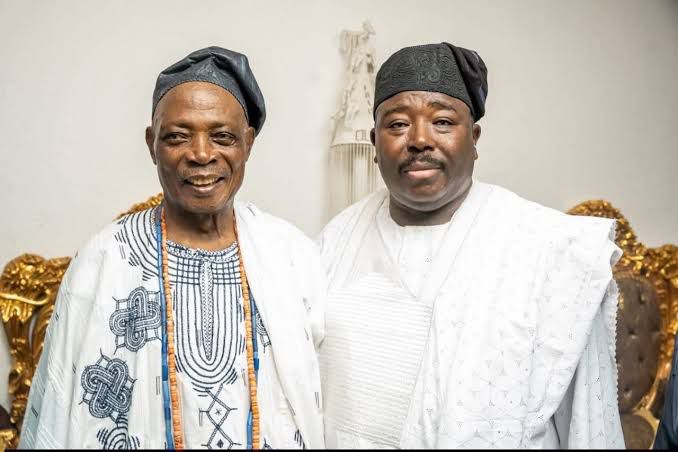
Those affected include Sarafadeen Abiodun Alli, Akeem Mobolaji Adewoyin, and Oyekola Babalola, all of whom were formally presented with the Staff of Office through the governor’s representative, Bayo Lawal.
While the government insists the process followed due procedure, the Oyo Government crowns Senator Sarafadeen Alli, others in absentia decision has introduced a new dimension to traditional rulership in Ibadanland.
Legal and constitutional implications emerge
One of the immediate consequences of the Oyo Government crowns Senator Sarafadeen Alli, others in absentia action is the potential for legal scrutiny.
Traditional institutions in Nigeria operate within a hybrid framework that combines customary law with statutory backing. Legal experts note that while state governments possess the authority to recognise and upgrade chiefs, the absence of the individuals during key rites could raise questions about procedural validity.
There are concerns that aggrieved stakeholders within Ibadan’s traditional hierarchy could challenge the process in court, particularly if they perceive it as a deviation from established customs.
Such litigation, if initiated, could test the limits of executive powers over traditional institutions and set precedents for future reforms.
Cultural authenticity under debate
Beyond legal considerations, the Oyo Government crowns Senator Sarafadeen Alli, others in absentia move has sparked a deeper cultural debate.
In Yoruba tradition, coronation rites are not merely symbolic—they are spiritual and communal processes that often require the physical presence of the individual being crowned.
Cultural custodians argue that performing such rites in absentia could dilute the authenticity of the institution and weaken the spiritual legitimacy traditionally associated with Obaship.
However, proponents of the reform maintain that evolving governance realities necessitate flexibility, especially in cases where administrative decisions intersect with tradition.
Impact on Ibadan traditional hierarchy
Ibadan’s unique chieftaincy system has historically followed a structured progression leading to the emergence of the Olubadan. The elevation of multiple High Chiefs to Obaship status—and particularly in absentia—introduces a structural shift that may redefine power dynamics within the system.
The Oyo Government crowns Senator Sarafadeen Alli, others in absentia development could lead to overlapping authorities among traditional rulers, potentially creating ambiguity in roles and jurisdiction.
Observers warn that without clear delineation of responsibilities, the reform could trigger rivalry or contestation among traditional titleholders.
Political consequences and perception
The inclusion of a serving senator among those crowned has also injected political undertones into the development.
The Oyo Government crowns Senator Sarafadeen Alli, others in absentia decision may be interpreted by some as a convergence of political influence and traditional authority, a dynamic that has historically shaped governance in parts of Nigeria.
This perception could influence public trust and stakeholder acceptance of the reform, especially if it is seen as politically motivated rather than culturally grounded.
Precedent for future coronations
Another major consequence is the precedent it sets. By successfully conducting a coronation in absentia, the Oyo State Government may have opened the door for similar actions in the future.
The Oyo Government crowns Senator Sarafadeen Alli, others in absentia move could therefore redefine procedural norms, making physical presence less central to traditional rites.
While this may enhance administrative efficiency, critics caution that it risks eroding long-standing customs that have sustained traditional institutions for generations.
Governance and administrative efficiency
On the other hand, supporters argue that the decision reflects a pragmatic approach to governance.
The Oyo Government crowns Senator Sarafadeen Alli, others in absentia initiative demonstrates the state’s willingness to prioritise continuity and administrative timelines, even in the face of logistical challenges.
From this perspective, the reform could streamline traditional appointments and reduce delays associated with ceremonial obligations.
Balancing tradition and modernity
Ultimately, the controversy surrounding the Oyo Government crowns Senator Sarafadeen Alli, others in absentia action highlights a broader tension between tradition and modern governance.
As states continue to reform traditional institutions to align with contemporary realities, questions about cultural preservation, legal validity, and stakeholder inclusion are likely to persist.
What lies ahead
In the coming weeks, attention will likely shift to how the newly crowned Obas assume their roles and integrate into the existing traditional framework.
There may also be increased calls for dialogue among stakeholders to address concerns and clarify the implications of the reform.
For now, the Oyo Government crowns Senator Sarafadeen Alli, others in absentia development stands as a defining moment in Ibadan’s traditional evolution—one that could reshape not only local governance but also the broader discourse on the future of traditional institutions in Nigeria.
About The Author
