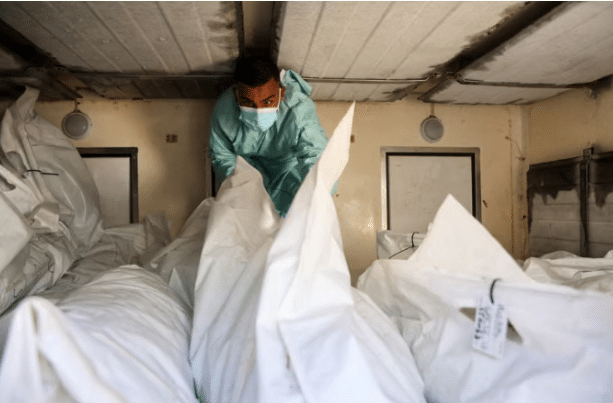
Gaza authorities confirmed that at least 135 Palestinian bodies returned from Israel were held at Sde Teiman, a notorious military detention facility long accused of torture and unlawful deaths.
Documents discovered inside the body bags indicate that all remains came from Sde Teiman, a site in the Negev desert. Doctors in Gaza immediately began forensic examinations on the returned bodies.
Dr Munir al-Bursh, director general of Gaza’s health ministry, said that Hebrew tags in each body bag confirm DNA tests were conducted on some victims, revealing systematic documentation by Israeli authorities.
Eyad Barhoum, administrative director at Nasser hospital in Khan Younis, explained that many bodies carried only identification codes instead of names, complicating identification but showing clear signs of execution and torture.
Photographs reviewed by doctors, too graphic to publish, show victims blindfolded, hands tied behind their backs, and some with ropes around their necks, evidence of systematic abuse before death.
Official examinations revealed injuries consistent with summary executions, point-blank gunshots, and crushing under tank tracks, suggesting some detainees may have been killed in Gaza before being transported to Sde Teiman.
Sde Teiman has faced serious allegations for years. Last year, the Israeli military launched an investigation into 36 detainee deaths, yet human rights activists insist abuse and neglect remain widespread in the detention facility.
Whistleblowers testified that detainees were handcuffed to beds, blindfolded, dressed in nappies, and physically abused. These accounts corroborate the evidence discovered in the Palestinian bodies returned to Gaza.
Eyad Barhoum described the case of Mahmoud Ismail Shabat, 34, whose body bore marks of hanging, legs crushed by tanks, and tied hands. His brother identified him using a prior surgical scar.
Shabat’s mother lamented: “All our hostages returned tortured and broken. Where is the world?” Families continue to face severe emotional trauma caused by deliberate abuses inside detention.
Doctors observed that blindfolds and bindings strongly suggest that detainees were tortured before death. Many of the 1,500 bodies currently held at Sde Teiman await identification and forensic analysis.
Whistleblowers described detainees arriving at hospitals with gunshot wounds, handcuffed, blindfolded, and naked. Some had been captured while receiving medical treatment in Gaza, raising grave ethical concerns.
Shadi Abu Seido, a Palestinian journalist, reported extreme mistreatment during 20 months of detention. He described being stripped naked for ten hours and handcuffed and blindfolded for over 100 days.
He detailed amputations, sexual abuse, and psychological torture. “They brought dogs that urinated on us,” Abu Seido said. His experience highlights widespread abuse of Palestinian detainees in Israeli custody.
Physicians for Human Rights Israel (PHR) confirmed the findings. Naji Abbas said the evidence aligns with years of reports of systematic torture and killings at Sde Teiman detention facility.
PHR emphasized that independent international investigations are required to hold perpetrators accountable. Impunity cannot continue for violations of detainees’ rights under international law.
Forensic specialists stress impartial review. UN-appointed expert Dr Morris Tidball-Binz called for independent assistance to examine the Palestinian bodies returned and determine the circumstances surrounding each detainee’s death.
An Israeli doctor who reviewed photos noted severe ischemic changes in detainees’ arms caused by binding. These injuries may have contributed to death while in custody, experts warned.
The IDF has asked the Israel Prison Service to investigate but declined to comment on Sde Teiman allegations. While claiming detainees are treated “appropriately and carefully,” concerns remain.
The United Nations reports at least 75 Palestinians have died in Israeli detention since October 2023. Families and human rights advocates stress urgent international oversight is needed to prevent further deaths.
Returned bodies are part of ongoing hostilities and ceasefire agreements. Hamas and Israel exchange hostages and remains, yet evidence of torture complicates confidence in peace and ceasefire mechanisms.
Eyad Barhoum highlighted that returning tortured bodies has devastating psychological effects. Families face compounded grief, while broader communities confront evidence of systematic abuses during detention.
International human rights organizations have called for investigations into Sde Teiman. They stress that torture allegations, unlawful deaths, and medical neglect cannot be resolved by internal military inquiries alone.
Doctors and witnesses report that detainees are often brought from Gaza conflict zones with injuries but denied medical care once in detention, suggesting deliberate abuse and intimidation.
One whistleblower described detainees with gangrenous wrists due to handcuffs, leading to amputations. These cases demonstrate both physical and psychological torture, highlighting severe conditions inside Israeli custody.
PHR and UN experts continue to demand accountability. Abbas said each Palestinian body returned is evidence of systemic human rights violations. International law requires Israel to protect detainees and investigate abuses.
As Gaza examines the remains, questions persist about how many detainees were killed inside Sde Teiman versus elsewhere. Evidence of torture underscores the human cost of detention during conflict.
The findings are a stark reminder of the critical role of international law in conflict zones. Transparency in military detention practices is essential to protect detainees’ human rights.

Families like the Shabats await answers. Recovering remains is only the start of seeking truth and justice. Evidence of torture and mutilation represents a humanitarian crisis demanding urgent global attention.
Global authorities and human rights organizations insist that Palestinian bodies returned must be fully examined. Independent investigations are necessary to prevent future atrocities and hold perpetrators accountable.
The case of Sde Teiman detention underscores systemic failures in protecting prisoners. Human rights advocates emphasize international monitoring as crucial for detainees’ safety and dignity in conflict zones.
The tragedy extends beyond physical abuse. Psychological trauma inflicted by torture and binding leaves long-lasting scars on survivors, families, and the broader Palestinian community affected by occupation.
Without transparent investigations, detainees remain vulnerable, impunity continues, and accountability remains elusive. International legal mechanisms must intervene to ensure justice for victims and their families.
The evidence from Gaza serves as both documentation and warning. Palestinian bodies returned highlight systematic abuses, urgent human rights violations, and the critical need for independent forensic examinations to hold authorities accountable.
The return of additional remains over the coming weeks is expected to provide more information. Medical teams stress that Palestinian bodies returned often show repeated patterns of abuse, pointing to institutionalized torture practices.
Doctors urge international forensic experts to assist in examining Palestinian bodies returned, ensuring accurate documentation and evidence collection for accountability measures at global human rights forums.
The findings emphasize the ongoing human rights crisis in Gaza detention centers. Each examination of Palestinian bodies returned reinforces calls for urgent, independent international investigations into systemic abuses.
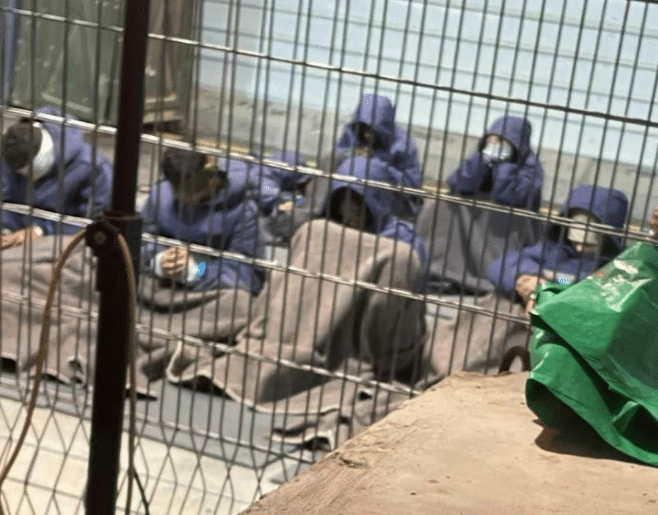
Families, human rights organizations, and medical authorities warn that without action, the cycle of abuse will continue. Palestinian bodies returned provide undeniable proof of violations demanding global attention and justice.