

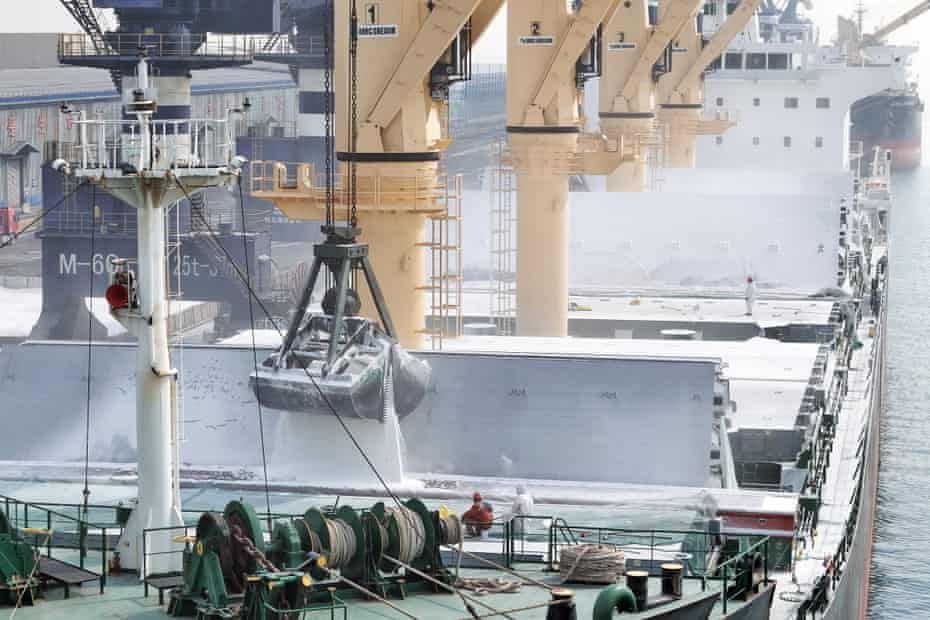
WTO fertiliser warning over strait of Hormuz closure highlights growing risks to global agriculture, as disruptions in supply chains raise concerns about declining harvests and rising food prices worldwide.
The warning was issued by World Trade Organization deputy director general Jean-Marie Paugam, who emphasized the serious consequences of prolonged disruption to fertiliser shipments through the critical maritime route.
According to Paugam, approximately one-third of the world’s fertiliser supplies typically pass through the strategic strait, making it a vital artery for global agricultural production systems.
The strait of Hormuz, now heavily disrupted due to ongoing conflict involving Iran, has significantly slowed or halted shipments, creating uncertainty in international markets.
Paugam stressed that the impact would not only be immediate but could also extend into future agricultural cycles, amplifying risks for food security across multiple regions.
“There would be an impact on both quantity and prices,” he explained, warning that supply disruptions would inevitably translate into higher costs for farmers and consumers alike.
“The effect compounds the following year: harvests shrink and prices rise,” Paugam added, underlining the long-term consequences of the current situation.
Fertiliser production has also been affected, as the Gulf region, which holds abundant natural gas reserves essential for fertiliser manufacturing, faces operational disruptions.
Several production facilities have reportedly been forced to shut down due to the conflict, further tightening global supply and increasing pressure on agricultural systems.
Countries that rely heavily on fertiliser imports are particularly vulnerable, as reduced availability could limit crop yields and strain national food supplies.
Major agricultural exporters such as India, Thailand, and Brazil depend significantly on fertilisers like urea, a nitrogen-based input crucial for high-yield farming.
Any sustained disruption in supply could therefore have cascading effects, not only on domestic production in these countries but also on global food markets.
Paugam noted that while there is currently no immediate fertiliser shortage, the situation could deteriorate if the conflict continues for an extended period.
He warned that the timing of the disruption is especially concerning, as it coincides with key planting seasons for crops that will be harvested in the following year.
This overlap increases the likelihood that shortages will directly affect agricultural output, potentially leading to reduced harvest volumes on a global scale.
Regions that depend heavily on food imports, particularly parts of West and North Africa, face heightened risks under these conditions.
Such countries may struggle to secure adequate supplies if global production declines or if exporting nations impose restrictions to protect domestic markets.
The potential for stockpiling by countries seeking to safeguard their own food security could further exacerbate the situation.
A similar pattern was observed during the Covid pandemic, when panic buying and export restrictions intensified shortages and drove up prices.
Experts warn that repeating such behaviors could accelerate the emergence of a global food crisis if supply disruptions persist.
The interconnected nature of global supply chains means that even localized disruptions can have far-reaching consequences across continents.
Agricultural markets are particularly sensitive to such shocks, given their reliance on timely access to inputs like fertilisers and stable transportation routes.
The closure or restriction of the strait of Hormuz underscores the vulnerability of these systems to geopolitical conflicts.
It also highlights the importance of diversifying supply chains and investing in alternative sources of fertiliser production to enhance resilience.
International organizations are closely monitoring the situation, urging cooperation among nations to avoid measures that could worsen the crisis.
Maintaining open trade flows and preventing unnecessary restrictions will be critical in mitigating the potential impact on global food security.
Farmers around the world are already facing rising input costs, and further increases could limit their ability to maintain production levels.
This, in turn, could lead to reduced availability of key staple crops, affecting both prices and access to food in vulnerable regions.
The situation serves as a reminder of how geopolitical tensions can quickly translate into economic and humanitarian challenges.
As the conflict continues, policymakers will need to balance national interests with global responsibilities to prevent widespread disruption.
Efforts to stabilize the region and restore normal trade routes will be essential in ensuring the continuity of fertiliser supplies.
In the meantime, governments and international bodies may need to explore contingency measures to support affected countries.
These could include financial assistance, strategic reserves, and initiatives aimed at boosting local agricultural production.
Read also: Iran Israel missile escalation intensifies as Tehran rejects Trump talks claims
The coming months will be critical in determining the extent of the impact, as planting decisions made now will shape harvest outcomes in the future.
Without timely intervention, the warning signals outlined by the WTO could materialize into tangible shortages and escalating food prices.
Ultimately, the crisis underscores the fragile balance that underpins global food systems and the need for coordinated action to sustain them.
About The Author
