
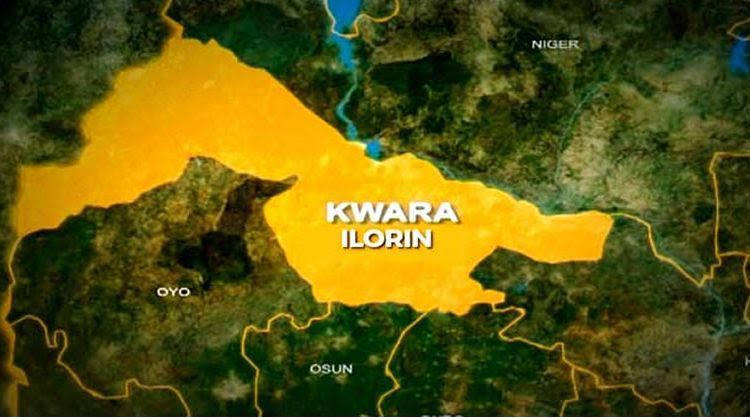
A United States–based professor of journalism, Farooq Kperogi, has delivered a harrowing account of a deadly terrorist assault on Woro, a rural community in Kaiama Local Government Area of Kwara State, describing the killings as both devastating and deeply troubling for Nigeria’s internal security architecture.
The Woro massacre has not only left scores of families grieving but has also sparked serious concerns about possible compromises within the nation’s security system.
Kperogi, who is originally from neighbouring Baruten Local Government Area, said the attack struck close to home because of the strong historical, cultural, and familial links between Woro and his own people.
In a personal reflection shared publicly, he said the scale of violence was so overwhelming that it took a significant emotional toll on him as he struggled to document what had happened.
According to his account and reports from local residents, the violence erupted after the community received a letter from terrorists who claimed they intended to visit the village to preach on an unspecified date.
Troubled by the message and suspicious of its true purpose, the district head of Woro, Alhaji Salihu Umar, reportedly alerted security agencies, believing this was the responsible step to protect his people.
Instead of bringing safety, that decision may have sealed the community’s fate.
The attackers, locally referred to as “Mamuda” and believed to be Boko Haram–linked elements operating along the Borgu axis, allegedly became aware that their plan had been reported.
What followed was a brutal retaliation that residents say suggests the terrorists had access to inside information.
The assault reportedly began on a Tuesday evening and continued into the early hours of Wednesday.
Survivors described a sustained onslaught in which armed men moved through the village with deadly efficiency.
By the time the gunfire subsided, at least 170 people were believed to have been killed, making the Woro massacre one of the deadliest single attacks in the area’s history.
Homes were set ablaze, farmlands destroyed, and personal belongings looted.
Several residents were abducted during the chaos, and their whereabouts remain unknown.
Entire families were wiped out, while others fled into nearby bushes and neighbouring communities in search of safety.
One of the most disturbing details to emerge from the attack was the alleged use of the district head’s personal SUV by the assailants during the operation.
Kperogi disclosed that Alhaji Salihu Umar’s fate is still unclear, adding another layer of tragedy and uncertainty to the unfolding story.
For many locals, this detail symbolised the depth of the community’s vulnerability and the attackers’ boldness.
Images and videos circulating privately among residents show scenes of devastation that words struggle to capture.
According to Kperogi, the visuals depict lifeless bodies of men, women, and children scattered across the village.
He said viewing the images left him emotionally shaken and haunted, underscoring the human cost behind the statistics of the Woro massacre.
Beyond the immediate horror, the attack has reignited broader fears across the Borgu axis, a vast border region spanning parts of Kwara, Niger, and Kebbi states.
This corridor has increasingly become a hotspot for armed groups exploiting porous borders, difficult terrain, and limited security presence.
Residents say the attackers often move freely across state lines, striking isolated communities with little resistance.
Kperogi recalled that only weeks before the events in Woro, hundreds of people were reportedly killed on the Niger State side of Borgu in similarly brutal raids.
He argued that these repeated attacks point to a systematic pattern rather than isolated incidents, warning that rural communities are being left exposed to organised violence.
Central to the outrage surrounding the killings is the belief among residents that the terrorists may have informants within the security agencies.
Kperogi stressed that this is a perception widely held by locals, based on the speed with which the attackers appeared to know their plans had been reported.
While this allegation has not been officially confirmed, it has severely eroded trust between communities and the institutions meant to protect them, especially in the aftermath of the Woro massacre.
The professor challenged authorities to confront these concerns transparently, arguing that restoring public confidence is just as important as deploying troops.
He warned that without accountability and intelligence reform, military reinforcements alone may not be enough to deter future attacks.
In a strongly worded appeal, Kperogi urged the federal government to treat the Borgu axis as a security priority.
He called for increased patrols, better intelligence gathering, closer cooperation between states, and meaningful engagement with local communities who often have early warnings of impending threats.
He also addressed narratives circulating outside Nigeria that frame such attacks through a narrow religious lens.
According to him, the victims of the Woro massacre were Muslims, stressing that violence against civilians should never be minimised or politicised based on identity.
Every innocent life lost, he said, is a tragedy that demands empathy and action.
As families in Woro bury their dead and search for missing loved ones, the community faces a long road to recovery.
Many survivors are now displaced, traumatised, and fearful that the attackers could return.
The destruction of homes and livelihoods has compounded their suffering, leaving urgent humanitarian needs alongside security concerns.
Ultimately, the tragedy has become a grim symbol of the challenges confronting Nigeria’s fight against terrorism.
For observers like Kperogi, the lesson of the Woro massacre is clear: without decisive action, improved intelligence integrity, and sustained protection for vulnerable rural areas, more communities could face similar devastation.
Ireport247news
About The Author




