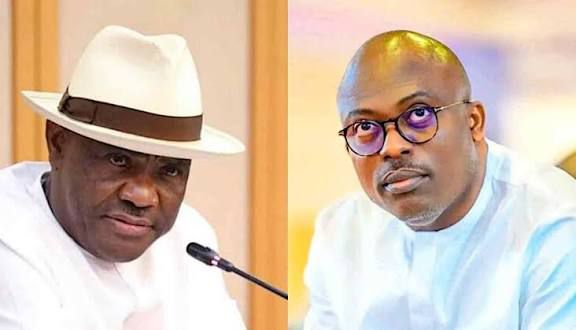
Wike has accused Rivers Governor Siminalayi Fubara of cancelling a 10,000-youth employment scheme and abandoning major projects initiated by the previous administration.
The Minister of the Federal Capital Territory (FCT), Nyesom Wike, has launched a fresh and blistering attack on the Rivers State Governor, Siminalayi Fubara, accusing him of abandoning critical development initiatives and cancelling a large-scale youth employment programme designed to engage 10,000 young people across the state.
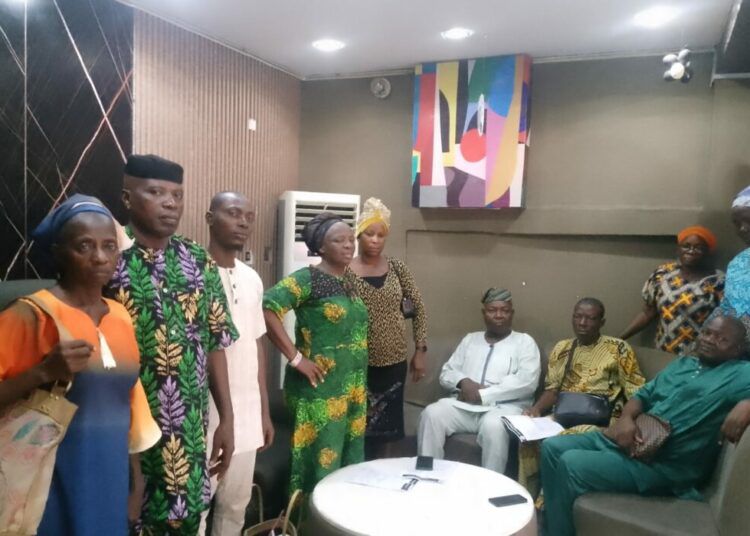
Speaking during a political visit to Ahoada East Local Government Area, the former Rivers State governor expressed deep disappointment over what he described as a lack of continuity and gratitude by the current administration.
The visit, organised by the Renewed Hope Family, was part of an appreciation tour to thank supporters in the area for their political loyalty.
According to the minister, the employment programme was already in progress before he handed over power in May 2023, and was meant to address youth unemployment while promoting social stability.
However, he alleged that the programme was abruptly cancelled shortly after Governor Fubara assumed office, denying thousands of young people an opportunity to earn a living.
Wike described the decision as a major setback for Rivers State, stressing that governance is a continuum that requires successive administrations to build on existing frameworks rather than dismantle them.
He argued that the strength of any government lies in its ability to sustain policies that directly impact the welfare of the people, especially young citizens.
Beyond employment, the minister also accused the Fubara administration of taking undue credit for large infrastructure projects that were conceived, funded, and substantially executed under his leadership.
He specifically mentioned the Ahoada–Omoku Road and the Emohua–Kalabari Road projects, insisting that significant financial commitments had already been made before the change of government.
Providing details, Wike explained that his administration undertook the ambitious dualisation of the Ahoada road at a time many believed the project was unrealistic.
He said the first phase of the project was completed, while the second phase—designed to extend to Omoku—was formally launched before his exit from office.
He added that the same day the Ahoada–Omoku project was flagged off, the Emohua–Kalabari Road contract was also awarded.
Both projects, he noted, were given to reputable construction firms under financing arrangements tied to the state’s internally generated revenue.
According to the minister, Julius Berger was engaged with an agreement to receive N4 billion monthly from Rivers State’s IGR, while the combined cost of the two road projects was estimated at approximately N80 billion.
Under the agreed structure, he said, the roads were projected to be completed within two years.
Wike further disclosed that substantial payments had already been made to contractors before he left office.
He claimed that about 70 per cent of the contract sum for one of the road projects handled by Setraco had been paid, leaving little justification for any delay or controversy surrounding the work.
Expressing frustration, the former governor lamented what he described as deliberate attempts to downplay his contributions while presenting ongoing projects as new initiatives.
He questioned why political actors would ignore the foundations laid by previous administrations instead of acknowledging them and ensuring their completion.
Reflecting on his time as governor, Wike said Rivers State once commanded respect and admiration across the country due to its pace of development and political relevance.
He argued that abandoning established programmes risked eroding those gains and diminishing the state’s standing within the federation.
He maintained that upon handing over power, he clearly outlined the status of projects and programmes and urged the new administration to continue from where he stopped.
According to him, leadership demands humility and responsibility, especially when benefiting from structures already put in place.
At the event, the Chairman of the Board of the South-South Development Commission (SSDC) and leader of the Renewed Hope Family in Ahoada, Rt. Hon. Chibudom Nwuche, publicly aligned himself with the minister’s position.
Nwuche praised Wike for what he described as unmatched commitment to the development of Ahoada and its surrounding communities.
The former Speaker of the House of Representatives said no previous governor had invested as much political will and resources into the area as Wike.
He commended the minister for supporting President Bola Tinubu during the general elections and for backing the emergence of Governor Fubara as part of a broader political strategy.
Nwuche stressed that political loyalty should be reciprocal, noting that Governor Fubara emerged from a collective political decision.
He argued that unity and gratitude were essential for sustaining political structures, warning that internal divisions weaken governance and public trust.
He also cautioned individuals outside Rivers State against interfering in its internal political affairs, emphasising that politics remains local in nature.
According to him, external actors should focus on consolidating support for the president in their respective states rather than attempting to influence Rivers State politics.
The remarks at Ahoada further highlight the growing political tension within Rivers State, as disagreements between former allies continue to shape public discourse.
Analysts believe the dispute underscores broader debates around political succession, loyalty, and the challenge of maintaining continuity in governance.
As Rivers State navigates this period of political realignment, many residents are watching closely to see how the ongoing rift will affect development, youth empowerment, and the delivery of public services.
The controversy has also reignited conversations about the importance of institutional stability beyond individual personalities.
While the Fubara administration has yet to formally respond to the latest allegations, the statements made in Ahoada signal that the political relationship between both leaders remains strained.
For now, the debate continues to dominate Rivers State politics, with implications that may extend well beyond the state.
Ireport247news
About The Author