

Nigeria’s Rusty Affair with Ajaokuta Steel Leaves Billions Wasted
Nigeria has spent N46.62 billion on the Ajaokuta Steel Company over the past decade, yet the facility has failed to produce a single tonne of steel commercially, according to budget data analysed by ireport247news.
Envisioned in the late 1970s, the complex was intended as the crown jewel of Nigeria’s industrial revolution, aimed at anchoring shipbuilding, construction, transport, automotive, and broader manufacturing.
Today, it stands as a cautionary tale of squandered billions, policy flip-flops, and decaying infrastructure.
Ajaokuta Steel Company: A Failed Industrial Dream
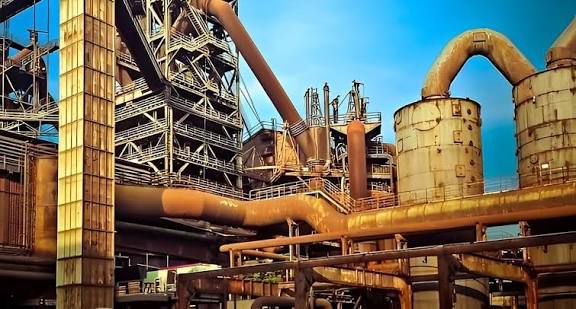
The Ajaokuta Steel Company, located on the banks of the River Niger in Kogi State, was commissioned in 1979 as part of Nigeria’s strategic plan to industrialise rapidly.
The project was designed to produce 1.3 million tonnes of steel annually, a capacity that could have underpinned the country’s ambitions in infrastructure, rail, and automotive manufacturing.
Over the decades, it has attracted massive investments from successive administrations, yet production has remained largely elusive.
According to budget documents, Nigeria has allocated billions of naira annually to maintain and attempt to operationalise the plant.
Despite these disbursements, the steel mill has remained non-operational, leaving equipment to rust and foreign contractors largely unpaid or disengaged.
Historical Setbacks and Policy Failures
Several factors explain the long-standing dysfunction at Ajaokuta. Initially, the project faced delays due to design flaws, funding gaps, and poor project management.
During the 1980s and 1990s, successive governments shifted focus, abandoning industrial strategy in favour of short-term political priorities.
Coupled with bureaucratic bottlenecks, the project became a recurring subject of audits, presidential committees, and political promises, none of which fully restored operational capacity.
Attempts to privatise or attract strategic investors have also failed. The 2000s witnessed multiple agreements with foreign partners, particularly from Russia and Germany, aimed at completing and operating the plant.
However, disputes over ownership, debt, and valuation led to cancellations, further delaying production. Analysts argue that inconsistent policies, combined with corruption and lack of technical oversight, have compounded the plant’s woes.
Economic and Industrial Implications
The failure of Ajaokuta Steel has had far-reaching consequences for Nigeria’s industrial sector.
Instead of supplying locally produced steel for construction, infrastructure, and manufacturing, the country remains dependent on imported steel, exposing local industries to currency fluctuations and higher costs.
Industrial analysts warn that without a functional Ajaokuta facility, Nigeria’s manufacturing ambitions are constrained.
“The steel sector is the backbone of industrialisation. Ajaokuta was meant to provide a foundation for downstream industries. Its failure has created a structural deficit that local manufacturing continues to feel,” said Segun Kuti-George, National Vice President of the National Association of Small-Scale Industrialists.
Looking Ahead: Can Ajaokuta Be Rescued?
Efforts to revive Ajaokuta Steel continue to emerge periodically. Recent administrations have floated proposals for joint ventures with private investors, refinancing, and technology upgrades, but none have materialised fully.
Experts insist that meaningful progress requires a coordinated industrial policy, transparency in funding, and strong technical oversight.
Some suggest that the government could consider segmenting the plant, focusing first on sections that can quickly produce steel billets and sheets for domestic industries.
Others argue that without tackling underlying governance issues, any investment risks being another addition to the list of squandered billions.
In the meantime, Ajaokuta Steel remains both a symbol of Nigeria’s industrial ambition and systemic inefficiency—a reminder that long-term vision without implementation is an expensive lesson in rust and lost opportunity.


