UK promises to double troop numbers in Norway to deter Putin, marking a significant escalation in Britain’s military commitment to the High North as concerns grow over Russia’s expanding Arctic footprint.
Defence Secretary John Healey made the announcement during a visit to Royal Marines stationed at Camp Viking in the Norwegian Arctic, confirming that British troop levels will rise from 1,000 to 2,000 over the next three years.
The pledge comes as the war in Ukraine enters its 1,449th day, a conflict that has fundamentally reshaped Europe’s security landscape. While much of the fighting remains concentrated in eastern and southern Ukraine, Western governments are increasingly focused on preventing further Russian assertiveness beyond the battlefield. The Arctic, once considered a relatively low-tension zone, has re-emerged as a strategic frontier.
Healey delivered a blunt assessment of Moscow’s intentions. “Demands on defence are rising, and Russia poses the greatest threat to Arctic and high north security that we have seen since the cold war,” he said.
He added: “We see Putin rapidly re-establishing military presence in the region, including reopening old cold war bases.” His remarks highlight fears that Russia is rebuilding infrastructure and capabilities that had fallen into decline after the collapse of the Soviet Union.
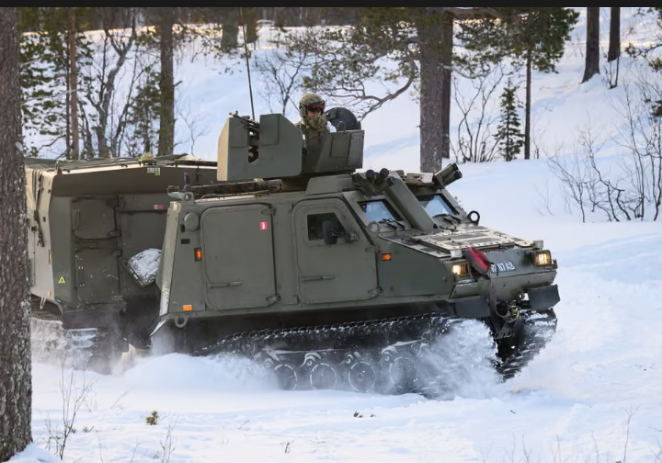
The decision to increase British troops in Norway reflects both solidarity with Oslo and a broader NATO strategy aimed at reinforcing its northern flank. Norway shares a border with Russia in the Arctic, and its territory plays a critical role in monitoring Russian naval activity, particularly movements of the Northern Fleet based on the Kola Peninsula. A strengthened British presence enhances joint training, intelligence-sharing and rapid response capability in extreme conditions.
Royal Marines deployed to Norway specialise in cold-weather warfare, mountain operations and amphibious manoeuvres. Their training in the harsh Arctic climate is designed to ensure that NATO forces can operate effectively in one of the world’s most demanding environments.
Doubling troop numbers over three years will expand joint exercises, improve interoperability with Norwegian forces and send a clear political signal of resolve.
In addition to increasing personnel, the UK will commit forces to NATO’s Arctic Sentry mission.
The Nato Arctic Sentry mission is the alliance’s initiative to improve security coordination in the region and address vulnerabilities exposed by Russia’s military modernisation. The mission has gained additional political attention amid former US President Donald Trump’s long-standing concerns over Greenland and Arctic security, further underlining the strategic importance of the area.
The Arctic’s importance has grown as climate change reduces sea ice, opening potential new shipping lanes between Europe and Asia and exposing untapped reserves of oil, gas and rare minerals.
For Russia, which has the longest Arctic coastline, maintaining dominance in the region is a strategic priority. Western officials argue that Moscow’s reopening of Cold War-era bases, expansion of airfields and deployment of advanced missile systems signal a clear intent to project power.
British former head of the armed forces General Sir Nick Carter has also called for deeper European cooperation to deter Russia and sustain support for Ukraine. His intervention reflects ongoing debate within Europe about burden-sharing and long-term defence readiness.
Carter has argued that Europe must be prepared to take greater responsibility for its own security, particularly as political dynamics in the United States fluctuate.
The UK government’s announcement aligns with its broader defence strategy, which has emphasised readiness, deterrence and alliance cohesion since Russia’s full-scale invasion of Ukraine in 2022. Increasing troop numbers in Norway is not simply about symbolism; it represents a tangible shift in resource allocation toward high-intensity conflict preparedness in extreme environments.
For Norway, the reinforcement is likely to be welcomed as a sign of enduring British commitment. The UK and Norway have deep defence ties, including joint expeditionary initiatives and cooperation in maritime security. As Arctic competition intensifies, such partnerships are expected to deepen further.
Moscow has consistently framed NATO’s expanded presence near its borders as provocative, arguing that alliance deployments contribute to regional instability.
Western governments counter that their actions are defensive and proportionate responses to Russia’s own military build-up and its invasion of Ukraine.
The cycle of accusation and counter-accusation underscores how mistrust between Russia and NATO has hardened since 2022.

The pledge that UK promises to double troop numbers in Norway to deter Putin forms part of a broader pattern of European states strengthening their northern and eastern defences. From Finland’s accession to NATO to Sweden’s deepened integration with alliance planning, the security map of northern Europe has shifted dramatically in response to Russian aggression.
As the war in Ukraine continues with no immediate resolution in sight, attention is increasingly turning to long-term deterrence beyond Ukraine’s borders. The Arctic may once have been viewed as remote and strategically secondary, but it now occupies a central place in defence calculations.
By committing additional troops and resources, Britain is signalling that it sees the High North not as a peripheral theatre, but as a critical front in safeguarding European security.
Whether the move will meaningfully alter Russia’s strategic calculus remains uncertain. However, the message from London is clear: the Arctic is no longer an afterthought, and NATO allies intend to contest any attempt by Moscow to dominate the region.
About The Author