

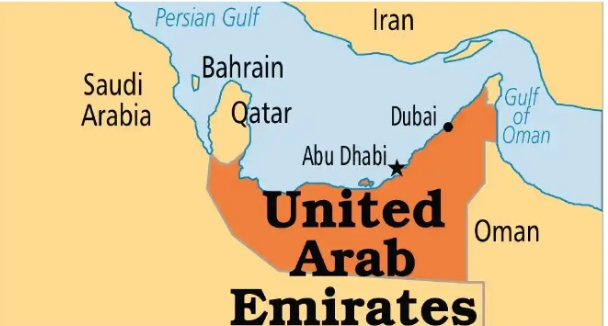
US attack on Iran– Amid escalating US-Iran tensions, the United Arab Emirates (UAE) stated that it will not permit its territory to support any US military action against Iran.
In a statement shared on social media, the UAE Foreign Ministry emphasized it will also not provide logistical support for such an operation, reiterating commitment to diplomacy.
“The UAE will not allow its airspace, territory, or waters to be used in any hostile military action against Iran,” the Ministry said.
The announcement comes as tensions between Washington and Tehran rise following reports of Iranian security forces violently suppressing protests, with thousands reportedly killed in recent demonstrations.
Iranian protests crackdown has sparked international concern, with human rights groups blaming Tehran for excessive force and accusing authorities of targeting unarmed demonstrators.
US President Donald Trump previously warned of military intervention should Iran harm protesters, saying the United States was “locked and loaded and ready to go.”
The UAE hosts the US military presence in UAE, including Al Dhafra Air Base with over 3,500 American personnel, raising concerns about regional entanglement in conflict.
Other Gulf allies, such as Qatar and Saudi Arabia, are reportedly uneasy about US-Iran tensions, though they have not publicly mirrored the UAE’s strong refusal.
“Dialogue, adherence to international law, and respect for sovereignty are the foundations for resolving disputes peacefully,” the UAE Ministry added in its statement.
Tensions have been fueled by the arrival of the aircraft carrier USS Abraham Lincoln and accompanying destroyers to the Indian Ocean, reportedly heading toward the Gulf of Oman.
US officials insist all options, including military strikes, remain under consideration as the administration closely monitors developments in Iran and the wider Middle East.
The UAE’s decision underscores broader concerns over Middle East security, signaling reluctance among key allies to host attacks that could destabilize the region further.
Analysts note the move reflects a shift in Gulf diplomacy, balancing strong ties with the US while avoiding direct confrontation with Iran, a major regional power.
“The UAE’s stance is a clear message that it seeks peace and stability, not escalation, in an already volatile region,” said Middle East analyst Dr. Leila Hamid.
In Tehran, officials accused the US and Israel of interfering in protests to incite chaos, escalating rhetoric and fueling fears of direct confrontation with Washington.
The US has repeatedly expressed concerns over Iran’s internal policies and human rights record, emphasizing support for peaceful protesters amid growing international condemnation.
US-Iran tensions remain high, with political, military, and humanitarian dimensions converging as both nations exchange warnings and public statements, raising stakes across the Gulf region.
Military experts point out that the UAE’s refusal limits US operational flexibility, especially regarding potential air or naval strikes against Iranian targets from Gulf bases.
“Without access to UAE territory, any strike against Iran becomes far more complicated and politically sensitive for Washington,” said retired US Navy officer Admiral Charles Rivers.
Historically, the UAE has maintained a careful balance between cooperation with the US and preserving neutrality in regional disputes, particularly those involving Iran.
This policy aligns with the UAE’s strategic interest in protecting its own security while promoting dialogue and preventing escalation in the Middle East security environment.
The Iranian government has warned it will retaliate against any attacks, increasing the risk of military confrontation and drawing international calls for restraint from the UN and neighboring states.
The ongoing Iranian protests crackdown has sparked debates worldwide over foreign intervention, with critics arguing that threats of military action worsen violence and destabilize civilian populations.
US allies in Europe have expressed concern over potential escalation, emphasizing diplomacy and sanctions over direct military engagement as a means to influence Iranian authorities.
“The region cannot afford another war. Diplomacy must prevail,” said EU foreign policy official Javier Solana, commenting on the unfolding Gulf developments.
Regional observers say the UAE’s refusal may influence other Gulf Cooperation Council states, discouraging the use of their territories for foreign military actions against Iran.
The US military continues repositioning forces in the Indian Ocean and surrounding areas, preparing contingencies while weighing political and logistical obstacles in light of the UAE’s refusal.
“We are closely monitoring developments and are ready to respond, but we respect the sovereignty of our partners,” said a senior US defense official on condition of anonymity.
Analysts emphasize that Gulf states’ cautious stance reflects growing wariness of entanglement in protracted conflicts, highlighting the challenges of pursuing US-Iran tensions through military means alone.
Read also: Hundreds feared dead attempting to cross Mediterranean during Cyclone Harry
The UAE’s approach signals a commitment to conflict de-escalation, dialogue, and adherence to international norms, contrasting with the rhetoric of immediate military intervention from Washington.
As regional media reports, the aircraft carrier USS Abraham Lincoln and its destroyers remain en route, underscoring the delicate balance between showing strength and avoiding provocation.
The UAE has consistently advocated resolving disputes through diplomacy, reinforcing its image as a stable partner amid widespread unrest in the Middle East security context.
“Our priority is preventing escalation and ensuring that our territory is not used to harm others. Peaceful resolution remains our guiding principle,” the Ministry concluded.
Observers suggest the UAE’s refusal may redefine alliances and military planning in the Gulf, creating a new precedent for partner nations considering involvement in foreign interventions.
The implications for Iran are significant, as reduced access to nearby US bases could limit rapid-response options and affect regional power dynamics in any hypothetical conflict.
The US military presence in UAE has long been a strategic advantage, but the refusal demonstrates that host nations retain agency over their involvement in foreign policy conflicts.
Human rights advocates continue to focus on the Iranian protests crackdown, urging international action to protect civilians while discouraging aggressive foreign interference that may exacerbate violence.
“External threats often worsen internal conflicts. Dialogue and humanitarian assistance are the only viable paths forward,” said Human Rights Watch spokesperson Fatima Al-Khalid.
As the world watches, the UAE’s firm refusal underscores the importance of diplomacy and restraint, marking a critical moment in US-Iran relations and regional geopolitical calculations.
The broader Middle East security landscape faces uncertainty as both military posturing and political maneuvering continue, demanding careful navigation from all regional and international actors.
The UAE’s stance serves as a reminder that even close allies may assert sovereignty and resist participation in foreign conflicts, emphasizing the limits of external influence.
“Our decision reflects a commitment to peace, international law, and regional stability,” said the UAE Foreign Ministry, summarizing its position on this sensitive issue.
As developments unfold, attention remains on diplomatic channels, the US’s strategic adjustments, and Tehran’s response, which together will shape the trajectory of US-Iran tensions in the coming months.
The situation underscores that while military power is significant, regional cooperation, dialogue, and respect for sovereignty are essential in preventing wider conflict in the volatile Gulf region.
The UAE’s refusal has implications for US strategy, Iran’s domestic policy, and the role of international actors seeking to mediate, marking a pivotal point in modern Middle East security considerations.
“This is not just a military decision; it is a diplomatic signal to all regional and global stakeholders that escalation must be avoided,” concluded Dr. Hamid.
The resolution of tensions will depend on multilateral efforts, careful negotiation, and the willingness of both the US and Iran to prioritize dialogue over direct confrontation, with the UAE playing a critical mediating role.
The unfolding events highlight the UAE’s strategic balancing act: maintaining alliance obligations, protecting sovereignty, and promoting stability amid escalating US-Iran tensions and widespread international scrutiny.
About The Author
