

The International Maritime Organization has postponed its much-anticipated Net Zero Framework following pressure from U.S. President Donald Trump, who threatened sanctions against countries supporting new shipping emissions deal.
Trump’s intervention disrupted months of international negotiations aimed at cutting global maritime emissions, forcing delegates to delay a final vote on the framework by at least twelve months.
The framework, widely seen as the first global carbon-pricing system for shipping, would have imposed financial penalties on polluting vessels while rewarding ships using cleaner, low-emission technologies.
Trump denounced the proposal on his Truth Social platform, calling it a “Global Green New Scam Tax” and warning that the United States “will not stand for it.”
He accused the International Maritime Organization of plotting to impose a global carbon tax that would harm American workers and raise shipping costs for U.S. businesses.
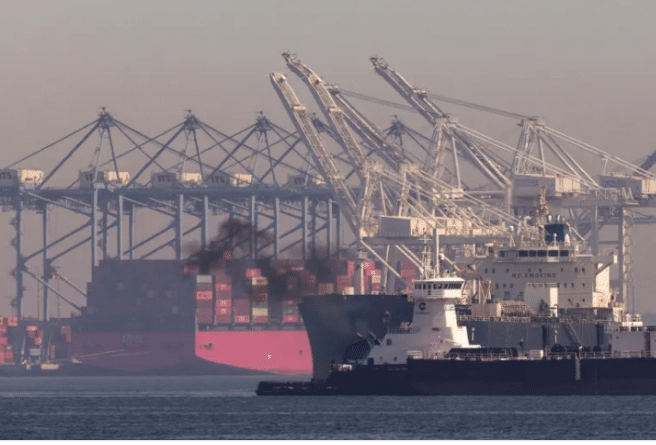
Washington signaled it could retaliate economically, warning of visa restrictions, trade penalties, and port levies on nations backing the emissions plan if it passed in London.
Faced with U.S. threats, delegates at the London meeting voted on a last-minute resolution to delay the decision, with 57 in favor and 49 opposed.
The outcome reflected growing divisions among the IMO’s 176 member states, many of which had earlier agreed to ambitious climate targets for the shipping sector.
Those targets aimed to reduce maritime greenhouse gas emissions by 20 percent by 2030 and reach net-zero by 2050 through the use of cleaner fuels and technologies.
The postponement represents a significant setback for global climate diplomacy, coming just months after governments celebrated initial progress toward establishing a unified emissions pricing mechanism.
Trump’s return to power has reignited tensions between Washington and international bodies over climate commitments, echoing policies from his previous administration that prioritized fossil fuel expansion.
Since January, the Trump government has slashed funding for clean-energy initiatives, rolled back environmental safeguards, and encouraged oil and gas exploration under its “drill, baby, drill” agenda.
Critics say his latest move undermines global cooperation at a critical time when scientists warn the world is approaching irreversible climate tipping points.
A spokesperson for UN Secretary-General António Guterres called the IMO’s delay “a missed opportunity to place global shipping on a credible path toward net-zero emissions.”
Environmental groups expressed frustration, saying the decision was heavily influenced by political pressure rather than scientific urgency or economic fairness.
Thomas Kazakos, Secretary-General of the International Chamber of Shipping, said companies urgently needed clarity to invest in low-carbon solutions and modernize the global fleet responsibly.
“The industry cannot decarbonize without predictable policy,” Kazakos stated, emphasizing that long-term investment decisions depend on consistent regulations and clear carbon-pricing signals.
The International Chamber of Shipping represents over 80 percent of the world’s merchant fleet, making its endorsement crucial for global maritime emissions reform.
Developing nations, particularly small island states, voiced deep disappointment, warning the delay would have real human and environmental consequences for vulnerable coastal communities.
Ralph Regenvanu, Vanuatu’s Minister for Climate Change, condemned the decision as “unacceptable,” highlighting that low-lying nations were already suffering from rising sea levels and stronger tropical storms.
“But we know international law is on our side,” Regenvanu said, vowing to keep fighting for emissions reductions that protect both “our people and our planet.”
The Net Zero Framework had won support from more than sixty countries earlier this year, including the European Union, China, Brazil, and the United Kingdom.
It proposed charging ships $380 per metric tonne of CO2-equivalent emissions, creating an incentive system that rewards innovation and punishes heavy polluters.
Funds raised from this carbon levy would help developing nations transition to greener maritime infrastructure and support the research of alternative marine fuels.
Experts described the policy as the shipping industry’s Paris Agreement moment—an opportunity to finally align one of the world’s largest polluting sectors with global climate goals.
However, the U.S. opposition changed the calculus dramatically, emboldening countries like Russia, Saudi Arabia, and others skeptical of international environmental frameworks.
A Russian delegate called the session “chaos,” criticizing the rushed vote and claiming the proposal lacked sufficient economic analysis and technical feasibility.
Argentina and Singapore, both of which initially supported the framework in April, unexpectedly joined those voting to postpone the measure during the London meeting.
Analysts say the shift illustrates how geopolitical tensions and economic self-interest continue to hinder collective climate action, particularly in industries tied to global trade.
The shipping industry accounts for nearly three percent of total global greenhouse gas emissions—roughly equivalent to the carbon output of Germany’s entire economy.
If left unchecked, experts warn those emissions could rise by 50 percent by 2050, undermining the Paris Agreement and worsening the impacts of climate change.
Already, climate shifts are affecting ocean currents, increasing storm intensity, and threatening maritime safety—forcing ports and shipping routes to adapt to extreme conditions.
To reduce reliance on heavy bunker fuel, researchers have proposed alternatives like ammonia, methanol, and hybrid electric systems for next-generation cargo ships.
Engineers are also testing modern sail technology and carbon-capture equipment designed to cut emissions while maintaining cargo efficiency on long-distance routes.
But industry leaders say these solutions require clear policy guidance and international cooperation—both of which are jeopardized by the Trump administration’s confrontational approach.
The U.S. decision to oppose the Net Zero Framework follows similar moves to withdraw from or undermine global climate agreements under Trump’s leadership.
His administration previously exited the Paris Climate Accord and blocked several United Nations climate resolutions, arguing they placed unfair burdens on American industries.
Supporters of the U.S. stance claim the carbon levy would drive up shipping costs, disrupt supply chains, and disadvantage developing economies reliant on maritime exports.
They argue that market-driven innovation, not international taxation, should lead the shipping industry’s transition toward cleaner energy solutions.
However, climate advocates counter that without coordinated pricing mechanisms, companies will continue using cheap, polluting fuels that worsen global warming.
The delay at the IMO, they warn, risks locking in decades of inaction and making future decarbonization efforts significantly more expensive and complex.
European climate diplomats have expressed disappointment, pledging to continue pushing for regional carbon-pricing systems if global consensus remains out of reach.
Meanwhile, Pacific Island nations say they are considering taking legal action under international environmental law to compel stronger commitments from major polluting states.
The Trump administration’s defiance on the shipping emissions deal has also reignited global debate over America’s moral leadership and its willingness to address planetary environmental challenges.
Observers note that Washington’s opposition could isolate it further from allies seeking collective solutions to the escalating climate crisis.
The failure to finalize the Net Zero Framework underscores the difficulty of reconciling economic nationalism with the urgent global need for coordinated environmental policies.
It also highlights how a single powerful nation can stall multilateral climate progress, even in sectors where technological solutions are already within reach.
For now, the International Maritime Organization will resume discussions next year, though analysts warn the delay may discourage investment and weaken political momentum.
Environmental advocates say the world cannot afford another year of inaction, as shipping emissions continue to rise amid accelerating global warming and ocean degradation.
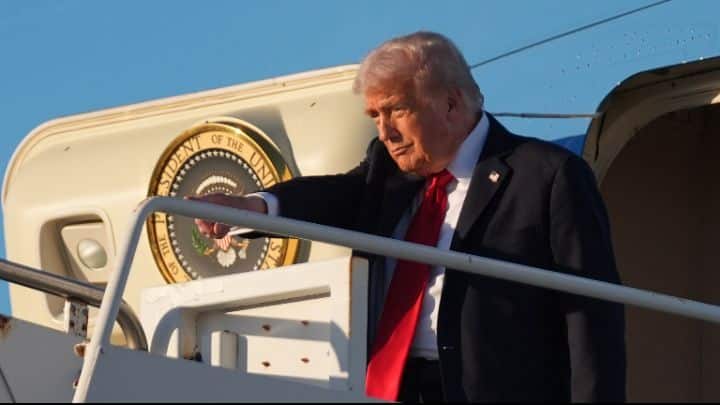
The outcome has once again placed Donald Trump at the center of global climate controversy—this time over the future of maritime sustainability and international cooperation.
As global pressure mounts, the postponed “Trump shipping emissions deal” remains a defining test of whether politics or planetary survival will shape the next era of trade.
About The Author


