A Federal High Court in Abuja has reassigned a terrorism financing trial involving Bauchi’s finance commissioner following the end of the court’s vacation period.
Proceedings in the high-profile terrorism financing trial involving the Bauchi State Commissioner for Finance, Yakubu Adamu, have taken a procedural turn following the conclusion of the Federal High Court’s annual vacation.
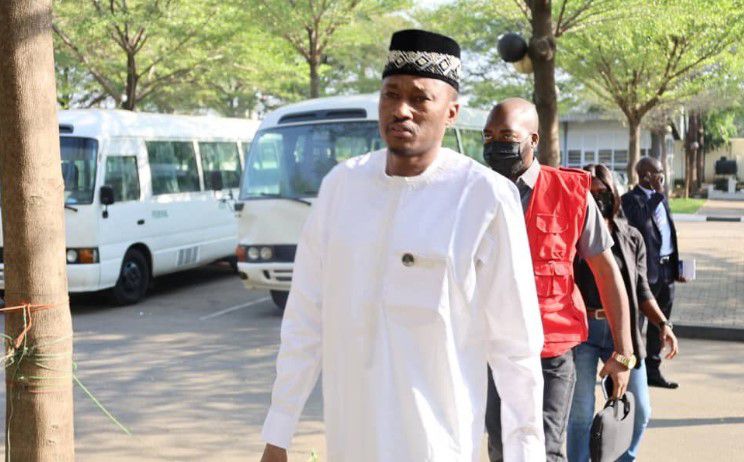
A Federal High Court sitting in Abuja has formally returned the case file to the Chief Judge of the court for reassignment to a substantive judge, paving the way for the continuation of the trial under normal court sittings.
The decision was taken by Justice Emeka Nwite, who had been overseeing the matter in his capacity as a vacation judge.
In a ruling delivered on Monday, the judge explained that since the case was handled during the court’s vacation period, judicial practice required that the file be transferred back to the Chief Judge once regular court sessions resumed.
The Chief Judge is expected to assign the case to a permanent judge who will conduct subsequent proceedings.
Justice Nwite clarified that the step was procedural rather than substantive, noting that the court’s vacation had officially ended.
According to him, the reassignment would ensure continuity and adherence to established judicial processes. He therefore ordered the immediate return of the file for appropriate reassignment.
Yakubu Adamu, a former branch manager of Polaris Bank Plc in Bauchi State, is one of four defendants standing trial in the terrorism financing trial, which is being prosecuted by the Economic and Financial Crimes Commission (EFCC).
The EFCC alleges that the defendants were involved in acts bordering on terrorism financing and money laundering, offences considered grave due to their implications for national security.
Alongside Adamu, three other individuals—Balarabe Abdullahi Ilelah, Aminu Mohammed Bose and Kabiru Yahaya Mohammed—are facing trial.
The co-defendants are reportedly civil servants employed by the Bauchi State Government. Collectively, the four defendants are answering to a 10-count charge filed by the anti-graft agency.
The defendants were arraigned before the court on December 31 last year, where they all entered pleas of not guilty to the charges brought against them. Following their arraignment, arguments were taken on their bail applications.
In a ruling delivered on January 5, Justice Nwite declined to grant bail to the accused persons.
The judge held that the allegations before the court went beyond ordinary financial crimes, stressing that offences connected to terrorism financing pose a direct threat to public safety and national stability.
He ruled that granting bail under such circumstances could undermine the broader interest of justice.
As a result, the court ordered that the defendants be remanded at the Kuje Correctional Centre pending the determination of the terrorism financing trial.
Justice Nwite also directed that the matter be given accelerated hearing, recognising the seriousness of the allegations and the need for a swift resolution. The case was adjourned to January 13 for the commencement of trial.
However, when the matter came up as scheduled, an unexpected development occurred.
Despite the presence of the defendants and their legal team, no counsel appeared in court on behalf of the prosecution.
Lead counsel to the defendants, Chief Chris Uche (SAN), informed the court that during the previous sitting, the judge had made it clear that the adjournment date was fixed because the court was sitting as a vacation court. He said all parties had complied fully with the court’s directive.
Uche told the court that the defendants had been transported from the Kuje Correctional Centre in compliance with the adjournment, while their lawyers were also present and prepared for the day’s proceedings.
He further disclosed that earlier in the day, he had encountered another senior lawyer, Chief Adebayo Ojo (SAN), in a different courtroom.
According to Uche, Ojo informed him that he had recently been engaged by the EFCC as the new lead prosecutor in the terrorism financing trial.
Uche added that Ojo had assured him that junior members of his legal team would be present to represent the prosecution in court.
However, when Justice Nwite asked if any of the prosecution’s lawyers were in attendance, there was no response, confirming the absence of the EFCC’s legal representatives.
The absence of the prosecution, combined with the fact that the court’s vacation had ended, reinforced the need to return the case file to the Chief Judge for reassignment.
Justice Nwite subsequently ordered that the file be transmitted for that purpose.
Legal observers note that while the reassignment may cause a brief delay, it does not affect the substance of the terrorism financing trial or the earlier rulings made during the vacation period.
The remand order and refusal of bail remain in force until a substantive judge takes over the case.
The trial continues to attract national attention due to the profile of the defendants and the gravity of the allegations.
As the EFCC prepares to proceed under a newly assigned judge, expectations remain high that the case will move forward expeditiously in line with the court’s earlier directive for accelerated hearing.
Ireport247news
About The Author