Tensions across the Middle East escalated dramatically on Saturday after U.S. President Donald Trump announced that Iran’s Supreme Leader, Ali Khamenei, had been killed during coordinated airstrikes carried out by American and Israeli forces.
The announcement, made through Trump’s Truth Social, stunned global observers and immediately triggered widespread speculation about the regional and international consequences.
According to the U.S. president, the operation targeted high-level Iranian leadership and was executed with precision intelligence and advanced tracking systems developed in partnership with Israel.
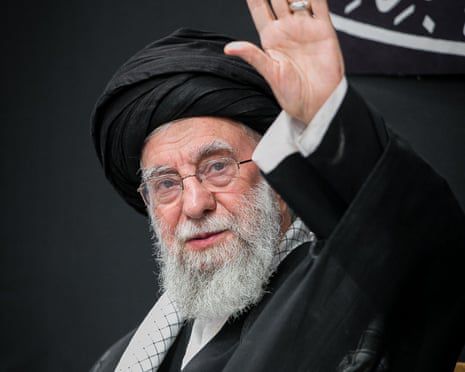
Trump described the outcome of the airstrikes as a decisive blow, claiming that Khamenei and several other senior figures were unable to escape surveillance mechanisms deployed in the operation.
He characterized the strike as a calculated and strategic mission designed to neutralize what he called long-standing threats linked to Iran’s leadership.
In his statement, Trump portrayed Khamenei’s reported death as an act of justice, arguing that it served not only the interests of the Iranian people but also victims worldwide whom he accused Iran’s leadership of harming over decades.
While offering strong rhetoric, he also suggested that the broader objective extended beyond immediate military success.
The president indicated that the campaign of airstrikes would not end with this single operation.
He stressed that heavy and highly targeted bombardment would continue throughout the week or for as long as necessary to achieve what he described as peace in the Middle East and beyond.
His comments signaled that further military engagement could follow, depending on developments on the ground.

Earlier the same day, Israeli Prime Minister Benjamin Netanyahu hinted that intelligence assessments strongly suggested Khamenei had been killed in strikes directed at his residence.
Though Israeli officials stopped short of providing detailed operational information, Netanyahu stated there were “many indications” that the mission had succeeded.
The developments have placed Iran at the center of global attention.
As of the time of the announcement, official confirmation from Iranian authorities had not been fully detailed, leaving questions about the accuracy of the claims.
However, the scale and coordination of the reported airstrikes suggest a significant military undertaking with far-reaching implications.
Within Iran, the potential power vacuum created by Khamenei’s reported death could alter the country’s political trajectory.
Trump expressed hope that elements of Iran’s security forces, including the Islamic Revolutionary Guard Corps, would choose to align with what he described as patriotic reform efforts.
He suggested such cooperation might allow Iran to rebuild and reorient its future after what he portrayed as a period of destructive leadership.
The strategic consequences of these airstrikes are expected to reverberate across the Middle East, where Iran maintains strong alliances and influence in multiple countries.
Regional actors are closely monitoring the situation, weighing potential diplomatic responses or defensive preparations in anticipation of possible retaliation.
For Washington and its allies, the operation represents a bold and controversial step.
While supporters may frame the move as a security breakthrough, critics warn that such actions risk escalating into broader confrontation.
Military analysts note that targeted airstrikes against senior leadership figures can significantly destabilize already fragile geopolitical balances.
About The Author