

Torrential rains have wreaked havoc across Southern Africa, killing more than 100 people and displacing hundreds of thousands as countries struggle to respond to worsening floods.
Weeks of relentless rainfall have battered Mozambique, South Africa, and Zimbabwe, overwhelming rivers, collapsing infrastructure, and isolating entire communities.
Meteorologists warn that more heavy rainfall is expected, raising fears of further destruction in the coming days. Governments across the region have deployed emergency services, but the scale of the disaster is testing their response capacities.
In South Africa, the northern provinces of Limpopo and Mpumalanga have been particularly hard hit. Officials reported that flooding has claimed at least 30 lives, with rescue operations underway for residents trapped on rooftops and trees as swollen rivers surged through towns and villages.
Security personnel stationed at a border checkpoint with Zimbabwe also had to be evacuated after floodwaters surrounded the area.
President Cyril Ramaphosa visited affected areas in Limpopo on Thursday, noting that some regions had received around 400 millimeters (16 inches) of rainfall in less than a week.
“In one district, there are 36 houses that have just been wiped away from the face of the earth,” he said. Limpopo Premier Phophi Ramathuba confirmed the scale of the damage, stating that more than 1,000 homes had been affected. “It’s so terrible,” she added, describing the devastation as unprecedented.
Neighboring Zimbabwe has also experienced severe flooding. The country’s government disaster management agency reported at least 70 deaths since the beginning of the year, with over 1,000 homes destroyed.
Roads, bridges, and schools have been damaged or collapsed under the force of floodwaters. Authorities have issued warnings for additional flooding as river levels continue to rise.
Local communities, particularly in rural areas, have been cut off from relief efforts, forcing residents to rely on makeshift shelters. Volunteers and local authorities are struggling to provide clean water and food to those affected. Aid agencies have called for urgent support as the situation continues to deteriorate.
Mozambique has emerged as the hardest-hit country in the region. Its disaster management authorities reported 103 deaths since late last year, including fatalities from flooding, lightning strikes, infrastructure collapse, and a cholera outbreak linked to contaminated water.
More than 200,000 people nationwide have been affected, with thousands of homes damaged or destroyed. Tens of thousands have been evacuated from low-lying areas to higher ground.
The World Food Programme (WFP) warned that the floods have submerged over 70,000 hectares (173,000 acres) of crops, exacerbating food insecurity for small-scale farmers in a country already facing poverty and repeated natural disasters.
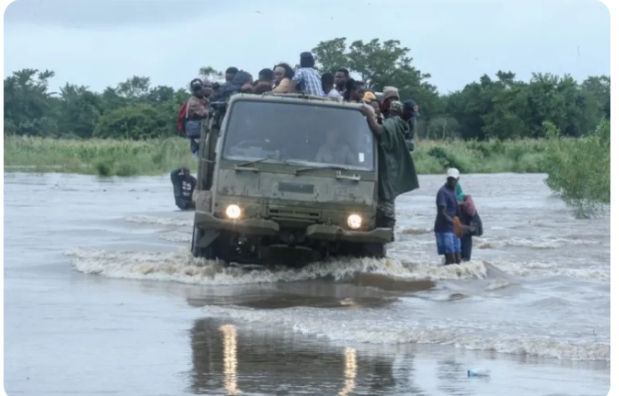
Residents in Mozambique’s Boane district were seen being transported across floodwaters by military trucks, highlighting the scale of the emergency response.
The United States Famine Early Warning System (FEWS NET) has reported flooding or expected flood conditions in at least seven Southern African countries. Experts attribute the unusually heavy rains partly to the La Niña phenomenon, which tends to increase rainfall across the region during this time of year.
South Africa’s iconic Kruger National Park has not been spared. Approximately 600 tourists and park staff were evacuated from flood-affected camps.
While no deaths or injuries have been reported in the park, authorities say large areas remain inaccessible after rivers overflowed.
The floods have forced closures of key routes and damaged infrastructure critical to tourism and conservation activities. Southern Africa has faced a growing number of climate-driven disasters in recent years.
From deadly cyclones to prolonged droughts, the region’s vulnerability is exacerbated by fragile infrastructure and limited disaster preparedness.
Experts warn that climate change is likely to increase the frequency and intensity of such extreme weather events.
Governments in the affected countries have mobilized military and emergency services to rescue trapped residents and provide relief.
In South Africa, army helicopters have been used to evacuate people stranded by floodwaters. Humanitarian organizations, including the Red Cross and the WFP, are coordinating efforts to distribute food, clean water, and medical aid.
In Mozambique, authorities have focused on evacuating residents in flood-prone areas near the capital, Maputo. Shelters have been set up to accommodate displaced families, but the scale of the disaster is stretching resources thin.
International organizations have pledged support, emphasizing the need for rapid response to prevent further loss of life.
The floods have also raised public health concerns.
In Mozambique, the outbreak of cholera linked to contaminated water supplies has added to the urgency of relief efforts. Health officials are warning that stagnant floodwaters, combined with damaged sanitation infrastructure, could lead to additional outbreaks of waterborne diseases.
In Zimbabwe, officials are providing medical care to residents affected by flooding and warning against drinking untreated water. Authorities stress the importance of hygiene and safe water practices to prevent disease.
Entire communities have been displaced, with families forced to leave homes and belongings behind. In some areas, residents are living in temporary shelters with limited access to basic necessities.
Schools have been closed, and agricultural activities have been disrupted, threatening food security in affected regions.
Economists warn that the flooding could have long-term economic consequences. Crop losses, infrastructure damage, and displacement of workers may strain national budgets and slow economic recovery.
Small-scale farmers, who form the backbone of rural economies in the region, face the greatest risk of losing their livelihoods.
Meteorologists have issued warnings that additional rainfall is likely in the coming days, raising fears of more flooding. Authorities are urging residents to remain vigilant and follow evacuation orders when necessary.
The disaster highlights the urgent need for Southern African countries to invest in climate resilience and disaster preparedness.
Read also: White House confirms Gaza ‘Board of Peace’ with Rubio, Kushner and Tony Blair among members
Experts stress that improving infrastructure, early warning systems, and emergency response capabilities is critical to mitigating the impact of future extreme weather events.
Southern Africa’s recent flooding crisis is a stark reminder of the region’s vulnerability to climate-related disasters.
With communities reeling from loss of life, homes, and livelihoods, humanitarian assistance and government intervention are vital to prevent further devastation.
About The Author


