
In a charged Senate session that underscored the depth of partisanship in Washington, Republicans blocked a Democratic-led bid to curb Donald Trump’s authority over Venezuela strikes.
The move effectively maintained the president’s unilateral power to order military actions in the Caribbean, further entrenching executive dominance in U.S. foreign policy and intensifying constitutional tensions.
At the heart of the debate was the War Powers Resolution, a 1973 statute designed to restrain presidents from waging war without congressional approval — a limit few modern presidents have respected.
Senators opposing the measure argued that restricting Trump’s actions could “embolden adversaries” and “undermine deterrence,” echoing long-held conservative skepticism of legislative oversight in matters of national defense.
Republican leaders insisted the strikes were necessary responses to “narco-terrorist” threats emanating from Venezuelan waters, framing the campaign as part of a broader Trump Venezuela policy aimed at “protecting American lives.”
Yet Democrats and some independents denounced the refusal to vote for limits as “a blank check for perpetual war,” warning that Congress was abdicating its constitutional responsibilities.
“This is not about politics,” one Democratic senator said. “It’s about preventing presidents — any president — from waging secret wars without accountability or evidence.”
The blocked resolution came after weeks of controversy surrounding Trump’s authorization of lethal drone strikes on boats allegedly linked to Venezuelan drug cartels.
Since early September, the administration has reported multiple “successful operations,” claiming the targets were smuggling narcotics to the United States, though no verifiable proof has been presented.
Critics, including several retired Pentagon officials, have questioned the legal justification for strikes, pointing out that the administration’s explanations rely heavily on secret Office of Legal Counsel memos.
Those memos, revealed in classified briefings, reportedly classify dozens of cartel-affiliated groups as “legitimate military targets” within a “non-international armed conflict.”
Such legal framing effectively treats anti-drug operations as warfare, stretching the boundaries of international law and testing domestic definitions of “hostilities.”
At a closed-door meeting, Defense Secretary Pete Hegseth and Secretary of State Marco Rubio briefed congressional leaders, reaffirming that Trump’s actions were consistent with “existing authorities.”
Also present was T. Elliot Gaiser, head of the Justice Department’s Office of Legal Counsel, who reiterated that the operations “do not rise to the level of hostilities.”
That interpretation has alarmed legal scholars, some of whom argue it redefines conflict to avoid triggering the War Powers Resolution’s reporting and time-limit requirements.
“The administration is playing with language to evade constitutional checks,” said a former OLC attorney, describing the reasoning as “a recipe for endless executive warfare.”
Since the Venezuela strikes began, the White House has provided only brief statements, emphasizing casualty numbers and alleged drug links while withholding operational details and intelligence sources.
This opacity has deepened suspicion that political motives — not imminent threats — drive the campaign, particularly as Trump intensifies his anti-Maduro rhetoric ahead of an election year.
His supporters, however, view the strikes as proof of decisive leadership, contrasting Trump’s assertive approach with what they call Democratic “paralysis” on foreign and security issues.
“This president is willing to act,” declared one Republican senator. “He’s sending a message to cartels and dictators alike that America will not hesitate.”
The partisan divide in Congress was on full display, with nearly every Republican voting against the limitation measure and Democrats uniformly supporting it.
The 52–48 vote margin reflected not only ideological differences but also deeper disputes over the scope of presidential war powers.
Some centrist Democrats warned that normalizing extrajudicial action abroad could erode America’s moral credibility and embolden other nations to bypass international norms.
International observers have expressed similar concern, noting that the strikes blur the line between counterterrorism and military aggression.
Regional analysts say the campaign has already worsened U.S.–Venezuela tensions, destabilizing maritime trade routes and emboldening hardliners within Nicolás Maduro’s government.
“This is less about drugs and more about dominance,” a Latin America scholar observed, describing the strikes as “symbolic warfare with high political yield but low strategic clarity.”
Trump’s confirmation that the CIA has been authorized to conduct “covert action” inside Venezuela has fueled further unease among oversight advocates.
Reports suggest that the agency provides most of the targeting intelligence used in the attacks, reviving debates about accountability in covert operations.
The blending of intelligence and military functions echoes Cold War–era tactics, when executive secrecy often obscured policy aims from both Congress and the public.
For Democrats, the pattern reinforces their case that congressional intervention is essential to preserving the balance of powers envisioned by the Constitution.
“The founders feared precisely this — a single leader waging undeclared wars under cover of legality,” another lawmaker argued on the Senate floor.
Republicans countered that modern threats demand rapid, flexible responses, and that congressional micromanagement risks compromising national security.
They also invoked the 2001 Authorization for Use of Military Force (AUMF), claiming it still grants broad authority to combat transnational terrorist groups, even in new theaters.
Legal experts dispute that interpretation, emphasizing that the AUMF was crafted for groups linked to 9/11, not Latin American criminal organizations.
Still, the administration’s broad reading of “associated forces” continues to underpin much of U.S. military engagement outside declared war zones.
Civil liberties advocates warn that such elasticity could set a precedent allowing future presidents to strike anywhere under the banner of “counter-narcotics warfare.”
The resulting tension — between executive flexibility and legislative constraint — mirrors earlier clashes over drone programs in Yemen, Somalia, and Pakistan.
As with those precedents, secrecy and limited oversight have produced a cycle of justification and impunity, where legality is constructed after action rather than before.
Behind the legal maneuvers lies a political calculus: maintaining the image of strength amid economic unease and electoral uncertainty.
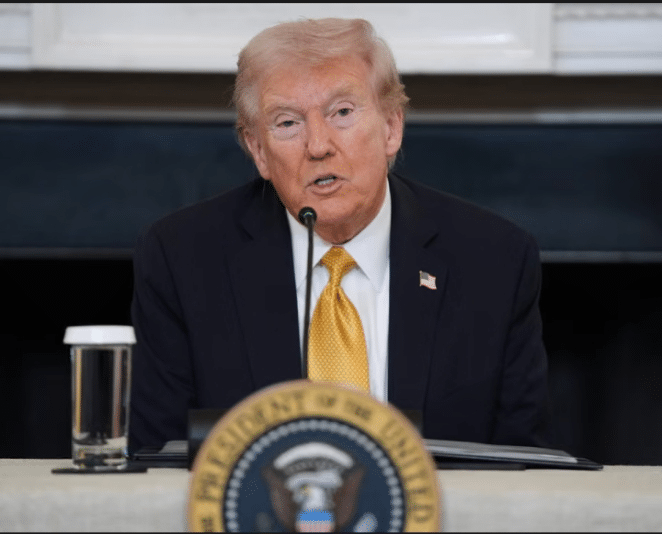
For Trump’s allies, each Venezuela strike reinforces his image as the architect of an assertive, borderless security policy immune to what they call “Democratic dithering.”
For his opponents, it signifies a creeping erosion of checks and balances — a moment when legality bends to power, and the Senate chooses silence over scrutiny.
As one independent analyst concluded, “This vote wasn’t just about Venezuela strike; it was about whether Congress still matters in questions of war powers resolution and peace.”