

The Nigerian Senate has officially rejected a proposed amendment to the Electoral Act that sought to make the electronic transmission of election results mandatory, a decision that has sparked widespread debate among political analysts, civil society organisations, and the general public.
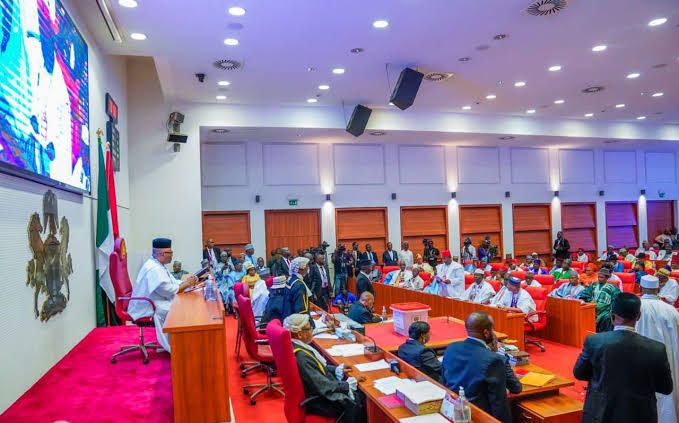
On Wednesday, lawmakers voted against the amendment to Clause 60, Subsection 3, of the Electoral Amendment Bill, which was intended to remove the discretion of the Independent National Electoral Commission (INEC) in determining how election results are transmitted.
The proposed amendment would have legally required presiding officers at polling units to transmit election results directly to the INEC Results Viewing Portal (IREV) in real-time transmission immediately after the official Form EC8A had been signed, stamped, and countersigned by party agents.
Advocates of the bill argued that this reform would drastically reduce instances of manual tampering and improve transparency in Nigeria’s electoral process.
Instead of adopting this measure, the Senate opted to retain the existing provision of the Electoral Act, which currently states: “The presiding officer shall transfer the results, including the total number of accredited voters and the results of the ballot, in a manner as prescribed by the Commission.”
Critics of the Senate’s decision warn that this discretionary language continues to allow INEC to decide whether or not to use electronic transmission—a loophole that many believe was exploited during the 2023 general elections, leading to significant public distrust.
The decision has elicited strong reactions from civil society organisations (CSOs) and concerned citizens who had championed the amendment.
They argue that mandatory electronic transmission is essential to prevent “manual miracles” and reduce opportunities for result manipulation during collation.
Many expressed shock that the upper legislative chamber, which has the power to shape the future of Nigeria’s democratic process, did not seize the opportunity to close a loophole widely seen as undermining electoral credibility.
Political analysts have described the Senate’s rejection as a “regressive step” that threatens the legitimacy of future elections. Gerald Ede, a political commentator, told SaharaReporters, “We thought the National Assembly would learn from the failures of 2023, where the IREV portal became a source of national embarrassment.
“By rejecting mandatory electronic transmission, the Senate has essentially given a green light for the status quo, where manual manipulation of election results can continue.”
The push for real-time transmission of election results was seen by many as the most viable solution to restoring voter confidence in Nigeria’s electoral system.
Proponents of the reform believe that once results are transmitted electronically from each polling unit without delay, the potential for human interference and deliberate alteration at collation centers would be significantly reduced.
Critics also highlighted INEC’s history of technical failures during critical hours of result collation, emphasizing that leaving the “manner” of transmission at the discretion of the commission increases the risk of disputes and undermines the credibility of elected officials.
They argue that a mandatory system of electronic transmission would standardize procedures nationwide and provide real-time verification, minimizing opportunities for fraud and ensuring that the public receives timely and accurate election results.
Civil society groups have vowed to continue advocating for electoral reforms that prioritize transparency and accountability.
Many believe that the Senate’s current stance reflects political inertia rather than a commitment to improving Nigeria’s democratic processes.
By allowing the discretion in the Electoral Act to persist, critics argue, lawmakers have missed a crucial opportunity to strengthen the integrity of future elections.
The debate over electronic transmission of election results is expected to remain a central issue in Nigeria’s political discourse.
Advocates insist that without mandatory real-time transmission, the public’s trust in the electoral system will continue to erode, especially in an era where technology can ensure faster, safer, and more verifiable results.
Meanwhile, INEC has yet to indicate whether it will voluntarily implement broader electronic measures, leaving observers concerned about the potential for disputes and delays in upcoming elections.
The Senate’s rejection underscores the ongoing tension between maintaining discretion for electoral management bodies and enforcing strict measures to guarantee transparency.
As calls for reform intensify, the public and civil society organisations are likely to increase pressure on both INEC and the legislature to adopt more robust systems for the transmission of election results that minimize human interference and strengthen democratic credibility.
With the 2023 elections still fresh in memory, the insistence on preserving discretionary control over electronic transmission raises important questions about the future of Nigeria’s democratic system.
For many Nigerians, the debate is not just about technology but about fairness, accountability, and the assurance that every vote counts.
Ireport247news


