The Nigerian Senate calls for stronger INEC accountability, proposing major electoral reforms to ensure credible, transparent, and fair elections before the 2027 polls.
The Nigerian Senate has renewed calls for INEC accountability, pushing for sweeping reforms to strengthen transparency and fairness in the nation’s electoral system.
Lawmakers are proposing a fundamental shift in electoral jurisprudence that would place the burden of proof in election petitions on the Independent National Electoral Commission (INEC) instead of on the candidates.
The proposal was the central focus of Wednesday’s plenary session, where senators debated far-reaching amendments to the Electoral Act 2022 ahead of the 2027 general elections.
The initiative, they said, aims to enhance credibility and restore public confidence in Nigeria’s democratic process through strengthened INEC accountability.
Senate President Godswill Akpabio, who presided over the session, emphasized that INEC must take full responsibility for its actions during and after elections.
He argued that as the body controlling election logistics and materials, INEC should be required by law to defend the legality and transparency of its processes when disputes arise.
“It is wrong to assume that whatever INEC does is perfect,” Akpabio stated.
“INEC should be held accountable because it manages electoral materials and logistics. Therefore, it should bear the responsibility in court to prove that its actions were lawful and reflected the people’s will.”
Akpabio insisted that strengthening INEC accountability would not only improve the integrity of the electoral system but also reduce post-election litigations that often drag through the courts for years.
Lawmakers across party lines supported the idea, noting that the current system unfairly burdens candidates who often have limited access to evidence.
They argued that it is only logical for INEC—which possesses all relevant election data—to defend its conduct when an election result is challenged.
This adjustment, according to senators, would ensure fairness, eliminate systemic bias, and reinforce confidence in the judiciary’s handling of electoral cases.
The move would also compel INEC to maintain accurate records, ensure transparency in result transmission, and prevent manipulation of electoral materials.
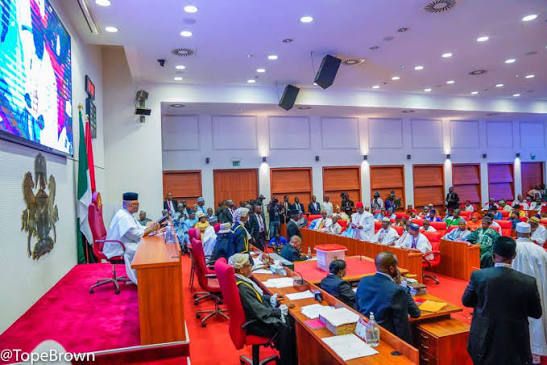
Akpabio acknowledged the progress achieved since the enactment of the Electoral Act 2022 but admitted that perfection remains distant.
He praised Nigeria’s gradual improvements in election management while emphasizing that further reforms were necessary to achieve credible, technology-driven elections.
“We are improving, but we are not yet perfect,” Akpabio said.
“Our goal is to craft amendments that will bring us closer to credible, transparent, and violence-free elections.”
He also urged continued national dialogue until a near-perfect electoral framework is achieved, reiterating that INEC accountability must become a core legal principle in election administration.
In a rare moment of optimism, the Senate President commended Nigeria for setting positive precedents in Africa’s democratic space.
He recalled instances where Nigeria demonstrated leadership in election transparency and called for continued innovation in electoral management.
“At one time, we were among the first African countries to release presidential results promptly. If other nations emulate such transparency, democracy across the continent will thrive,” he noted.
Despite this progress, Akpabio cautioned that the journey toward full electoral credibility is ongoing, saying that consistent legislative updates are vital to sustain integrity and trust in Nigeria’s democracy.
During the debate, senators from various political parties emphasized the role of technology in achieving lasting electoral reform.
They called for enhanced use of electronic transmission of results, improved biometric verification, and stronger cybersecurity frameworks to prevent vote tampering.
Lawmakers argued that modern technology must be complemented by legal mechanisms that make INEC directly accountable for any errors or irregularities. They agreed that institutional transparency, backed by robust laws, is central to achieving credible elections.
As preparations for the 2027 general elections intensify, the Senate’s proposal reflects a renewed commitment to transparency and justice.
Many senators asserted that INEC accountability should no longer be optional but a mandatory element of electoral governance.
By shifting the legal burden of proof to INEC, lawmakers believe Nigeria can drastically reduce electoral malpractice and litigation.
The reform, they said, will ensure that elections genuinely reflect the will of the people while compelling INEC to adopt international best practices in election management.
The Senate Committee on the Review of the Electoral Act is expected to refine the proposals, consult stakeholders, and submit a comprehensive report for legislative approval. If enacted, this reform could represent one of the most significant overhauls in Nigeria’s electoral history.
Akpabio concluded the session with a call for collective responsibility among all democratic stakeholders — political parties, civil society groups, and citizens — to support reforms that promote transparency and accountability.
“Our democracy grows stronger when institutions are accountable,” he said. “This reform is not to weaken INEC but to make it more credible, efficient, and trusted by the people.”
As Nigeria approaches another election cycle, the Senate’s push for INEC accountability marks a bold step toward consolidating democracy and strengthening public faith in the electoral process.
With consistent legal, institutional, and technological reforms, Nigeria’s electoral system could soon serve as a model for other African democracies seeking credible and transparent governance.
More news at ireport247news
About The Author