

Reform UK has moved to sharpen its political profile by unveiling a senior front-bench team and promising sweeping legislative change, including the repeal of the Equality Act, should it win the next general election.
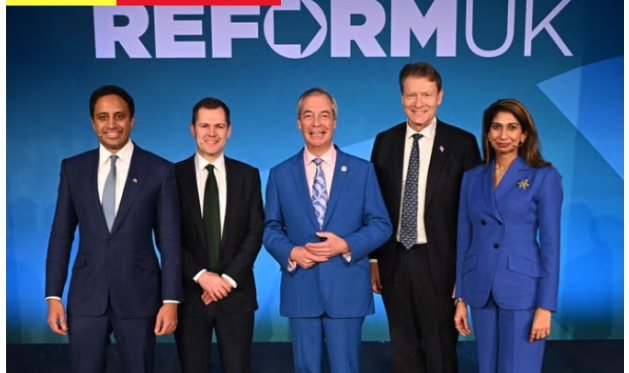
The announcement, led by Nigel Farage, was framed by party figures as evidence that Reform is no longer a “one-man band” and is ready to function as a government-in-waiting.

Critics across politics, trade unions and civil society immediately warned that the plans would roll back long-standing protections and deepen social division.
At a press conference in London, Farage introduced four senior spokespeople who he said would form the core of a Reform cabinet. Former Conservative cabinet minister Robert Jenrick was appointed economic spokesperson, with Farage dubbing him Reform’s “shadow chancellor of the Exchequer”.
Business and party chair Richard Tice was named business, trade and energy spokesperson and floated the idea of a new “super-department” if the party entered government. Policy chief Zia Yusuf was given the home affairs brief and later styled himself “shadow home secretary” on social media.
The most contentious announcement came from Suella Braverman, introduced as Reform’s education, skills and equalities spokesperson. Braverman said the party would repeal the Equality Act on “day one” of a Reform government, arguing that Britain had been “ripped apart by diversity, equality and inclusion” policies.
She also said Reform would scrap the role of equalities minister, a position that currently sits within her own brief.
Farage reinforced the hard-line direction by backing plans to withdraw from international agreements that, in Reform’s view, obstruct deportations.
Yusuf said the party would be prepared to “rip up treaties” to restore what he described as control over borders, making immigration the central organising theme of his new role.
Farage praised Yusuf as a strong public performer and said restoring trust after “manifesto after manifesto” on migration was Reform’s priority.
The proposals provoked immediate backlash. The Trades Union Congress said repealing the Equality Act would amount to legalising discrimination at work, while charities warned that protections built up over decades for women, ethnic minorities, disabled people and LGBT+ communities would be dismantled.
Critics accused Reform of pitching for votes from social conservatives by attacking equality law, a charge party figures rejected by insisting they were advocating “meritocracy” and “personal responsibility”.
Political opponents were equally scathing. Liberal Democrat leader Ed Davey mocked Farage for unveiling a team without health or foreign affairs spokespeople, suggesting Reform’s priorities were narrowly focused and ideologically driven.
Labour figures said the plans showed Reform’s values were incompatible with governing a diverse country, while Conservatives warned that tearing up equality legislation would put the UK at odds with allies and courts.
The timing of Reform’s announcement intersected with turmoil elsewhere in Westminster. Labour had just abandoned plans to postpone local elections across dozens of councils after legal advice and a challenge brought by Reform.
That reversal prompted renewed scrutiny of Labour’s poll standing and gave Farage an opening to claim his party was now the real opposition. Polling cited in the live coverage suggested Reform’s lead over Labour had narrowed but remained significant, feeding the party’s confidence ahead of May’s contests.
Farage’s team-building also sought to counter a persistent critique: that Reform revolves around its leader. By elevating recognisable figures, including a former Conservative cabinet minister and a former home secretary, Reform aims to project credibility and readiness.
Supporters argue that the party’s appeal lies in its willingness to confront what it sees as policy failures on immigration, public spending and cultural questions. Detractors counter that the recruitment of high-profile defectors underscores opportunism rather than a coherent governing programme.
Central to the debate is the Equality Act itself, which consolidated and strengthened anti-discrimination law in Britain.
Any attempt to repeal it would face intense parliamentary, legal and public resistance, particularly given the breadth of protections it enshrines.
Even some who share Reform’s scepticism about aspects of equality policy caution that wholesale repeal would create legal uncertainty for employers and public bodies.
On immigration, Reform’s rhetoric again raises questions about feasibility. Leaving or overriding international treaties would carry diplomatic costs and legal challenges, and critics note that past governments have struggled to reconcile enforcement with human rights obligations.
Farage argues that voters are prepared for confrontation with institutions if it delivers results; opponents say such promises underestimate complexity and overstate executive power.
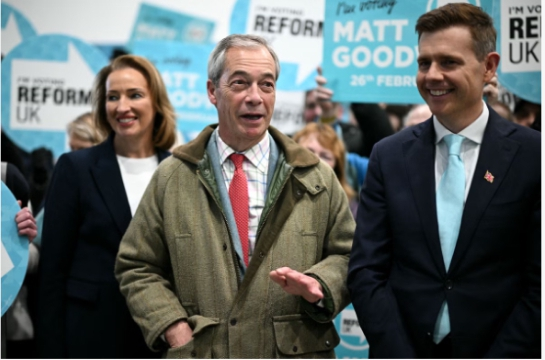
As the live political row unfolded, commentary from pollsters suggested that May’s local elections could punish both Labour and the Conservatives, with Reform positioned to make gains in areas once considered safe for the main parties.
That prospect has heightened attention on Farage’s strategy: consolidate a protest vote while signalling enough seriousness to be seen as a governing alternative.
Whether the unveiling of a shadow team achieves that balance remains contested. For supporters, the clarity of Reform’s positions—particularly on immigration and equality—distinguishes it in a crowded field.
For critics, the same clarity represents a sharp turn away from consensus politics and risks inflaming divisions. What is clear is that Farage’s announcement has forced equality law, treaty obligations and the nature of opposition politics back to the centre of the national conversation, setting the tone for a volatile election year ahead.
Read also:Starmer condemns Reform UK as measles outbreak exposes vaccine misinformation fault lines
About The Author


