

The Philippines has accused China of deliberately ramming one of its government vessels in the South China Sea, escalating tensions near Thitu Island in the Spratly archipelago.
The Philippine Coastguard reported that a Chinese coastguard vessel fired a water cannon at the BRP Datu Pagbuaya, a government ship, before deliberately colliding with its stern. This incident marks another serious Philippine vessel collision in disputed waters.
No crew members were injured during the encounter, which took place near Thitu Island, known locally as Pag-asa. The island is the largest Philippine-occupied territory in the Spratlys, central to ongoing Thitu Island tensions.
Videos shared on X by Coastguard spokesman Commodore Jay Tarriela show the Chinese vessel briefly colliding with the Filipino ship. “This is blatant bullying,” he said, highlighting growing Chinese coastguard aggression in the South China Sea.
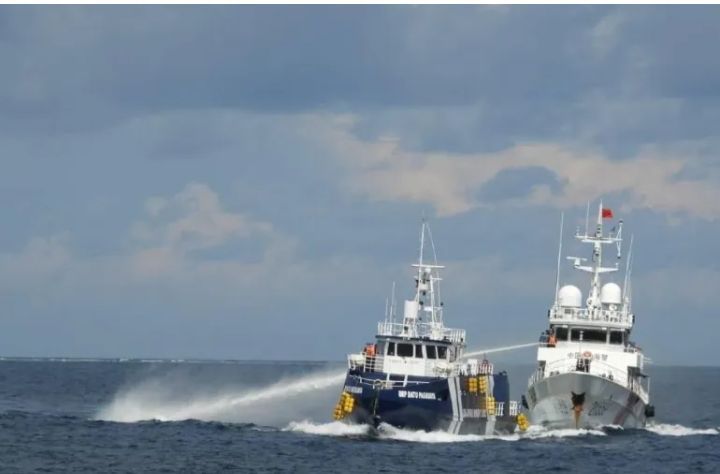
The BRP Datu Pagbuaya quickly maneuvered away to avoid further damage. Philippine authorities emphasized that the incident demonstrates Beijing’s strategy of asserting dominance through Chinese coastguard aggression and intimidation in contested waters.
Admiral Ronnie Gil Gavan, Philippine coastguard chief, stated, “This only strengthens our resolve to defend every inch of Philippine territory in the South China Sea.” He reinforced Manila’s commitment to safeguard its maritime borders.
China, meanwhile, denied responsibility. Chinese coastguard spokesman Liu Dejun said the collision occurred because the Philippine vessel “ignored repeated stern warnings and dangerously approached,” framing the incident as a provocation rather than a Philippine vessel collision.
Beijing has previously accused Manila of acting as a proxy for the United States in the South China Sea, further complicating regional disputes and amplifying Thitu Island tensions among Southeast Asian nations.
The South China Sea is a vital maritime corridor, carrying over $3 trillion in annual trade. Any escalation from repeated Philippine vessel collisions risks destabilizing shipping routes and regional security.
Thitu Island remains a focal point in the Spratlys. Philippine forces stationed there maintain both civilian and military presence, emphasizing the significance of Thitu Island tensions and the country’s determination to patrol contested waters.
Commodore Tarriela posted a video showing the Chinese coastguard aggression, including the use of a water cannon. “Our vessel was deliberately targeted while performing routine patrols,” he wrote on X, underscoring the continuing threat in the South China Sea.
Previous incidents in the Spratlys have involved collisions, minor damages, and confrontations between Filipino and Chinese ships. Analysts say repeated Philippine vessel collisions increase the risk of broader conflict if left unchecked.
The United Nations-backed tribunal previously ruled China’s claims over most of the South China Sea have no legal basis. Yet Beijing continues to assert sovereignty aggressively, contributing to ongoing Thitu Island tensions.
Philippine officials lodged formal protests with Beijing, citing repeated Chinese coastguard aggression and violations of international law. Manila demanded that China cease dangerous maneuvers that threaten both lives and regional stability.
Analysts warn that escalating Philippine vessel collisions could draw in the U.S. and other powers, turning the South China Sea into a potential flashpoint for wider geopolitical tensions in Southeast Asia.
The clash underscores the broader Thitu Island tensions, where overlapping claims involve not only the Philippines and China but also Vietnam, Malaysia, and Brunei, each contesting sovereignty over islands and maritime zones.
Philippine authorities emphasize they are patrolling peacefully, seeking to avoid escalation despite continued Chinese coastguard aggression. The BRP Datu Pagbuaya remains operational, symbolizing Manila’s determination to protect its territorial waters in the South China Sea.
Beijing maintains that the Philippine vessel “provoked” the collision, reiterating its stance that any encounter near Thitu Island falls within Chinese jurisdiction. Analysts see this as a tactic to normalize Chinese coastguard aggression.
The incident is likely to be discussed in ASEAN forums, where member states seek to develop codes of conduct to manage Thitu Island tensions and prevent incidents that could destabilize the South China Sea.
Despite international attention, the Philippines continues patrolling disputed areas. Officials warn that further Philippine vessel collisions may occur if China persists with aggressive maneuvers, emphasizing the importance of vigilance and diplomacy.
Observers stress that documenting these incidents is vital for accountability. Videos of Chinese coastguard aggression and Philippine vessel collisions help illustrate the persistent risks facing nations operating in the South China Sea.
Philippine Coastguard Chief Admiral Gavan said, “We will continue to defend our sovereign rights. The South China Sea is non-negotiable, and our presence here is a matter of national security.”
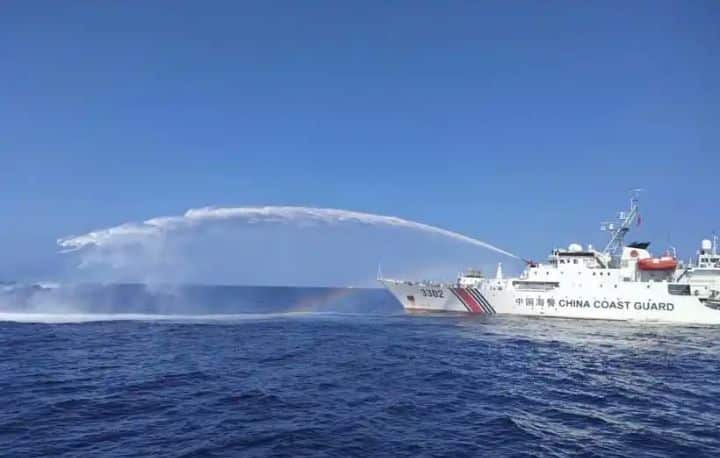
The latest clash highlights the ongoing volatility in the South China Sea, where competing territorial claims and Thitu Island tensions continue to challenge regional stability and test international maritime norms.
In summary, repeated Philippine vessel collisions and Chinese coastguard aggression underscore the fragility of peace in the South China Sea. Manila remains resolute in defending its territory and upholding international law.
About The Author


