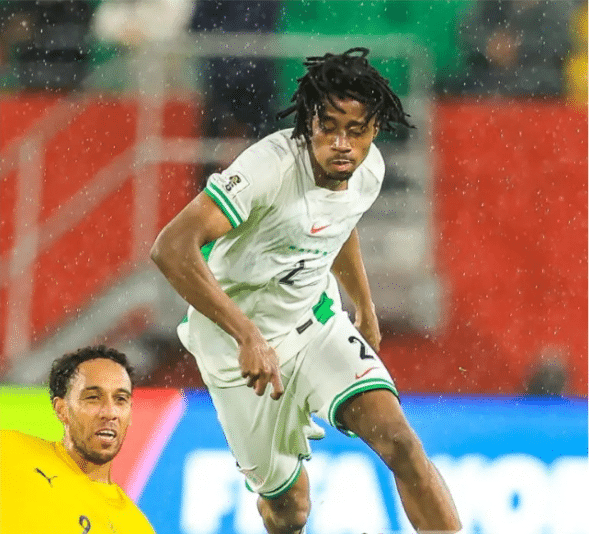
The growing debate surrounding Osimhen’s terrible miss vs Gabon continues dominating conversations as Nigeria’s Super Eagles attempt to analyse their uneven performances during a complicated qualifying phase that produced moments of brilliance and moments of frustrating inconsistency.
Many supporters believe the team should have sealed control of the match earlier, arguing that the dramatic episodes overshadowed the broader tactical issues that shaped the Super Eagles vs Congo storyline and the challenging narrative of Nigeria’s World Cup qualifying path.
Despite frustrations felt across the fan base, several players insist the squad remains united in their ambitions, noting that criticism should focus on structural improvements rather than solely on individual moments that drew intense public scrutiny.
Coaches and analysts reviewing the match emphasised that the missed chance remains unforgettable, yet they insist the real lesson lies in improving conversion rates, transitional organisation, and physical discipline during high-pressure encounters.
Observers monitoring the Super Eagles’ performance argue that even with occasional setbacks, the foundations for a stronger, more coherent side exist, especially when evaluating contributions from senior figures like William Troost-Ekong, whose leadership stabilised tense periods.
Samuel Chukwueze, another prominent voice, stressed that emotional reactions must not overshadow the collective effort displayed by the team, especially given the psychological demands associated with World Cup playoff expectations and continental qualification pressure.
The squad’s internal review highlighted how momentum shifted during crucial moments, especially when the Gabon WCQ performance unexpectedly unsettled Nigeria’s defensive shape, revealing vulnerabilities the coaching crew aims to address before the next qualifier.

Football analysts agree that although the incident involving Osimhen’s terrible miss vs Gabon continues circulating across media platforms, the Super Eagles vs Congo assessment remains equally essential when measuring the team’s overall technical progression.
Some Nigerian supporters fear these disruptive patterns might resurface in future matches, but the team’s improved defensive transitions during the later stages demonstrated encouraging levels of discipline under intense match-day stress.
With Nigeria’s World Cup playoff opportunities now more valuable than ever, fans expect the coaching crew to refine tactical spacing, speed of play, and pressing triggers to ensure better efficiency in future fixtures.
The coaching staff acknowledges that offensive coordination must improve, especially as strategic variations involving wide attackers like Chukwueze and central orchestrators aim to unlock complex defensive blocks encountered throughout qualifying.
Fan discussions grew louder when replays of Osimhen’s terrible miss vs Gabon circulated widely, but several veterans encouraged younger players to maintain composure and focus on improving decision-making under crowded penalty-area situations.
Viewing the match from a broader perspective, many argue that Nigeria’s Super Eagles qualification journey still demonstrates resilience, particularly when recalling difficult encounters handled with maturity, despite occasional lapses in concentration.
The Super Eagles vs Congo conversation remains relevant because analysts insist that understanding each match’s tactical layers allows the coaching staff to measure performance metrics accurately while building toward long-term qualifying targets.
Witnessing Troost-Ekong’s defensive interventions throughout the campaign reminded supporters of his essential role, especially in stabilising backline coordination and ensuring Nigeria remained competitive even when offensive execution faltered.
Chukwueze’s comments regarding team mentality resonated strongly with fans, as he highlighted the importance of blocking out distractions while placing priority on sharpness, chemistry, and precise movements required at international competition levels.
In subsequent press conferences, coaching personnel reiterated the need for consistent midfield control, acknowledging that better balance between defensive support and creative transition would reduce pressure accumulating during unpredictable match swings.
Although the reaction to Osimhen’s terrible miss vs Gabon remains intense, some analysts argue that exaggerated criticism risks undermining the striker’s confidence, especially considering his previous clutch performances in high-stakes qualifiers.
Nigeria’s World Cup playoff campaign exposed tactical inconsistencies but also showcased glimpses of superiority, particularly when the team controlled possession efficiently and applied coordinated pressure that forced opponents into hurried defensive clearances.
Reviewing Gabon’s WCQ performance revealed how their compact defensive structure disrupted Nigeria’s rhythm, proving that the Super Eagles must improve their ability to break down tightly organised teams.
Coaches emphasised that preparing for future challenges requires deeper focus on tactical adaptability, especially when unpredictable match dynamics force rapid changes in attacking shape or defensive positioning.
Player reflections after the match included candid admissions regarding missed opportunities, urging teammates to adopt sharper decision-making habits and maintain composure during high-speed sequences when immediate reactions determine match outcomes.
The Super Eagles qualification narrative continues evolving, shaped by memorable victories, painful near-misses, and emotionally charged incidents that test the psychological endurance of both players and supporters.
Rewatching the footage of Osimhen’s terrible miss vs Gabon prompted discussions among technical experts who analysed body positioning, visual cues, defensive pressure, and the milliseconds that separate goals from wasted opportunities.
Nigeria’s preparation for upcoming qualifiers will include intensive drills aimed at improving finishing accuracy, midfield balance, and high-line defensive coordination to prevent counters that previously troubled the team.
Many believe lessons from the Super Eagles vs Congo analysis should inform future strategies, ensuring Nigeria avoids repeating similar structural breakdowns that previously hindered match control during crucial moments.
As part of long-term development, coaches plan to integrate younger players gradually, ensuring they adapt to the demands of high-pressure fixtures without destabilising existing squad dynamics or diminishing overall experience.
Fan expectations remain remarkably high, but football insiders encourage patience, noting that qualification tournaments often require resilience, consistency, and tactical evolution rather than immediate perfection after each disappointing moment.
Evaluating Nigeria’s World Cup playoff trajectory reveals optimistic possibilities, particularly if transitional errors decline and attacking combinations gain clarity, allowing forwards to exploit narrow defensive gaps more effectively.
The broader African qualification landscape remains highly competitive, meaning the Super Eagles must maintain intensity across every fixture, recognising how unpredictable results can reshape standings rapidly in closely contested groups.
Players insist unity remains strong inside the camp, describing a collective desire to respond positively to adversity while embracing responsibility for correcting weaknesses exposed during challenging fixtures.
Training sessions will prioritise sharper off-the-ball movement, improved communication, and faster ball circulation to ensure Nigeria dictates tempo earlier in matches, avoiding slow starts that previously allowed opponents to gain confidence.
The match debates resurfaced when new analysis programmes featured segments revisiting Osimhen’s terrible miss vs Gabon, reinforcing how pivotal moments often shape wider narratives far beyond the ninety minutes.
Supporters hope upcoming matches provide renewed confidence, expecting the team to translate lessons learned into mature, disciplined performances capable of guiding Nigeria back to the World Cup stage.
Even critics acknowledge that with improved tactical discipline and refined execution, the Super Eagles possess the potential to dominate their qualification path and restore belief among their passionate global fanbase.
The Nigerian Football Federation also highlighted the need for stable preparation cycles, ensuring players arrive in optimal condition and avoiding unnecessary disruptions that historically affected squad cohesion.
While debates may continue, the coaching crew remains committed to using every setback as motivation, transforming emotional disappointment into structured improvement that strengthens Nigeria’s competitive identity.

Reflecting on the emotional reactions surrounding Osimhen’s terrible miss vs Gabon, players emphasised resilience, choosing to analyse the episode calmly while reaffirming their desire to elevate performance standards across upcoming qualifiers.
Nigeria’s long-term ambition remains clear: reclaim continental authority, secure World Cup qualification, and establish a sustainable tactical identity capable of competing confidently against Africa’s strongest footballing nations.