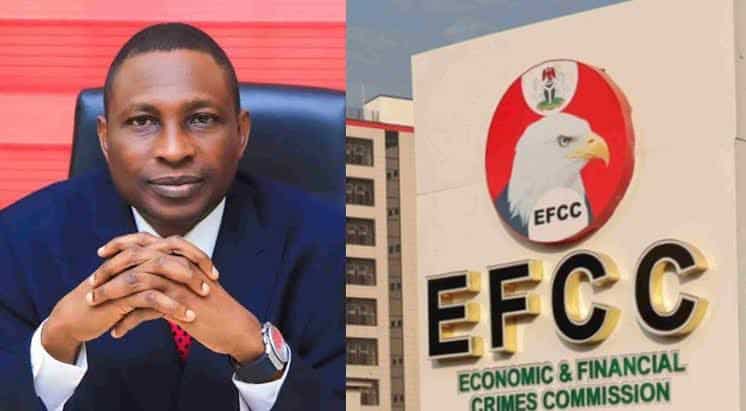
EFCC Chairman Ola Olukoyede urges stronger anti-corruption collaboration among West African nations to curb trans-border crimes and strengthen regional prosperity.
The Economic and Financial Crimes Commission EFCC Chairman, Ola Olukoyede, has called for enhanced anti-corruption collaboration among West African countries to tackle trans-border crimes, promote regional peace, and accelerate economic growth.
Speaking at the 7th Annual General Assembly of the Network of National Anti-Corruption Institutions in West Africa (NACIWA) held in Abuja, Olukoyede — who also serves as NACIWA President — emphasized that sustained anti-corruption collaboration is crucial for building a transparent, stable, and prosperous subregion.
Renewing the Fight Against Corruption
In his address, Olukoyede commended delegates for their commitment to integrity and accountability, urging them to use the gathering as a “renewal of vision, leadership, and collective determination” to eliminate corruption across the region.
He noted that corruption remains one of the greatest obstacles to peace and development, warning that no country can achieve stability without a unified regional approach.
“Our fight against corruption must go beyond borders,” he stated.
“We must continue to strengthen anti-corruption collaboration to restore public trust and promote sustainable governance across West Africa.”
Institutional Recognition and Strategic Direction
Olukoyede revealed that NACIWA had proposed its formal recognition as a Technical Commission under Article 19 of the ECOWAS Protocol.
The proposal, he explained, aims to institutionalize coordination among anti-graft agencies in the region, covering investigations, asset recovery, and policy harmonization.
He added that this recognition would enable NACIWA to act as a technical backbone for ECOWAS anti-corruption programs, aligning the fight against corruption with broader goals of peace, political stability, and economic justice.
“Political transitions, insecurity, and governance challenges across our member states remind us that our anti-corruption efforts are inseparable from the pursuit of social justice and inclusive governance,” Olukoyede said.
Key Achievements and Institutional Growth
Highlighting the network’s achievements since 2022, Olukoyede explained that NACIWA has been repositioned as a dynamic and credible regional platform for effective cooperation.
He listed the following accomplishments:
Enhanced regional visibility and formal ECOWAS recognition.
Establishment of a permanent secretariat in Nigeria for operational efficiency.
Financial sustainability through improved membership dues and control systems.
Strengthened partnerships with ECOWAS, UNODC, and the AU Anti-Corruption Board.
Recognition by the GlobE Network and designation of the EFCC Academy as a Centre of Excellence for training and research.
Olukoyede noted that these milestones were possible due to unwavering anti-corruption collaboration among member agencies, underscoring the need to sustain momentum through continuous partnership and political will.
Legislative Commitment to Regional Integrity
Senator Emmanuel Udende, Chairman of the Senate Committee on Anti-Corruption and Financial Crimes, praised NACIWA’s progress and described the Assembly as timely.
He said corruption’s trans-border nature requires intelligence sharing, asset recovery cooperation, and legal harmonization.
“Corruption undermines governance and security,” he remarked.
“To tackle it effectively, we must embrace strong regional cooperation and cross-border enforcement.”
He pledged the National Assembly’s support in strengthening the legal framework for international anti-graft collaboration.
Similarly, Representative Ginger Onwusibe, Chairman of the House Committee on Anti-Corruption and Financial Crimes — represented by Nnamdi Ezechukwu — echoed that corruption thrives beyond national boundaries.
“Corruption moves through our banks, systems, and politics,” he said.
“That is why our fight and our solutions must equally cross borders through deliberate anti-corruption collaboration.”
ECOWAS and Partners Commend EFCC Leadership
The President of the ECOWAS Commission, Dr. Omar Touray, represented by Vice President Damtien Tchintchibidja, lauded the EFCC’s leadership under Olukoyede for revitalizing NACIWA’s structure and driving regional synergy.
“NACIWA has achieved significant progress in fostering cooperation among member states,” she said.
“However, there is still a need for deeper engagement and stronger political commitment.”
Also present at the event were Ambassador Gautier Mignot, Head of the EU Delegation to Nigeria and ECOWAS; representatives from UNODC, International IDEA, the Code of Conduct Bureau, and civil society organizations who all expressed their support for enhanced regional anti-corruption initiatives.
The Assembly featured a panel discussion moderated by Yusuf Rafsanjani, Executive Director of the Civil Society Legislative Advocacy Centre (CISLAC).
Panelists from Liberia, Côte d’Ivoire, Sierra Leone, Guinea, and Nigeria discussed strategies for improving asset recovery, information sharing, and regional policy coordination.
They unanimously agreed that anti-corruption collaboration remains the strongest tool for tackling illicit financial flows, money laundering, and governance failures that weaken institutions across West Africa.
The Assembly concluded with a joint resolution reaffirming participants’ dedication to deepening regional partnerships, harmonizing anti-corruption laws, and promoting collective accountability.
Delegates pledged to expand cross-border cooperation, improve capacity-building initiatives, and strengthen NACIWA’s institutional role as the regional hub for anti-corruption collaboration.
“Only through unity, transparency, and shared vision can we achieve lasting progress,” Olukoyede concluded, urging continuous cooperation among governments, parliaments, and civil society to make corruption unprofitable in West Africa.
More news at ireport247news
About The Author