


Oil prices surge above $105 as geopolitical tensions rattle global markets
Global crude markets extended gains on Thursday, with oil prices surging above $105 per barrel as renewed tensions in the Middle East disrupted supply expectations and reignited fears of a broader energy-driven inflation shock.
Benchmark Brent crude climbed past the $105 mark, while U.S. West Texas Intermediate (WTI) traded near $102, widening the Brent-WTI spread amid heightened geopolitical risk premiums tied to the Strait of Hormuz — a critical artery for roughly 20 per cent of global oil shipments.
The rally marks a sharp reversal from last week’s dip toward $88, underscoring how fragile market sentiment remains as ceasefire negotiations between the United States and Iran falter.
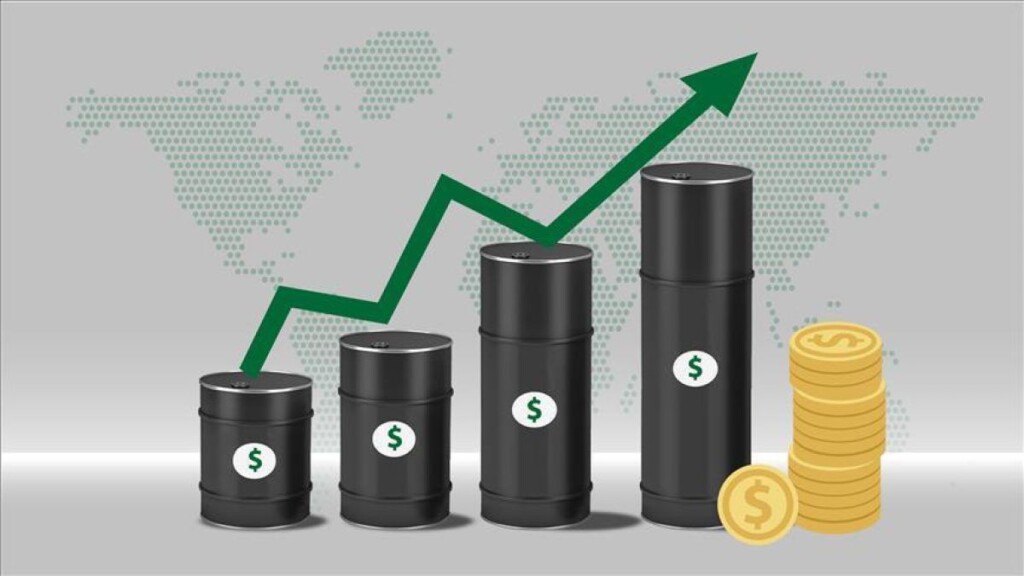
Strait of Hormuz disruption amplifies supply fears
The latest surge follows escalating hostilities around the Strait of Hormuz, where renewed military posturing and shipping disruptions have intensified concerns about supply bottlenecks.
According to estimates referenced by OPEC, any sustained disruption in the corridor could remove several million barrels per day from global supply chains, tightening already fragile inventories.
Energy analysts say the market is now pricing in a prolonged geopolitical risk premium.
“Crude above $105 reflects not just immediate supply concerns, but the risk of sustained disruption,” said Ayodele Oni, an energy lawyer and partner at Bloomfield Law Practice.
“Markets are reacting to uncertainty, not just physical shortages.”
Global inflation risks resurface as oil rally intensifies
The renewed oil rally is raising alarm among policymakers, with fears that rising energy costs could derail disinflation trends seen earlier this year.
The International Monetary Fund has previously warned that a $10 increase in oil prices could lift global inflation by up to 0.4 percentage points, depending on pass-through effects.
Similarly, the World Bank has flagged energy price volatility as a key risk to emerging market stability, particularly for import-dependent economies.
“With oil prices surging above $105, the risk is that inflation expectations become unanchored again,” said Razia Khan, Chief Economist for Africa at Standard Chartered. “That complicates central bank policy globally.”
Currency pressure builds as oil prices surge above $105
Rising oil prices are also feeding into foreign exchange volatility, particularly in emerging markets where energy imports strain external balances.
Nigeria’s naira traded within the ₦1,450–₦1,600 per dollar range in recent sessions, according to data from the FMDQ Exchange, reflecting persistent FX pressure despite ongoing reforms.
Higher oil prices typically support export earnings for producers like Nigeria, but analysts caution that structural constraints limit the upside.
“Oil above $100 should theoretically strengthen Nigeria’s FX position, but production constraints and debt servicing obligations dilute that benefit,” said Bismarck Rewane, CEO of Financial Derivatives Company.
Nigeria faces mixed impact despite oil windfall potential
While Nigeria stands to gain from higher crude prices, the domestic impact remains complex due to its reliance on imported refined products and FX exposure.
Economists note that with the naira still trading around ₦1,450–₦1,600 per dollar, a sustained oil price move above $105 could lift Nigeria’s import bill by an estimated 6–9 per cent, feeding directly into domestic inflation through higher fuel landing costs, transport tariffs, and energy-intensive food distribution chains.
Fuel prices across major cities have begun adjusting upward, with pump prices hovering between ₦650 and ₦750 per litre in some urban centres, driven by higher landing costs.
For many Nigerians, the effect is immediate.
“I now spend almost double on transport compared to last month,” said Chinedu Okafor, a Lagos-based commercial driver.
“Everything is going up — fuel, food, even basic goods.”
This underscores the paradox in Africa’s largest oil producer: higher crude prices boost fiscal revenues but simultaneously raise domestic living costs.
Africa’s vulnerability exposed as energy import dependence persists
Across the continent, the impact is even more pronounced.
Compared to Europe, where strategic reserves and diversified LNG contracts have softened immediate price shocks, and parts of Asia where subsidy buffers still absorb volatility, emerging import-dependent economies in Africa remain significantly more exposed to crude spikes, with limited fiscal space to cushion pass-through effects.
Africa imports over 70 per cent of its refined fuel needs, leaving economies highly exposed to global price shocks. Rising oil prices are expected to widen trade deficits and increase subsidy pressures in several countries.
According to the Africa Finance Corporation, the continent’s fuel demand is projected to reach 86 million tonnes by 2040, highlighting structural dependence on external supply chains.
“Oil price volatility exposes a deeper vulnerability — Africa’s lack of refining capacity,” said Rita Babihuga-Nsanze, Chief Economist at AFC.
“Until that gap is closed, external shocks will continue to translate into domestic crises.”
Related: Africa fuel shortfall 2040: deepening 86m tonne deficit fuels import crisis, inflation risk
Market reaction: equities weaken, yields rise
Financial markets have begun reacting to the renewed oil surge, with investor sentiment turning cautious.
Emerging market equities slipped broadly, while sovereign bond yields edged higher as investors priced in prolonged inflationary pressure.
In Nigeria, yields on government securities have remained elevated, reflecting tight monetary conditions and persistent inflation concerns.
“Higher oil prices reinforce the ‘higher-for-longer’ interest rate narrative,” said analysts at Vetiva Capital. “That keeps yields elevated and limits liquidity in risk assets.”
Conflicting analyst views highlight uncertainty
Despite the risks, analysts remain divided on the medium-term outlook.
Some see the current rally as manageable if geopolitical tensions ease.
“If supply routes reopen quickly, prices could stabilise below $100,” said Olumide Adesina, a financial market analyst. “Markets are highly reactive right now.”
Others warn that structural risks could sustain elevated prices.
“The risk of escalation remains significant,” said Khan. “If disruptions persist, we could see oil testing $110 or higher.”
Global comparison: emerging markets more exposed
Compared to developed economies, emerging markets — particularly in Africa — face disproportionate exposure to oil price shocks.
While advanced economies benefit from strategic reserves and diversified energy sources, many African countries remain vulnerable to supply disruptions and currency volatility.
This divergence underscores the uneven impact of global energy shocks across regions.
Outlook: volatility likely to persist as risks remain elevated
With ceasefire talks stalled and geopolitical tensions unresolved, analysts expect continued volatility in global oil markets.
The key variables now include:
- Stability of shipping routes through the Strait of Hormuz
- U.S.-Iran diplomatic developments
- Global demand resilience amid tightening financial conditions
For Nigeria and other emerging economies, the challenge will be balancing potential revenue gains against rising domestic costs and macroeconomic risks.
Oil prices surge above $105 signals deeper economic fault lines
As oil prices surge above $105, the implications extend far beyond energy markets, feeding into inflation, currency volatility, and cost-of-living pressures across the globe.
For Africa — and Nigeria in particular — the latest rally highlights a structural dilemma: benefiting from higher crude prices while remaining vulnerable to the downstream effects of energy dependence.
Unless structural reforms in refining, FX stability, and fiscal management accelerate, analysts warn that each oil shock will continue to expose the same economic fault lines — with households bearing the ultimate cost.
Read more at ireport247news
About The Author
