

Nigeria Power Crisis Deepens as No Major Power Plant Has Been Financed in 11 Years — Nnaji Warns
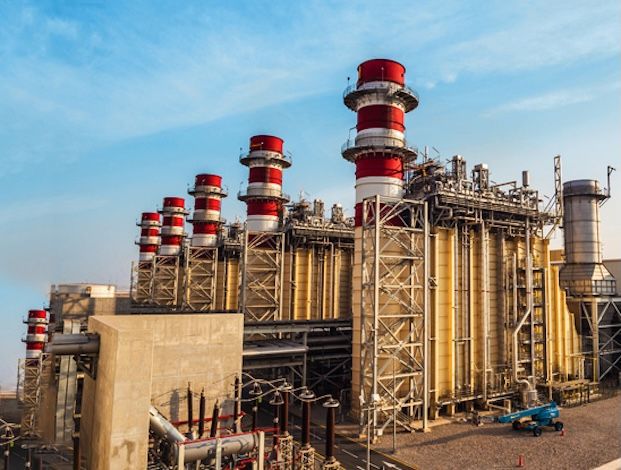
Nigeria’s power sector has failed to secure financing for any major power plant in more than a decade, a development that underscores the deepening Nigeria power crisis and persistent structural weaknesses in the country’s electricity market, former Minister of Power, Barth Nnaji, has said.
Speaking in Lagos at the 2026 conference of the Nigerian Association for Energy Economics, Nnaji attributed the investment drought to policy inconsistency, weak infrastructure, and the dismantling of a financing framework that had previously attracted global capital into power generation projects.
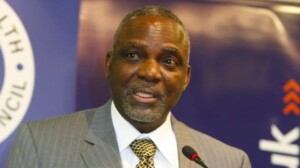
According to him, Nigeria has gone about 11 years without financing any new large-scale power plant, a gap he traced directly to the discontinuation of a government-backed risk guarantee system introduced during his tenure.
“That policy reversal effectively froze investment momentum in the sector,” he said.
The World Bank has repeatedly warned that policy inconsistency and tariff shortfalls continue to deter private capital from entering Nigeria’s power sector.
Financing Collapse and Investor Flight
Nnaji explained that the now-defunct partial risk guarantee instrument, developed in collaboration with former Finance Minister Ngozi Okonjo-Iweala, was designed to de-risk projects and make them bankable to international lenders.
The framework enabled projects such as the Azura-Edo Power Plant to reach financial close, signalling early investor confidence in Nigeria’s electricity reform programme.
“At the time, global financiers were ready to fund Nigerian power plants because the risks were mitigated,” Nnaji said.
However, he noted that the mechanism was scrapped following a change in administration, triggering a collapse in investor confidence that has persisted for over a decade.
The fallout remains visible today. Despite an installed capacity of roughly 13,000 megawatts, actual generation in Nigeria still averages just 4,000 to 5,000 megawatts, reflecting deep inefficiencies across gas supply, transmission, and market liquidity.
Tariffs, FX Pressure and the Cost of Power
The financing vacuum has intensified the broader Nigeria power crisis, with cost pressures cascading across the economy.
Electricity tariffs for Band A customers now exceed ₦200 per kilowatt-hour, while the naira’s depreciation to around ₦1,400–₦1,600 per dollar has significantly raised the cost of importing generation equipment and servicing dollar-denominated obligations.
This FX-tariff dynamic continues to deter investors, who face revenue risks in a market where cost-reflective pricing remains politically sensitive.
For households and small businesses, the impact is immediate and severe.
Many urban consumers now spend over ₦40,000–₦70,000 monthly on petrol and diesel to compensate for unreliable grid supply—an added burden in an already inflationary environment.
Energy Transition Reality Check
Nnaji also cautioned against what he described as an overly ideological approach to energy transition, arguing that recent geopolitical shocks have exposed the limits of rapid decarbonisation.
He referenced the fallout from the Russia-Ukraine War, noting that several European economies reverted to fossil fuels to stabilise energy supply.
“Countries that pushed aggressively for renewables had to fall back on coal and gas when faced with supply shocks,” he said.
For Nigeria, he argued, the implication is clear: natural gas must remain central to its energy strategy.
With over 210 trillion cubic feet of proven gas reserves, Nigeria holds one of the largest gas endowments globally. Yet inadequate infrastructure continues to limit utilisation.
“We are not building the pipelines and processing systems needed to unlock this potential,” Nnaji said.
Related: Oil prices surge past $107 as US–Iran tensions escalate, triggering inflation and market fears
Underperforming Assets and Structural Gaps
Even existing assets face constraints. Nigeria Liquefied Natural Gas, operated by Nigeria LNG Limited, is currently running at about 60 per cent capacity, largely due to gas supply shortfalls.
Nnaji said this reflects a broader failure to align upstream production with downstream demand, a disconnect that continues to undermine power generation.
On hydropower, he described the long-delayed Mambilla Hydropower Project as a symbol of execution failure.
The project, first conceived over four decades ago, remains stalled despite its strategic importance to Nigeria’s baseload capacity.
“The issue is not feasibility—it is execution and policy consistency,” he said.
Africa’s Broader Energy Deficit
The President of the Nigerian Association for Energy Economics, Hassan Mahmud, reinforced the urgency of reform, noting that more than 600 million Africans lack access to electricity, while nearly one billion rely on biomass for cooking.
He said Africa requires over $100bn annually in energy investment to achieve universal access by 2030, far above current funding levels.
“Nigeria’s challenge is not resource scarcity,” Mahmud said. “It is converting those resources into reliable and affordable energy at scale.”
Market Signals and Investor Sentiment
The prolonged financing gap is increasingly reflected in investor sentiment.
Investor caution is also reflected in Nigeria’s sovereign risk profile, with Eurobond yields remaining elevated in double digits, signalling persistent concerns about macroeconomic stability and infrastructure investment risk.
Unlike parts of Asia and the Middle East where stable regulation continues to attract large-scale power investment, Nigeria’s policy volatility has slowed capital inflows into the sector.
Energy sector analysts warn that without credible policy resets, Nigeria risks further capital flight, with investors favouring more predictable markets across Asia and the Middle East.
The absence of new large-scale projects over the past decade has also weakened confidence in the sector’s long-term bankability.
Outlook: Policy or Stagnation
The Nigeria power crisis now sits at a critical juncture.
Without the restoration of risk guarantees, cost-reflective tariffs, and coherent long-term policy signals, experts say the country could remain locked in a cycle of underinvestment and unreliable supply.
For millions of Nigerians, the consequences are already tangible—high energy costs, limited industrial productivity, and continued reliance on self-generation.
Nnaji’s warning is stark:
“What government policy and will can do is tremendous. Without it, progress will remain stalled.”
Read more at ireport247news
About The Author
