

Nigeria local government autonomy crisis worsens as states withhold ₦1.46tn funds despite court ruling
Nearly ₦1.46 trillion meant for grassroots development is still being controlled by state governments, affecting millions dependent on local services and raising concerns over fiscal transparency and investor confidence, despite a landmark Supreme Court ruling granting financial autonomy to Nigeria’s local councils.
The funds, allocated to the country’s 774 local government areas (LGAs) in the first quarter of 2026, were not paid directly to councils as mandated but instead continued to flow through state-controlled channels, according to data from the Federation Account Allocation Committee and government fiscal reports.
The development underscores a deepening Nigeria local government autonomy crisis, where legal reforms aimed at decentralising fiscal power are yet to translate into operational reality — nearly two years after the court’s decision.
Court ruling vs fiscal reality
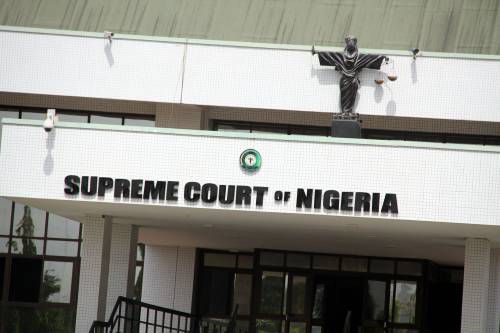
In July 2024, the Supreme Court of Nigeria ruled that state governments have no constitutional authority to retain or manage funds belonging to local councils, ordering that allocations be paid directly to democratically elected local governments.
The judgment was widely seen as a structural turning point for Nigeria’s fiscal federalism, promising to unlock grassroots development and improve accountability.
However, implementation has stalled.
Instead of direct disbursement, allocations are still routed through the long-standing State Joint Local Government Account system — a framework critics say enables governors to exert control over funds meant for local development.
“The legal position is clear, but the fiscal structure remains unchanged,” said a Lagos-based public finance analyst. “What we are seeing is a disconnect between judicial authority and political execution.”
Rising allocations, unchanged control
Local government allocations rose sharply year-on-year, highlighting the scale of funds involved:
- ₦537.88bn from January 2026 revenue (shared in February)
- ₦456.47bn from February revenue (shared in March)
- ₦468.83bn from March revenue (shared in April)
This brings total allocations to ₦1.46tn in Q1 2026, a 19.05% increase from ₦1.23tn in the same period of 2025.
Despite the increase, the funds remain under indirect state control.
Month-on-month, allocations showed volatility — falling by 15.14% between February and March before rebounding slightly in April — reflecting broader instability in federation revenues driven by fluctuations in oil earnings and tax receipts.
Human impact: services without control
Local governments are responsible for some of Nigeria’s most critical public services, including primary healthcare, rural roads, sanitation, markets and basic education infrastructure.
Yet, without direct access to their funds, councils often lack the financial autonomy needed to execute projects or respond to community needs.
The result is a persistent gap between budget allocations and real-world outcomes.
In many rural and semi-urban communities, residents continue to face deteriorating infrastructure, limited healthcare access, and underfunded local services — despite rising allocations on paper.
Analysts say the situation effectively weakens the last mile of governance.
“Local governments exist closest to the people, but without financial control, they cannot deliver impact,” said a development policy expert. “This is where the autonomy crisis becomes a human development issue.”
Market signal: fiscal credibility under pressure
Beyond governance concerns, the continued delay in implementing local government autonomy is beginning to carry broader economic implications.
Investors and development partners increasingly view fiscal transparency and institutional effectiveness as key indicators of macroeconomic stability.
The persistence of a system where funds are allocated but not directly controlled by intended recipients raises questions about public finance efficiency and accountability.
This is particularly significant as Nigeria seeks to attract foreign capital, stabilise its currency, and strengthen confidence in its reform agenda.
Economists warn that inefficiencies at the subnational level can dilute the impact of broader fiscal and monetary reforms.
“Fiscal leakages and weak accountability structures can undermine confidence in the system,” one economist said.
“Investors look beyond policy announcements — they look at implementation.”
Revenue pressures complicate reform
The autonomy issue is unfolding against a backdrop of tightening fiscal conditions.
Total distributable revenue to the three tiers of government declined to ₦6.97tn in Q1 2026, down from ₦7.40tn in the same period of 2025 — a 5.77% drop.
Despite this, allocations to the federal and state governments increased:
- Federal Government: ₦2.04tn (+23.7%)
- State governments: ₦2.10tn (+24.7%)
Meanwhile, oil-producing states saw derivation revenue fall by 18.29% to ₦321.90bn, reflecting volatility in oil receipts.
Local governments accounted for about 21% of total distributions, reinforcing their fiscal importance — even as their operational independence remains constrained.
Related: Nigeria’s wage crisis deepens as inflation crushes incomes, labour pushes new pay system
Structural bottleneck to decentralisation
Nigeria’s fiscal architecture has long been criticised for centralisation, with local governments historically dependent on states for financial access.
The Supreme Court ruling was intended to break this cycle by enforcing direct funding and reducing political interference.
However, the slow pace of implementation suggests deeper institutional resistance.
Civil society groups argue that without enforcement mechanisms, the ruling risks becoming symbolic rather than transformational.
“Autonomy is not just about allocation — it is about control and accountability,” said Dr Emeka Ononamadu of the Citizens Centre for Integrated Development and Social Rights.
Why this matters now
The timing is critical.
Nigeria is navigating a complex economic environment marked by fiscal pressures, inflationary trends, and ongoing structural reforms.
At such a time, efficient public spending and decentralised governance are essential for delivering tangible economic benefits.
Failure to operationalise local government autonomy could limit the effectiveness of national reforms, particularly in sectors that rely on grassroots execution.
For millions of Nigerians, the issue goes beyond policy — it directly affects access to essential services and economic opportunities.
Outlook: reform promise vs execution gap
The Supreme Court ruling remains one of the most significant fiscal reform signals in recent years, but its impact will ultimately depend on implementation.
For now, the Nigeria local government autonomy crisis highlights a broader challenge: bridging the gap between policy intent and institutional execution.
Until direct funding becomes a reality, local governments may continue to receive allocations in principle — but not in practice.
And for a country seeking to strengthen governance, boost investor confidence, and improve living standards, that gap carries both economic and social costs.
Read more @ireport247news