
Fresh Petrol Imports Deepen Questions Over Nigeria’s Refining Independence
Nigeria is receiving another large wave of imported fuel cargoes despite repeated assurances that local refining capacity can meet domestic demand, intensifying debate over the country’s energy security strategy and the true state of its downstream petroleum market.
At least eight vessels carrying about 164,000 metric tonnes of refined petroleum products are expected at Nigerian ports, according to shipping data obtained from the Daily Shipping Position.
The cargoes include 81,882 metric tonnes of Premium Motor Spirit, popularly known as petrol, and 82,000 metric tonnes of Automotive Gas Oil, or diesel.
The latest imports arrive at a delicate moment for Nigeria’s economy, where fuel supply, foreign exchange stability and refinery politics have become deeply intertwined.

For months, officials have projected confidence that the 650,000 barrels-per-day Dangote Petroleum Refinery could dramatically reduce the country’s dependence on imported fuel. Regulators previously claimed local refining had reached levels capable of supplying more than 90 per cent of Nigeria’s petrol consumption.
But the continued arrival of imported cargoes is now telling a more complicated story.
Nigeria Fuel Imports Raise Fresh Questions About Energy Self-Sufficiency
Most of the incoming vessels are expected to discharge at terminals in Lagos, which remains the country’s busiest hub for petroleum imports.
The vessel HUDSON arrived at Kirikiri Lighter Terminal Phase 2 on May 8 carrying 25,000 metric tonnes of diesel, while ALINDA berthed the same day with another 10,000 metric tonnes.
Another vessel, PINARELLO, delivered 20,000 metric tonnes of diesel on May 9, while LESTE was scheduled to arrive with an additional 27,000 metric tonnes.
For petrol imports, the vessel UM BALWA was expected to discharge 32,000 metric tonnes of PMS at KLT Phase 3A, while AFRICAN MARVEL was billed to berth at Koko Port in Delta State with 20,000 metric tonnes.
Additional shipments include KINGIS with 15,000 metric tonnes of petrol and SL AREMU carrying 14,882 metric tonnes for discharge in Calabar.
Discharge operations had already commenced for some of the vessels before the weekend, according to shipping data.
On the surface, the imports may appear routine in a deregulated market still balancing domestic production and supply logistics. But deeper inside Nigeria’s energy industry, the cargoes are reigniting uncomfortable questions regulators had hoped were fading.
If the Dangote refinery is already supplying the bulk of national petrol demand, why are large-scale imports accelerating again?
That question is now moving beyond industry circles into broader investor and policy conversations.
For traders, depot operators and downstream marketers, the return of large-scale fuel imports signals that confidence in Nigeria’s refining transition remains cautious rather than complete
Dangote Refinery Debate Reopens as Import Licences Expand
The NMDPRA recently approved import licences for six marketers to bring in about 720,000 metric tonnes of petrol.
The marketers include NIPCO, AA Rano, Matrix, Shafa, Pinnacle and Bono.
The approvals came only months after officials suggested fuel importation had become largely unnecessary due to rising local refining output.
The reversal has intensified scrutiny around the government’s refining transition strategy and the operational realities inside Nigeria’s downstream market.
An NMDPRA official recently clarified that there was never an outright ban on fuel imports, insisting that “energy security” remained the regulator’s top priority.
“There was never an embargo on importation,” the official said. “The target has always been to ensure there are no supply gaps in the system.”
That explanation may calm immediate supply fears, but it also exposes the fragile balancing act regulators are trying to maintain.
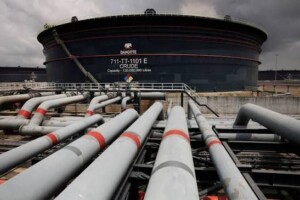
Nigeria is attempting to build a self-sufficient refining system while simultaneously relying on imported products to avoid shortages, price shocks and distribution disruptions.
The contradiction has become one of the defining tensions inside the country’s energy reforms.
Nigeria Fuel Imports Continue to Pressure FX Stability
Beyond fuel availability, the renewed imports are also reviving pressure on Nigeria’s foreign exchange market.
Petroleum imports remain one of the country’s largest sources of dollar demand, consuming billions of dollars annually and placing additional strain on FX liquidity during periods of naira volatility.
Before the expansion of domestic refining capacity, Nigeria spent billions of dollars annually importing refined petroleum products, making fuel imports one of the country’s most persistent drains on foreign exchange reserves and balance-of-payments stability.
Industry analysts say the continued dependence on imported fuel weakens one of the core economic arguments behind domestic refining: reducing pressure on foreign reserves.
Even as Nigeria attempts to stabilise the naira through tighter monetary policy and foreign capital inflows, large-scale fuel imports continue pulling demand back toward the dollar market.
That pressure becomes even more dangerous when global oil prices rise or freight costs spike across strategic shipping routes.
The issue is particularly sensitive because Nigeria had positioned the Dangote refinery as a potential turning point capable of reducing import bills, improving energy security and easing FX stress across the economy.
Instead, traders are once again watching import schedules, depot supply flows and regulatory approvals for signals about whether the country’s refining independence story is actually holding.
For many operators in the downstream sector, the latest cargoes suggest the transition remains far from complete.
Read Also: IPOB declares May 30 total sit-at-home across South-East for Biafra remembrance
Structural Weaknesses Still Haunt Nigeria’s Fuel Supply System
Analysts say the persistence of imports points to deeper structural weaknesses inside Nigeria’s petroleum supply architecture.
While refining capacity may be expanding, challenges linked to pricing, storage, logistics and nationwide distribution continue complicating the transition away from imported fuel.
Some marketers privately argue that imported petrol still offers strategic flexibility under certain pricing conditions, particularly when international supply spreads become favourable.
Others fear a market dominated too heavily by a single refinery operator could introduce new pricing distortions and supply concentration risks.
Those tensions have repeatedly pushed the Dangote Group into conflict with regulators.
Aliko Dangote previously accused former NMDPRA leadership of issuing excessive import licences despite rising domestic production capacity at his refinery.
Executives within the Dangote Group had reportedly considered increasing exports of refined products after concerns that continued imports were reducing domestic market opportunities.
The dispute eventually evolved into one of the most politically sensitive battles inside Nigeria’s energy sector.
Former NMDPRA chief executive Farouk Ahmed resigned after months of tension surrounding import approvals and downstream market regulation.
Dangote had publicly accused regulators of sabotaging local refining efforts by continuing to approve imports even while domestic production capacity was growing.
The billionaire businessman also petitioned anti-corruption authorities over allegations tied to overseas education spending linked to the former regulator’s family, escalating public scrutiny around the sector.
Nigeria’s Refining Transition Still Looks Fragile
The latest fuel imports suggest Nigeria’s transition toward self-sufficient refining remains fragile despite the launch of Africa’s largest refinery.
That reality is becoming increasingly difficult for both regulators and investors to ignore.
For years, Nigeria’s fuel import dependence symbolised the dysfunction of an oil-producing country unable to refine enough petroleum for its own citizens.
The Dangote refinery was supposed to begin changing that narrative.
And in some ways, it already has.
Domestic refining volumes have increased. Supply pressure has eased in several regions. Market expectations shifted dramatically after the refinery began operations.
But the continued flow of imported cargoes now shows that solving Nigeria’s fuel crisis involves more than simply building refining capacity.
The country is still confronting a broader system problem involving infrastructure gaps, regulatory uncertainty, FX instability and supply-chain vulnerabilities.
That complexity explains why fuel imports continue returning even as officials promote local refining gains.
For investors, fuel marketers and energy traders, the latest import wave sends a message that is becoming increasingly difficult to ignore.
Nigeria’s fuel market is no longer battling a temporary supply shortage. It is navigating a fragile and expensive transition between an old import-dependent system and a new refining-driven model still struggling to fully stabilise.
Until domestic refining capacity, pricing alignment, nationwide distribution and regulatory consistency begin working in sync, the country’s fuel import story may remain far from over.
Read more @ireport247news