

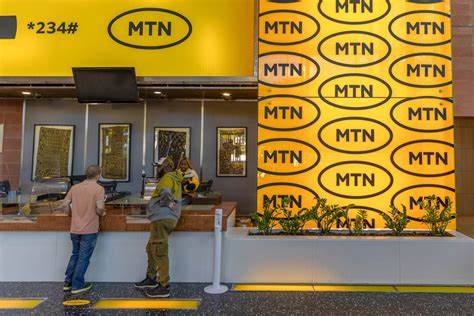
MTN Nigeria CEO Karl Toriola says tariff hikes saved telecom firms from collapse as the company boosts network investment and reaffirms its Nigerian identity.
The Chief Executive Officer of MTN Nigeria, Karl Toriola, has defended the recent telecommunications tariff adjustment approved by the Federal Government, insisting that the increase was necessary to prevent operators from slipping into financial crisis.
He also reaffirmed that MTN Nigeria should be viewed as a Nigerian company, arguing that its ownership, management and contributions to the country’s economy clearly reflect its local identity despite the MTN Group’s South African roots.
Speaking during an interview on Arise News, Toriola addressed several issues affecting the telecommunications sector, including public concerns over network quality, rising service costs, data consumption complaints and the company’s investment strategy.
He maintained that the additional revenue generated from the tariff review is already being channelled into expanding infrastructure and improving the quality of services offered to millions of subscribers across Nigeria.
According to him, many people continue to describe MTN Nigeria as a South African company simply because the MTN Group was founded in South Africa.
However, he argued that such a description overlooks the company’s present ownership structure and its significant Nigerian presence.
He explained that the parent company has shareholders from multiple continents, making it a globally owned business rather than one controlled exclusively by South African investors.
"We are labelled as a South African company because MTN Group was founded in South Africa. But the reality is that MTN Group has a very diverse global shareholding.

Only about 50 percent of the shareholding is African, while the rest is held by investors from North America, Europe, the United Kingdom, the Middle East and Asia-Pacific," he said.
Toriola further stressed that MTN Nigeria itself operates independently as a Nigerian corporate entity. He noted that the company is incorporated in Nigeria, listed on the Nigerian Exchange, complies with Nigerian tax regulations and is managed almost entirely by Nigerian professionals.
He pointed out that the overwhelming majority of the company’s leadership team consists of Nigerians, with only a handful of expatriates employed within the organisation.
Beyond its workforce, he added that millions of Nigerians have financial interests in the company through retail investments and pension funds, making the business an important part of the country’s economic landscape.
"MTN Nigeria is a Nigerian company through and through. We are domiciled in Nigeria. We are listed on the Nigerian Exchange. We pay all the taxes, duties and levies expected of us, and we are run by Nigerians.

"I am Nigerian. Apart from one executive, every member of our executive committee is Nigerian, while our entire expatriate workforce in Nigeria is just four people.

"We have over 201,000 retail investors, while about 11 million Nigerians own MTN shares indirectly through pension funds. We are very proud of our Nigerian identity," he stated.
Speaking on the controversial telecom tariff increase, the MTN Nigeria CEO said the decision should not be interpreted as an attempt by operators to maximise profits.
Rather, he explained that the industry had reached a stage where maintaining previous pricing had become financially unsustainable due to soaring operational costs, inflation, foreign exchange pressures and the increasing expenses associated with running telecommunications infrastructure across the country.
He revealed that before the tariff review, many operators struggled to meet routine financial commitments despite serving millions of customers every day.
"People perceived the tariff increase as an aspiration for profitability, but the reality was that we were on our knees financially. We couldn't even pay our month-to-month bills with the revenues we were generating.

"The tariff adjustment was an absolute necessity. It enabled us to stay alive," he said.
Toriola disclosed that the improved financial position has enabled MTN Nigeria to embark on one of its biggest infrastructure investment programmes in recent years.
According to him, the company initially planned to spend about N250 billion on capital projects in 2024 but significantly increased its investment budget to approximately N1 trillion in 2025.
He explained that a large portion of the investment is being directed towards expanding network capacity, modernising existing infrastructure and improving customer experience across Nigeria.
“In the first quarter of this year alone, we spent N390 billion on capital expenditure, compared with a profit after tax of N359 billion. That shows our commitment to improving quality of service,” he said.
Responding to persistent complaints about dropped calls, slow internet connections and network outages, Toriola acknowledged that service quality has not yet reached the standard customers expect.
However, he insisted that many of the problems are caused by factors beyond the company’s direct control.
He cited increasing demand for digital services, repeated fibre cable damage during road construction, vandalism of telecom infrastructure, insecurity in some parts of the country and the high cost of generating electricity for thousands of network sites as major operational challenges.
According to him, MTN currently operates around 18,000 network sites nationwide, many of which rely heavily on generators because of the country’s unreliable electricity supply.
"There are people who deliberately pour petrol into our manholes and set them on fire. A single incident can knock out services for millions of subscribers. We also face security challenges that prevent our engineers from accessing some sites quickly.

"In addition, we operate about 18,000 sites nationwide, each requiring generators, batteries, rectifiers and constant fuelling because of inadequate public electricity supply. All these affect quality of service," he explained.
Despite these obstacles, the MTN chief assured customers that the company remains committed to delivering better services through continuous investment and infrastructure upgrades.
“We are not perfect, but we are investing aggressively and continuously striving to do better,” he added.
Toriola also responded to allegations that telecom operators deliberately deduct customers’ mobile data.
He rejected the accusation, saying internal investigations repeatedly indicate that smartphones themselves are responsible for a significant portion of data usage through automatic background activities.
He explained that applications such as Apple iCloud, WhatsApp and other cloud-based services often perform automatic synchronisation and backups without users noticing that mobile data is being consumed.
"There is a perception that MTN goes and takes customers' data, but our studies have shown repeatedly that background applications are consuming much of that data.

"I encourage customers to check their device settings. Daily automatic backups are unnecessary for many users. If possible, carry out backups over Wi-Fi instead of mobile data," he advised.
About The Author
