

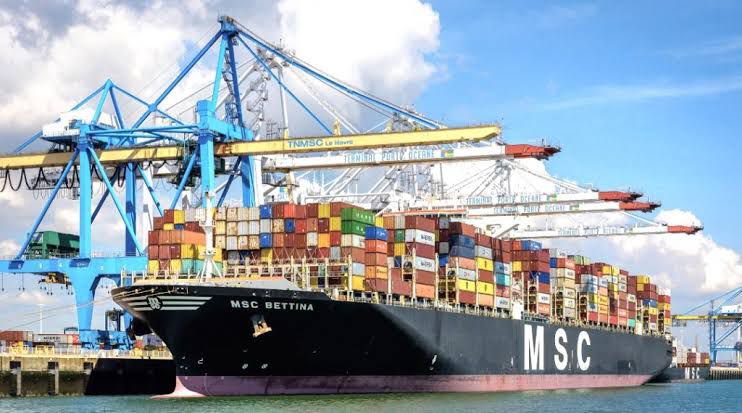
Nigeria’s maritime sector has recorded a regulatory breakthrough after one of the world’s largest shipping lines agreed to halt a contentious tariff increase, offering temporary relief to importers, exporters, and logistics operators already grappling with rising costs.
MSC tariff suspension eases pressure on Nigerian shippers
The decision by Mediterranean Shipping Company to implement an MSC tariff suspension marks a significant development in Nigeria’s port and shipping ecosystem, following regulatory intervention by the Nigerian Shippers’ Council.
In an official customer advisory, the shipping giant confirmed that it had suspended its recently introduced tariff adjustments in compliance with a directive from the industry regulator.
The company stated that the previous pricing structure would remain in force pending the outcome of ongoing consultations with stakeholders.
The MSC tariff suspension comes at a time when operators within Nigeria’s maritime value chain have been raising concerns over escalating port charges, which they say are contributing to higher logistics costs and, ultimately, increased prices of goods in the domestic market.
Industry stakeholders had expressed apprehension that the proposed tariff hike could worsen inflationary pressures and reduce the competitiveness of Nigerian ports compared to regional alternatives such as those in neighbouring West African countries.
By stepping in, the Nigerian Shippers’ Council reaffirmed its role as the economic regulator of the port sector, tasked with ensuring fair pricing practices and protecting the interests of port users.
The regulator’s directive effectively paused the implementation of the new tariff regime, creating room for dialogue between the shipping company and key stakeholders, including importers, freight forwarders, and terminal operators.
Analysts say the MSC tariff suspension reflects a broader effort by authorities to strike a balance between maintaining a business-friendly environment for international shipping companies and safeguarding the interests of local businesses.
For many import-dependent sectors of the Nigerian economy, shipping costs represent a critical component of overall expenses. Any increase in tariffs can have a cascading effect across supply chains, affecting everything from manufacturing to retail pricing.
The suspension is therefore expected to provide short-term relief, particularly for businesses already dealing with currency volatility, high energy costs, and logistics bottlenecks.
In its communication, Mediterranean Shipping Company emphasised its commitment to regulatory compliance and transparency, noting that it would continue to engage with the Nigerian Shippers’ Council until a mutually acceptable resolution is reached.
The company also assured customers that further updates would be communicated promptly once discussions with the regulator are concluded.
Maritime experts note that the MSC tariff suspension highlights the importance of regulatory oversight in ensuring stability within the port system. Without such intervention, unilateral tariff increases could disrupt trade flows and erode confidence among port users.
Nigeria’s ports, particularly those in Lagos, have long struggled with issues such as congestion, high turnaround times, and infrastructure deficits. These challenges have already made the cost of doing business at Nigerian ports relatively high compared to regional competitors.
As a result, any additional cost pressures—such as increased shipping tariffs—risk diverting cargo to alternative ports in countries like Ghana or Togo, where operations are often perceived as more efficient.
The current development underscores the need for continuous engagement between regulators and private sector operators to ensure that pricing decisions are aligned with broader economic objectives.
Stakeholders argue that a transparent and consultative approach to tariff setting is essential for maintaining confidence in the maritime sector and supporting Nigeria’s trade ambitions.
While the MSC tariff suspension is a positive step, experts caution that it is only a temporary measure. The outcome of ongoing consultations will ultimately determine whether a revised tariff structure will be introduced and under what conditions.
In the long term, addressing the underlying cost drivers within Nigeria’s port system will be crucial. These include infrastructure limitations, inefficiencies in cargo handling, and regulatory overlaps that contribute to higher operational expenses.
For now, the suspension provides breathing space for stakeholders to reassess cost structures and engage in constructive dialogue aimed at achieving a sustainable pricing framework.
The development also sends a signal to other operators in the sector about the regulator’s willingness to intervene when necessary to protect market stability.
As discussions continue, the focus will remain on ensuring that any future tariff adjustments are justified, transparent, and reflective of prevailing economic realities.
Ultimately, the MSC tariff suspension reinforces the critical role of regulatory institutions in shaping the trajectory of Nigeria’s maritime industry, particularly at a time when the country is seeking to enhance its position as a regional trade hub.
About The Author
